UNIDAD III KUHN LEC 5
Chapter 10: The Structure of Scientific Revolutions
Fundamental Concepts of Scientific Revolutions
- This chapter is crucial as it reinforces the idea that revolutions in science represent significant changes in worldviews and concepts.
- Kuhn employs a dual perspective, acting both as a historian and a scientist, to illustrate how scientific history can be perceived differently depending on one's role.
- The historian's viewpoint emphasizes that paradigm shifts not only alter scientific theories but also transform the understanding of the world itself.
- Kuhn posits that when paradigms shift, they bring about substantial changes in community commitments and perspectives, leading to new ways of interpreting phenomena.
- He argues that these shifts are evident through the adoption of new instruments and methodologies which allow scientists to observe previously unnoticed aspects of reality.
Instruments and Paradigmatic Changes
- New instruments lead to different observations; for instance, using telescopes or microscopes reveals details that were invisible under previous paradigms.
- Even with existing tools from earlier paradigms, scientists can discover new insights by applying them within a changed theoretical framework.
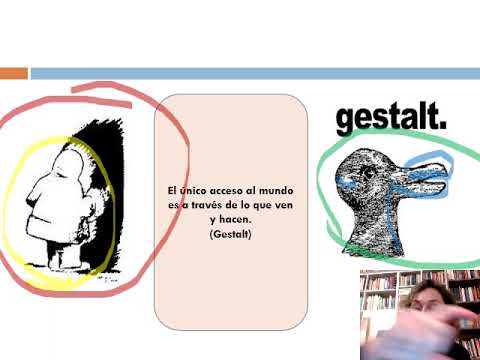
- Kuhn references Gestalt psychology to explain how perception is influenced by prior knowledge and frameworks; scientists see the world through their established paradigms.
- Knowledge is always situated; scientists' views are shaped by their historical context, personal experiences, and theoretical backgrounds.
- A scientist’s understanding is limited by their training within specific paradigmatic lenses which dictate what they perceive in their observations.
Perception and Paradigm Shifts
- Kuhn illustrates perceptual limitations using examples from Gestalt theory—how one can see different images (like a rabbit or a duck), emphasizing that perception is often singular at any moment.
- Once an individual perceives something under one paradigm (e.g., seeing the moon as a planet), reverting back to an old view becomes impossible after recognizing its true nature (as a satellite).
- This irreversible process highlights how paradigm shifts fundamentally change our understanding; once we learn something new about an object or concept, we cannot unlearn it.
- The transition from viewing celestial bodies under one paradigm to another involves deeper implications than mere terminology—it affects calculations related to movements and relationships in space.
- Understanding these shifts leads to broader consequences beyond simple definitions; it influences collective scientific practices and theories regarding celestial mechanics.
Understanding Paradigm Shifts in Science
The Concept of Paradigms and Their Impact
- The speaker discusses how changes in the meaning of words can lead to significant shifts in conceptual frameworks, indicating that altering a term's reference can modify an entire family of concepts.
- It is emphasized that paradigm shifts resemble the phenomenon of figure-ground perception, where recognizing one aspect alters the understanding of another.
- The speaker notes that scientists often fail to recognize new paradigmatic solutions during these shifts, which is crucial for scientific progress.
Historical Context: Copernican Revolution
- A comparison is made between scientists who remain entrenched in outdated paradigms and those who embrace revolutionary ideas, using the Ptolemaic model as an example.
- The transition from a geocentric (Earth-centered) view to a heliocentric (Sun-centered) perspective initiated by Copernicus represents a fundamental shift in understanding our universe.
- Following Copernicus, other scientists like Galileo and Kepler contributed significantly to solidifying this new paradigm against the backdrop of Ptolemaic beliefs.
Resistance to Change and Community Dynamics
- Despite Copernicus's contributions being minimal at first, it was later thinkers like Galileo who truly challenged existing norms and faced resistance from established scientific communities.
- The discussion highlights how individuals clinging to old paradigms may lose their scientific credibility and community support when they cannot adapt to new understandings.
Perception vs. Reality in Scientific Understanding
- The notion that changing paradigms alters perception is explored; what one sees can be drastically different based on theoretical frameworks or community consensus.
- This idea suggests that once a paradigm shift occurs, previously unseen elements become visible while others fade away from recognition entirely.
Interplay Between Nature and Paradigms
- The speaker argues that reality is not independent of paradigms; rather, our understanding of nature evolves with scientific advancements shaped by prevailing theories.
- Sensory inputs are distinguished from perceptions formed through theoretical lenses; thus, two observers may experience the same stimuli but interpret them differently based on their backgrounds.
Conclusion: Evolution of Scientific Thought
- Ultimately, the discussion concludes with the assertion that as science progresses through paradigm shifts, so too does our conception of nature itself evolve alongside these changes.
- Historians view these transitions as significant milestones while scientists may perceive them merely as corrections or clarifications within their ongoing research narratives.
Understanding the Discovery of Uranus
The Paradigm Shift in Astronomy
- The speaker discusses the historical context of scientific understanding, emphasizing that previous interpretations were flawed. The moon was once misunderstood as a massive satellite.
- A call to action is made for students to read Chapter 10 carefully, highlighting the nuances in human language and how they relate to scientific discoveries.
- The discovery of Uranus is introduced; it had been observed earlier but misidentified as a star until astronomer William Herschel recognized it as a planet in 1781.
- Herschel's role is underscored as he confirmed Uranus' planetary status, marking a significant moment in astronomy where classification systems evolved.
Classification and Scientific Revolution
- The historian's perspective on discovery emphasizes that Uranus was not recognized as a planet until Herschel's observations redefined its classification within the latest paradigm.
- Understanding when Uranus was classified as a planet reflects broader implications about scientific paradigms and how discoveries are contextualized historically.
- Dating discoveries can signal the onset of scientific revolutions, with scientists often experiencing moments of clarity akin to removing blindfolds from their eyes.
Perception and Scientific Training
- Scientists experience epiphanies when recognizing new classifications; however, this process involves shifting perspectives rather than simply gaining new information.
- The metaphor of changing lenses illustrates that while scientists may feel enlightened, they are merely adopting new frameworks through which to view data.
- Historians note that there’s always an underlying theory guiding observations; thus, what appears as revelation is often just another layer added to existing knowledge structures.
Complexity of Experience and Knowledge
- The discussion shifts towards how different perceptions create distinct worlds. It questions whether reality consists of one or multiple interpretations based on individual experiences.
- Emphasizing training in perception, the speaker argues that understanding complex concepts like H2O requires education beyond mere observation—scientific literacy shapes perception significantly.
- For someone untrained in chemistry, water remains just a liquid for quenching thirst; deeper comprehension involves recognizing its molecular structure and chemical properties.
Challenges in Scientific Interpretation
- Misunderstandings arise when individuals lack knowledge about fundamental concepts like chemical bonds or periodic table elements; these insights are crucial for informed interpretation.
- Education plays a vital role in shaping perceptions—what seems obvious to an expert may be invisible to someone without proper training or background knowledge.
- Ultimately, experience is not straightforward; it requires theoretical conditioning. Paradigms dictate how we interpret stimuli from our environment, complicating our understanding of reality.
The Impact of Paradigms on Scientific Progress
The Distinction Between Paradigms
- The discussion begins with the assertion that there will not be an oasis in a desert, symbolizing the disconnect between different scientific paradigms.
- An example is provided through Galileo's discovery of the pendulum, contrasting Aristotelian views on falling objects based on weight and elemental affinity.
Galileo's Revolutionary Approach
- Aristotle believed that objects fall according to their nature; heavier bodies fall faster due to their connection to earth elements, while lighter ones rise.
- Galileo challenged this notion by conducting experiments, such as those involving inclined planes, to demonstrate that acceleration during free fall is independent of weight.
The Pendulum Experiment
- At 17 years old, Galileo observed a swinging lamp in a church which led him to discover the principles of pendular motion.
- He noted that the amplitude of oscillation remains constant regardless of the weight attached, marking a significant departure from Aristotelian thought.
Shifts in Worldview and Scientific Perception
- These revolutionary ideas signify changes in how scientists perceive their world and necessitate adjustments in education and understanding within new paradigms.
- Kuhn emphasizes that revolutionary changes create fundamentally different worlds for scientists, leading to communication barriers across paradigms.
Understanding Progress in Science
- The concept of progress is debated; it can be empirical or related to truth-seeking. Traditional views associate progress with cumulative knowledge leading towards truth.
- Kuhn argues that revolutionary changes are disruptive rather than progressive; they create incompatible worlds where dialogue between differing paradigms becomes challenging.
Evaluating Scientific Advancement
- Traditionally, scientific progress was viewed as an upward curve toward better theories. However, Kuhn questions how one can measure progress when paradigms differ significantly (e.g., discussing cows vs. dogs).
- Without common ground for comparison between paradigms, establishing superiority or progress becomes problematic.
Accumulation vs. Disruption in Knowledge
- While normal science may show technical progression through problem-solving efficiency, true paradigm shifts do not align with traditional notions of cumulative knowledge leading toward truth.
- Kuhn suggests that real progress occurs only through disruptive revolutions rather than accumulation—indicating a shift in understanding rather than merely adding more information.
This structured overview captures key insights from the transcript regarding scientific paradigms and their implications for understanding progress within science.
Understanding the Role of Isolation in Scientific Progress
The Importance of Community Isolation
- The efficiency in normal science arises from the isolation of the scientific community from broader societal influences, allowing scientists to focus on problem-solving without external pressures.
- This isolation is crucial for understanding paradigms; it enables scientists to work within established norms and values without interference from political or social issues.
- A fundamental unwritten rule in science is to avoid appeals to state leaders or the general population regarding scientific matters, emphasizing a separation between science and politics.
- The discussion primarily revolves around basic science rather than applied fields like health or technology, highlighting that successful scientific communities thrive when they remain insulated.
- The text suggests that current discussions about state intervention in scientific matters are relevant, as they challenge the notion of an isolated scientific community.
Challenges with New Proposals
- The unit of scientific research is defined by resolved problems; this accumulation leads to resistance against accepting new proposals unless they promise better solutions.
- Normality in science thrives on previously solved problems, making it difficult for scientists to embrace new ideas unless these ideas significantly challenge existing paradigms.
- New phenomena must not only be novel but also present a compelling case that reconfigures previous understandings and offers improved resolutions for acceptance within the scientific community.