Informática - Aula 1 - A evolução dos computadores
Welcome and Introduction
In this section, the speaker introduces the topic of computer evolution, discussing computers as products of engineering and their role in contemporary society. The evolution of computers from their inception to modern-day devices is also touched upon.
Evolution of Computers
- Traditional desktop computers consist of various components like a monitor, keyboard, and peripherals beyond the standard desktop setup.
- Mainframes were prevalent in the past; currently, supercomputers like IBM Watson are prominent for tasks such as question answering competitions.
- Computers extend beyond traditional forms to include portable devices like notebooks, tablets, and smartphones.
- Embedded devices serve specific functions such as processing images in digital cameras or handling transactions in ATMs.
Definition and Historical Context
This section delves into the definition of a computer from historical perspectives, tracing its origins to human calculators and early computing machines.
Definition of "Computer"
- The dictionary's primary definition links a computer to performing calculations by humans or machines before associating it with informatics-related contexts.
- Initially, "computer" referred to individuals conducting calculations; later, it expanded to encompass various computing devices.
Evolution of Calculating Devices
This part explores the evolution of calculating tools from human calculators to mechanical devices designed for arithmetic operations.
Calculating Tools Evolution
- Historically, human calculators computed data crucial for tasks like navigation using tables such as astronomical charts.
The Evolution of Computers
This section discusses the evolution of computers from mechanical calculators to electronic devices, highlighting key milestones and influential figures in the field.
Charles Babbage and Analytical Engine
- : Charles Babbage proposed the construction of the Analytical Engine in 1822, a precursor to modern computers capable of calculating complex functions using difference methods.
- : The Analytical Engine introduced the concept of programming, laying the foundation for programmable machines like today's computers.
Early Computer Technologies
- : Babbage's son continued his work on the Analytical Engine posthumously, emphasizing its programmable nature akin to contemporary computers.
- : Babbage suggested using punched cards for data input, a technology already in use for textile production since 1800.
Contributions by Other Pioneers
- : Other pioneers like Corra Duse also developed mechanical calculators with binary logic systems before advancing to electromechanical devices.
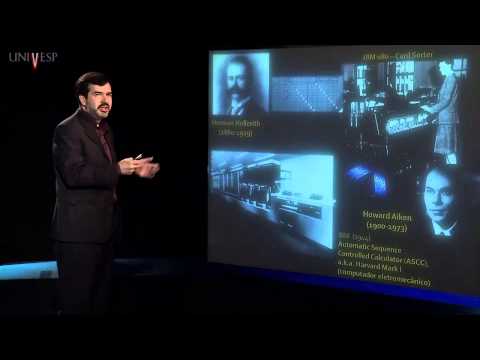
- : Notably, during World War II, significant efforts were made in the US towards electromechanical computers like the Harvard Mark I.
Technological Advancements in Computing
This section explores technological advancements that revolutionized computing, transitioning from mechanical to electronic components.
Evolution of Computer Technology
- : The evolution of computers saw a shift from mechanical devices to electromechanical systems and later electronic components like vacuum tubes and transistors.
Understanding the Evolution of Computers
The section discusses the historical development of computers, focusing on key milestones such as the Colossus and ENIAC, as well as advancements in electronic computing post-World War II.
Development of Early Computers
- During World War II, efforts like the Colossus in the UK were pivotal in decoding German cryptography.
- The ENIAC, a significant advancement post-war, marked a shift towards electronic computing and was instrumental in ballistic calculations.
- The ENIAC's impact was substantial, leading to advancements in computer technology globally.
Global Efforts in Computer Advancements
- The US developed the ENIAC for wartime purposes but later shared its technology openly due to the war's end.
- Germany lagged behind in electronic computing during this period due to limited resources and priorities.
Technological Progression Towards Modern Computers
This segment delves into the transition from early electronic computers to microprocessors and their role in shaping modern computing capabilities.
Transition to Microprocessors
- The 1950s saw a shift towards transistor-based technology, leading to commercial transistor-based computers like the IBM 608.
- Predictions around 2000 envisioned widespread home computer use based on evolving transistor technology.
Integration and Miniaturization
- By the 1960s, integrated circuits combined multiple transistors into compact units, enabling smaller-scale computer setups.
- Advancements like microprocessors with thousands of transistors paved the way for modern processors with billions of transistors today.
Impact on Computing Capabilities
- Enhanced integration allowed for miniaturized yet powerful computers accessible to various sectors like universities and hospitals.
- The evolution towards microprocessors facilitated complex simulations, engineering tasks, and digital control processes.
Conclusion: Significance of Computer Evolution
Concluding remarks highlight how technological advancements have transformed early calculators into ubiquitous digital tools integral to contemporary life.
Evolutionary Impact on Computing
- From early calculators with minimal transistors to modern processors housing billions, technological progress has revolutionized computing capabilities.
Ubiquity of Computers Today