Creativity is a remix | Kirby Ferguson
Everything is a Remix
The speaker discusses how remixing is the basic element of all creativity. He uses Bob Dylan's early songs as an example to show how he borrowed and transformed melodies from traditional folk tunes.
Bob Dylan's Early Songs
- In 1964, Bob Dylan was accused of stealing other people's songs.
- Danger Mouse created "The Grey Album" by combining the Beatles' "White Album" with Jay-Z's "The Black Album."
- Copy, transform, and combine are the three techniques used in remixing.
- Dylan's early songs were borrowed from traditional folk tunes.
- Dylan admits that he must have heard Dominic Behan's "The Patriot Game," forgot about it, then thought it was his song when it bubbled back up in his brain.
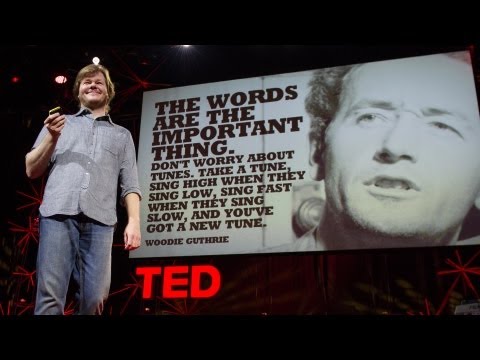
- Woody Guthrie advised not to worry about tunes but to take a tune, sing high when they sing low, sing fast when they sing slow, and you've got a new tune.
- Two-thirds of the melodies Dylan used in his early songs were borrowed.
Creativity and Copyright Laws
- American copyright and patent laws run counter to the notion that we build on the work of others.
- Creative works may indeed be kind of like property, but it's property that we're all building on.
- Progress happens when all the factors that make for it are ready and then it is inevitable.
Introduction
This section introduces the topic of multi-touch technology and how it is not a new concept. The speaker discusses how patent law contradicts its intent to promote the progress of useful arts.
Multi-Touch Technology
- Jeff Han explains that multi-touch sensing isn't completely new.
- Patent law contradicts its intent to promote the progress of useful arts by allowing companies to patent small parts of an idea.
- Apple has patented slide-to-unlock, which is a broad 28-page software patent covering unlocking your phone by sliding an icon with your finger.
Loss Aversion and Lawsuits
This section discusses our predisposition towards protecting what we feel is ours and how this affects lawsuits in the realm of smartphones.
Loss Aversion and Lawsuits
- We have a strong predisposition towards protecting what we feel is ours, but no such aversion towards copying what other people have.
- Laws that fundamentally treat creative works as property, massive rewards or settlements in infringement cases, huge legal fees to protect yourself in court, plus cognitive biases against perceived loss lead to lawsuits in the realm of smartphones.
Creativity Comes from Without
This section discusses how creativity comes from without and not within. Our creativity comes from being dependent on one another.
Creativity Comes from Without
- Our creativity comes from without, not from within. We are dependent on one another for our creativity.
- Admitting this to ourselves isn't an embrace of mediocrity and derivativeness. It's a liberation from our misconceptions and an incentive to not expect so much from ourselves and to simply begin.
Turn any video into a summary like this
YouTube links, meetings, lectures. With transcripts, search, and chat.