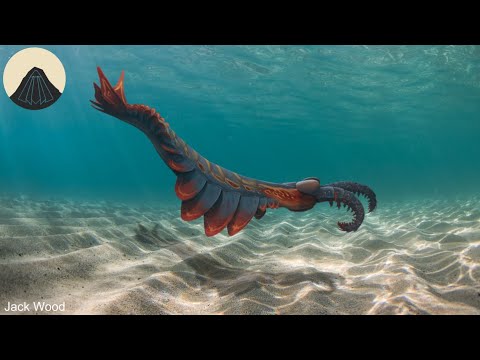
The Worlds First Apex Predator
The Evolution of Top Predators
The Concept of Early Ecosystems
- The idea of an ecosystem without a major predator is difficult to envision; however, there was a period before the evolution of significant predators like big cats and killer whales.
- In the Canadian Rockies, remains from an ancient underwater ecosystem reveal creatures vastly different from modern animals.
The Burgess Shale Formation
- The Burgess Shale formation preserves entire habitats, providing insight into life 500 million years ago during the Cambrian Period.
- This era predates dinosaurs and featured landscapes devoid of vegetation, with only simple plants possibly existing.
Unique Creatures of the Cambrian Period
- During this time, oceans hosted complex ecosystems with unusual animals such as a mouse-sized arthropod with five eyes and unique appendages.
- Most Cambrian animals had bizarre features not seen in modern species; their relationships to contemporary or other prehistoric creatures remain unclear.
Anomalocaris: The First Top Predator
- Anomalocaris stands out as one of the few recognizable creatures from this period, alongside trilobites and early fish ancestors like Pikaia.
- Following mass extinctions, strange new species often emerge to fill ecological niches but frequently face extinction due to competition.
Discovery and Misidentification
- Initially thought to be small prey items, fragments of Anomalocaris were misidentified for decades until scientists connected various fossils correctly.
- Fossils discovered in the late 1800s included mouth appendages mistaken for shrimp bodies and jellyfish parts.
Characteristics and Significance of Anomalocaris
- Once recognized as a single organism, Anomalocaris was identified as a fierce predator using undulating flaps for movement and crushing prey with specialized appendages.
Anomalocaris: The Apex Predator of the Cambrian Era
Evolution and Adaptation of Anomalocaris
- Anomalocaris were strong swimmers and free-swimming predators, adapting early in arthropod evolution to fill ecological niches similar to those occupied by modern fish.
- They reached significant sizes, around 60 cm long, which provided them a competitive advantage in a world dominated by smaller creatures. Their size was complemented by evolutionary innovations.
- Anomalocaris possessed compound eyes made up of multiple lenses, indicating advanced eyesight compared to other Cambrian creatures like trilobites.
- Unlike modern animals, their eyes were constructed from a mineral called calcite, resulting in potentially blurry vision; however, they still had superior eyesight akin to contemporary insects.
- Initially believed to prey on hard-shelled bottom dwellers like trilobites, recent studies suggest they likely targeted softer prey due to limitations in crushing hard shells.
Feeding Habits and Ecological Role
- New findings indicate that Anomalocaris may have been pursuit predators of swimming animals higher in the water column rather than dominant hunters of harder-shelled species.
- This shift suggests that Cambrian ecosystems were more complex than previously understood, with various niches being filled by different species.
- Following Anomalocaris's emergence, its relatives diversified into various forms; for instance, some adapted appendages for different hunting strategies or sediment sifting.
Diversity Among Relatives
- One smaller relative known as Heria victoria specialized in hunting small prey on the seafloor rather than trilobites due to its unique adaptations for sifting through sediment.
- Another larger relative named Amplectobelua exhibited claw-like appendages resembling crustaceans but resulted from convergent evolution rather than direct lineage ties.
Extinction and Survival Insights
- Contrary to earlier beliefs that Radiodontans went extinct during the Cambrian Period, a fossil discovered in Morocco dated back approximately 480 million years indicates their survival into later geological periods.
- This fossil was identified as Ajasus, notable for its filter-feeding adaptations using specialized appendages equipped with spines for capturing plankton and small organisms.