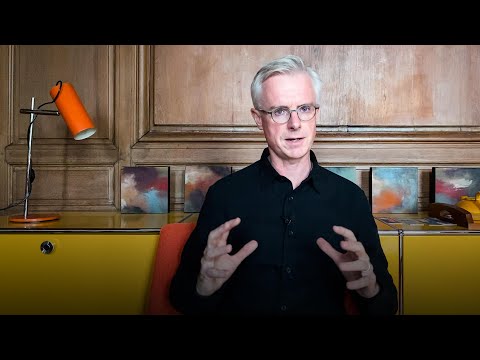
Mike O'Sullivan: The end of globalization (and the beginning of something new) | TED
New Section
The speaker discusses the end of globalization and its impact on various aspects of society.
The Impact of Globalization
- Globalization has brought significant benefits, such as lifting billions of people out of poverty and improving the role of women in many parts of the world.
- Economically, supply chains have spread globally, changing how we live, eat, communicate, and work.
- However, globalization has also led to inequality and record levels of indebtedness.
Mismanagement and Inequality
- The Global Financial Crisis was a result of mismanagement within globalization.
- Some countries have managed to improve income inequality through better distribution of wealth, while others have extreme levels of wealth inequality.
- This has created a perception that globalization is against the interests of many people.
Pandemic Exposes Frailties
- The COVID-19 pandemic has further exposed the weaknesses in the globalized world order.
- Lack of collaboration among nations during this crisis highlights the absence of a united response.
End of an Era
- We are at the end of an era characterized by globalization since the fall of communism.
- Events like the erosion of democracy in Hong Kong signify this transition.
Rival Ways and New World Order
- The new world order will be defined by rival ideologies and distinct ways of doing things.
- Collaboration will be based on shared values rather than economic goals or geography.
Values Shaping Alliances
- Small countries like Scotland, Iceland, and New Zealand have come together based on shared values beyond GDP-focused policies.
- Other small countries and city-states with common interests as global financial centers may collaborate more effectively.
Europe's Identity Crisis
- The European Union's eastward expansion has faced challenges, and Europe needs to reassess its values and direction.
- European leaders need to clarify shared common values that resonate with all Europeans.
Conclusion
The transcript discusses the end of globalization and its impact on various aspects of society. It highlights the benefits and drawbacks of globalization, including inequality and mismanagement. The COVID-19 pandemic further exposes the weaknesses in the globalized world order. The future will be defined by rival ideologies and collaboration based on shared values. Small countries have shown how shared values can foster cooperation, while Europe faces an identity crisis in defining its common values.
New Section
This section discusses the tension between Brussels and countries like Hungary and Poland, who are behaving in ways that go against basic values such as respect for democracy and the rule of law. It also mentions the treatment of women and the LGBT community as important markers.
Tension between Brussels and Hungary/Poland
- The tension arises from countries like Hungary and Poland going against basic values such as respect for democracy and the rule of law.
- Treatment of women and the LGBT community are important markers in this context.
New Section
This section highlights how Europe should tie financial aid to adherence to shared values by countries like Hungary, Poland, Eastern European countries, Cyprus, Russia, and China.
Financial Aid tied to Shared Values
- Europe should tie financial aid to countries' adherence to shared values.
- Countries in Eastern Europe, Cyprus, Russia, and China have close financial ties.
- In time, these countries will be forced to choose between Europe and its values or their own distinct values.
New Section
This section focuses on China's distinct set of values rooted in its history and desire to regain its past economic dominance. It also mentions that China's system is not well-understood in the West.
China's Distinct Set of Values
- China's values are deeply rooted in its history and a desire to regain past economic dominance.
- The set of values held by China is not well-understood in the West.
- Given China's economic transformation in recent years, there should be more curiosity about its values.
New Section
This section discusses China's system, which involves sacrificing liberty for order, prosperity, and national prestige. It also mentions the risk of unemployment breaking the contract between the state and the people.
China's System and Risks
- China's system is based on a contract where people sacrifice their liberty for order, prosperity, and national prestige.
- Most Europeans and Americans would find China's state control alien.
- The biggest risk for China is a period of high and prolonged unemployment that could break the contract between the state and the people.
New Section
This section highlights how China can be an attractive partner for other countries by providing capital and know-how. It also mentions Chinese technologies like Huawei being part of partnerships at a price.
China as an Attractive Partner
- China can provide capital and know-how to other countries.
- Chinese technologies like Huawei are part of partnerships but come at a price.
- Chinese investors own debt in some countries, giving them control over key infrastructure.
New Section
This section emphasizes the need to focus on fast-growing economies beyond America, Europe, and China in discussions about globalization and the new world order.
Beyond America, Europe, and China
- Discussions about globalization often overlook exciting developments in fast-growing economies like Ethiopia, Nigeria, Indonesia, Bangladesh, Mexico, and Brazil.
- The question for these countries in the new world order is what model to follow and what alliances to build.
- These countries have greater choice in the path to follow and face greater pressure to get it right.
New Section
This section highlights how fast-growing economies have more choice in the path they follow and the pressure to make the right decisions.
More Choice and Pressure for Fast-Growing Economies
- Fast-growing economies like Belarus, Lebanon, Kenya, Indonesia, etc., have more choice in the path they follow.
- They need to decide whether to follow models like Ireland or Dubai.
- The question of shared values with Commonwealth countries arises for Nigeria.
- Female leaders like President Sahle-Work Zewde of Ethiopia may be inspired by examples from New Zealand or Scotland.
New Section
This section discusses how countries like Tunisia and Cambodia can shape the future world order through battling corruption, building education and healthcare systems, and making their voices heard on the world stage.
Shaping the Future World Order
- Countries like Tunisia and Cambodia can craft future arrangements and institutions through sharing knowledge on battling corruption, building education and healthcare systems, and making their voices heard globally.
- These countries with young populations hold promise for the new world order.
Turn any video into a summary like this
YouTube links, meetings, lectures. With transcripts, search, and chat.