Organizational Structure
Organizational Structure
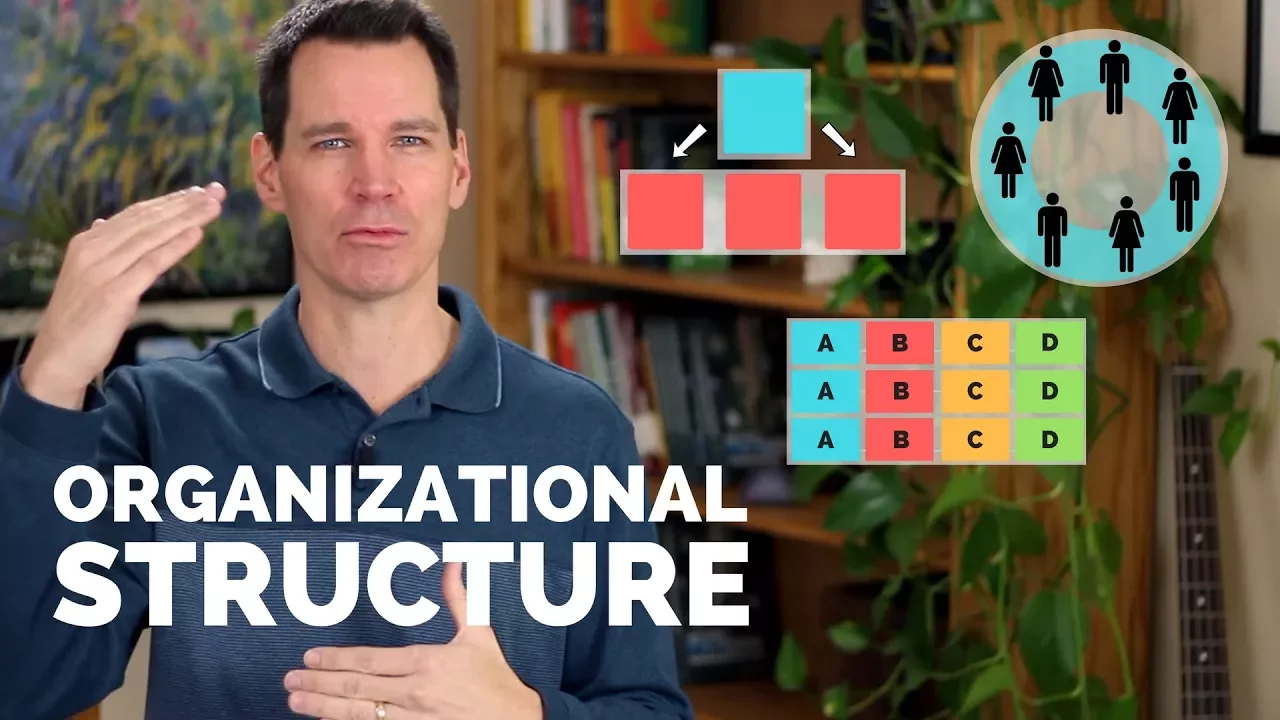
In this video, the speaker discusses different types of organizational structures commonly found in professional settings. The three main structures covered are the classic hierarchy, team-based organization, and matrix structure.
Classic Hierarchy
- The classic hierarchy is the most common type of organizational structure.
- It consists of a top-level person (e.g., CEO) followed by different levels of management and employees at the bottom.
- Positions in an organizational hierarchy often borrow vocabulary from the military, such as frontline employees and officers.
Team-Based Organization
- In a team-based organization, teams are formed with individuals from different areas working together.
- Cross-training and learning a common vocabulary are important aspects of this structure.
- Team-based organizations promote collaboration and high-quality work but require effort in terms of cross-training.
Matrix Structure
- The matrix structure combines elements of both hierarchy and teams.
- Individuals have both vertical superiors and lateral responsibilities to other teams or departments.
- This structure can be complex due to multiple bosses and responsibilities across different groups.
Overall, these three structures - classic hierarchy, team-based organization, and matrix structure - offer different approaches to organizing work within an organization. Each has its advantages and considerations depending on the specific context.