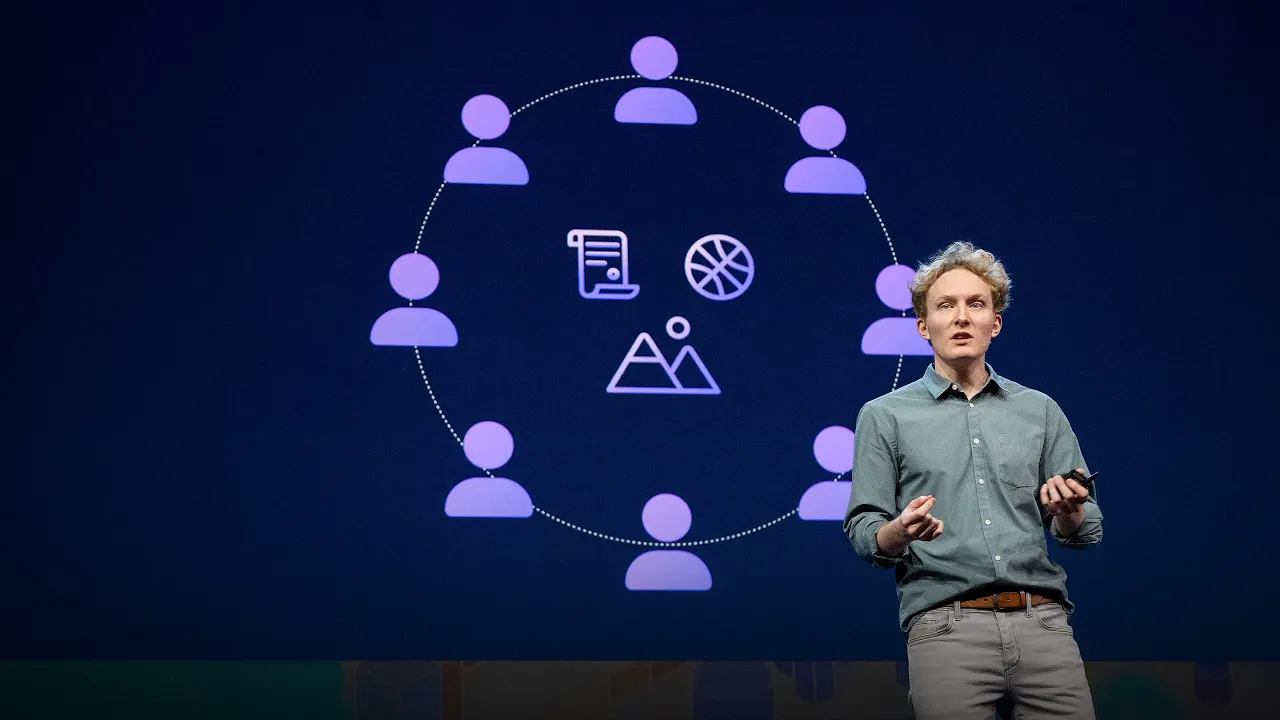
Could a DAO Build the Next Great City? | Scott Fitsimones | TED
How to Start a New City
The speaker discusses the process of starting a new city and introduces the concept of decentralized autonomous organizations (DAOs) as a way to collectively make decisions and manage resources.
Starting Small and Using Twitter
- Starting a new city is challenging, involving tasks such as surveying terrain, obtaining permission, buying land, and convincing people to move there. Land is limited.
- The idea of starting smaller and using Twitter to find people willing to help figure it out is introduced. This approach allows for global collaboration.
Forming CityDAO
- A group chat was formed with internet friends who pooled cryptocurrency and researched locations.
- After three months, 40 acres of land near Yellowstone National Park in Wyoming were purchased.
- To collectively make decisions and manage resources, a decentralized autonomous organization (DAO) called CityDAO was created.
Decentralized Autonomous Organizations (DAOs)
- DAOs are blockchain-governed organizations that work towards shared missions.
- Members contribute capital, propose projects, make decisions as peers, and replace top-down management with blockchain-based rules encoded in smart contracts.
- DAOs provide wider ownership opportunities and potential upside for participants compared to traditional companies.
Frustrations with Bureaucracy
- CityDAO emerged from frustrations dealing with city bureaucracy while building a startup focused on utilizing empty parking lots.
- Obtaining permits for projects like food truck parks or housing can be time-consuming due to archaic bureaucratic processes and zoning laws.
Advantages of On-chain Cities
- CityDAO envisions an on-chain city where transparency on a blockchain streamlines processes such as permitting, budgeting, laws, deeds, records, and transactions through smart contracts.
- Examples include buying/selling land or taking loans against property happening in seconds instead of weeks.
DAO Community Dynamics
- DAOs often start with a few people who have a big vision and require collective effort to achieve it.
- Community calls on platforms like Discord facilitate idea sharing and proposal debates.
- Teams have elected facilitators, and contributions can be made through full-time, part-time, or bounty-based participation.
Governance Tokens and Citizen Involvement
- DAOs raise initial funding by selling governance tokens that grant voting rights over DAO activities.
- Tokens can be bought on the open market or earned by contributing to the DAO (e.g., designing a logo, researching, writing code).
- CityDAO raised over six million dollars from 5,000 people through its governance token called "Citizenship," allowing citizens to vote on decisions like selecting future land locations.
DAOs as Financial Flash Mobs
- DAOs are often described as group chats with a bank account due to their ability to quickly organize around ideas and projects.
Conclusion
The speaker concludes the discussion on starting a new city using decentralized autonomous organizations (DAOs) and highlights their potential for transforming traditional bureaucratic processes.
Blockchain and DAOs: The Future of Ownership Understanding DAOs
In this section, the speaker explains how blockchain technology helps fix issues related to funds management in a Decentralized Autonomous Organization (DAO). They also discuss the process of proposing and voting on ideas within a DAO.
How Blockchain Helps in Funds Management
- Funds in a DAO are stored in a public blockchain treasury.
- Anyone can audit income and spending.
- The DAO approves spending or money transfers through proposals.
Proposing and Voting in a DAO
- A proposal starts as an idea and is debated by members of the DAO.
- Token holders vote on proposals.
- Example: CityDAO's first proposal was about which piece of land to buy.
- The top three land options were presented with pros and cons for each.
- The final proposal was voted on by the DAO members.
Blockchain and DAOs: The Future of Ownership Examples of DAO Activities
This section provides examples of different activities that decentralized autonomous organizations (DAOs) engage in, such as investing, purchasing assets, funding research, and raising money.
Examples of DAO Activities
- CityDAO acquired Parcel 0 near Cody, Wyoming based on criteria like proximity to an airport, water access, and being near Kanye West's ranch.
- Other proposals include buying land for conservation or creating decentralized city spaces.
- ConstitutionDAO raised over $47 million to buy an original US Constitution copy.
- Krause House is buying an NBA team while LinksDAO is acquiring a golf course.
- PleasrDAO collects art and digital assets like NFTs, including an unreleased Wu-Tang Clan album.
- VectorDAO is a collective of designers offering ownership in each project.
- MetaCartel and Seed Club review and fund promising start-ups and projects.
- VitaDAO funds research, while UkraineDAO raised over $6 million for the Ukrainian defense effort.
Blockchain and DAOs: The Future of Ownership Advantages and Challenges of DAOs
This section discusses the advantages and challenges associated with decentralized autonomous organizations (DAOs).
Advantages of DAOs
- DAOs have the potential to increase economic opportunity and allow more people to share in ownership of assets like real estate, sports teams, and fine art.
- Participants in a DAO can earn ownership through contributions, leading to voting rights for proposing changes or improvements.
Challenges of DAOs
- Consensus building within a DAO may slow down decision-making compared to traditional companies with centralized leadership.
- Transparency and decentralization can present coordination challenges, as seen when ConstitutionDAO was outbid at an auction due to difficulties in coordinating efforts.
- Regulatory uncertainties exist for DAO operations, but some states like Wyoming are recognizing them through specific laws.
Blockchain and DAOs: The Future of Ownership Potential Impact of DAOs
This section explores the potential impact that decentralized autonomous organizations (DAO) could have on various aspects such as work collaboration, trust-building, coordination on large-scale problems, and democratizing ownership.
Potential Impact of DAO
- Collaboration within a DAO enables working together on larger-scale problems than ever before.
- DAOs can democratize ownership of assets like real estate, sports teams, and fine art that are typically owned by high net-worth individuals.
- Imagine if the next social network or ride-hailing app were a DAO, where contributors earn ownership in the platform and have voting power for proposing changes.
Blockchain and DAOs: The Future of Ownership Conclusion
The speaker concludes by highlighting how agriculture enabled cities, the internet facilitated global information sharing, and DAOs offer new ways to work together, trust each other, and coordinate on larger-scale problems.
The Future Potential
- DAOs have the potential to build the next great city and revolutionize ownership structures.
Turn any video into a summary like this
YouTube links, meetings, lectures. With transcripts, search, and chat.