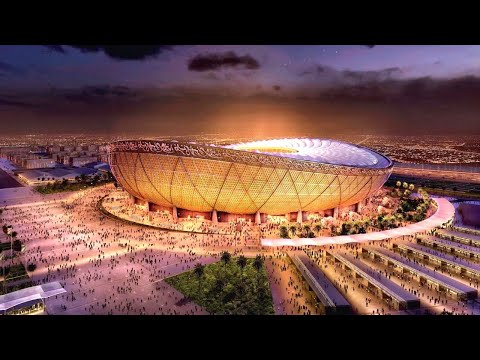
Inside Qatar's 8 Stunning FIFA World Cup 2022 Stadiums
Qatar World Cup: Managing Costs and Legacy
This section discusses the costs associated with hosting the World Cup in Qatar and the management of its legacy.
The Cost of Hosting
- Qatar is the smallest country to ever host a World Cup, with a population of less than 3 million.
- The total costs for hosting the tournament, including infrastructure, are estimated to be around $220 billion.
- The majority of the spending is on infrastructure-related costs as part of the broader Qatar 2030 plan.
- The cost of building new stadiums and renovating existing ones is only around $7 to $10 billion.
Legacy Planning
- The stadiums in Qatar are all situated within a 21-mile radius of central Doha and will be linked by a Metro and tram system.
- Solar-powered cooling technology is implemented in each stadium to maintain a temperature of 27 degrees Celsius.
- After the tournament, most stadiums will be reconfigured or repurposed to provide a lasting legacy beyond Qatar's borders.
- Only one stadium will continue to be used by a football team, while another stadium will be dismantled altogether.
- Six stadiums will have half their seats sent to developing countries to improve their sports infrastructure.
Unique Stadium Designs
Lusail Stadium
- Designed by Foster and Partners, Lusail Stadium has the highest capacity among all stadiums, accommodating up to 80,000 spectators.
- Its design is inspired by traditional Arab decorative motifs and craftsmanship from the golden age of art in the Arab and Islamic world.
Al Bayt Stadium
- Al Bayt Stadium has a capacity of 60,000 spectators and represents Arab hospitality with its design resembling a traditional Arab tent (bait al-shar).
- It incorporates green development principles and sustainability measures such as a retractable roof.
Al Janoub Stadium
- Al Janoub Stadium's futuristic design is inspired by the sails of traditional Qatari dow boats, paying homage to the coastal city's maritime heritage.
- It features a retractable roof and an innovative cooling system to enable year-round events.
Stadium 974
- Stadium 974 is made from 974 shipping containers and other modular steel elements, reflecting the nearby port and industrial history.
- Its clever modular design reduces construction costs and allows for easy dismantling after the tournament.
Education City Stadium
- Located within Qatar Foundation, Education City Stadium will host six matches up to the quarterfinals.
- The stadium aims to combine modernity with sustainability while showcasing Qatar's commitment to education.
Timestamps are provided in seconds (s) format.
Ahmed Binali Stadium
This section discusses the design and features of Ahmed Binali Stadium.
Design and Features
- The stadium's design represents quality, durability, and resilience.
- It changes color with the sun's movement across the sky.
- The stadium is meant to be treasured for both the memories it holds and its future value to the country.
- Initially called AL Ryan Stadium, it will host seven matches up until the quarter-final stage.
- The facade features intricate patterns representing Qatar's wildlife and history of trade.
- The hospitality areas and merchandise stalls outside the ground resemble sand dunes.
- Located in Al Ryan, this stadium was built on the side of the old ground using construction materials from there.
Alpha Lamar Stadium
This section discusses the design and features of Alpha Lamar Stadium.
Design and Features
- Inspired by "graphia," a traditional woven cap worn by men in the Middle East.
- The stadium showcases elements of Qatari culture and symbolizes dignity and independence.
- Designed by Qatari architect Ibrahim al-jaida, it has a capacity of 40,000 spectators.
- It will host eight matches during the World Cup.
- After the tournament, its capacity will be reduced to 20,000 seats donated to developing countries.
- The remaining seats will be used for football and other sporting events.
- A sports clinic and boutique hotel will also be opened on-site.
Khalifa International Stadium
This section discusses Khalifa International Stadium.
History and Renovation
- Khalifa International Stadium was opened before Qatar was awarded the World Cup. It was initially built in 1976.
- It has been extensively renovated to host this year's World Cup after serving as Qatar's National Stadium since its opening.
- The stadium was renovated and expanded in 2005 for the 2006 Asian Games, hosted by Qatar.
- It has also hosted the golf cup, AFC Asian Cup, and IAAF World Athletics Championships in 2019.
- The stadium includes sweeping arcs and partially covered stands.
- It is part of a sports complex called Spire Zone, which includes the Spire Academy for sports excellence and other sporting venues.
- Attached to the stadium via a walkway is the 3-2-1 Qatar Olympic and Sports Museum.
Criticism and Controversy
This section discusses criticism and controversy surrounding the World Cup in Qatar.
Human Rights Violations
- The World Cup in Qatar has faced international criticism for its high cost and human rights violations.
- Thousands of workers have reportedly suffered due to dangerous working conditions while building the stadiums.
- These allegations have sparked an ongoing debate in many countries about whether or not to watch the World Cup.
- Some cities in France have decided against broadcasting games on big screens due to human rights violations and environmental concerns.