Técnicas artísticas: Grabado calcográfico
The Technical Procedure for Printing
This section explains the technical procedure for printing, which faithfully imitates the method used in 17th- and 18th-century studios.
Engraving the Copperplate
- The image is engraved on one face of a copperplate using a burin, a cutting tool that opens up the lines of the composition to create the image.
- The plate is made of beaten copper, a hard but ductile material produced by hammering the surface of the metal to make it thin and soft.
- Hammer marks are visible on the back of many 17th-century copperplates.
Heating and Inking the Plate
- A chafing dish, a hollow metal box with a small heater inside, is used to heat the surface of the copperplate. This makes the ink less dense so that it fully penetrates the incisions.
- Greasy inks are used, which have a component that binds pigments.
- The plate is inked with a dabber in a circular movement to ensure all strokes making up the image are fully covered.
- After inking, it is passed over a cold chafing dish to make the ink denser again.
Cleaning and Preparing the Plate
- To check if ink has penetrated all strokes, excess ink is wiped off with a tarlatan cloth. Tarlatan has an open weave that helps remove excessive ink from incisions without scratching the plate.
- Chalk is rubbed onto hand and gently passed over the surface of copperplate to de-grease it.
- Tissue paper is used to clean edges and bevel where excessive ink tends to accumulate.
Printing Process
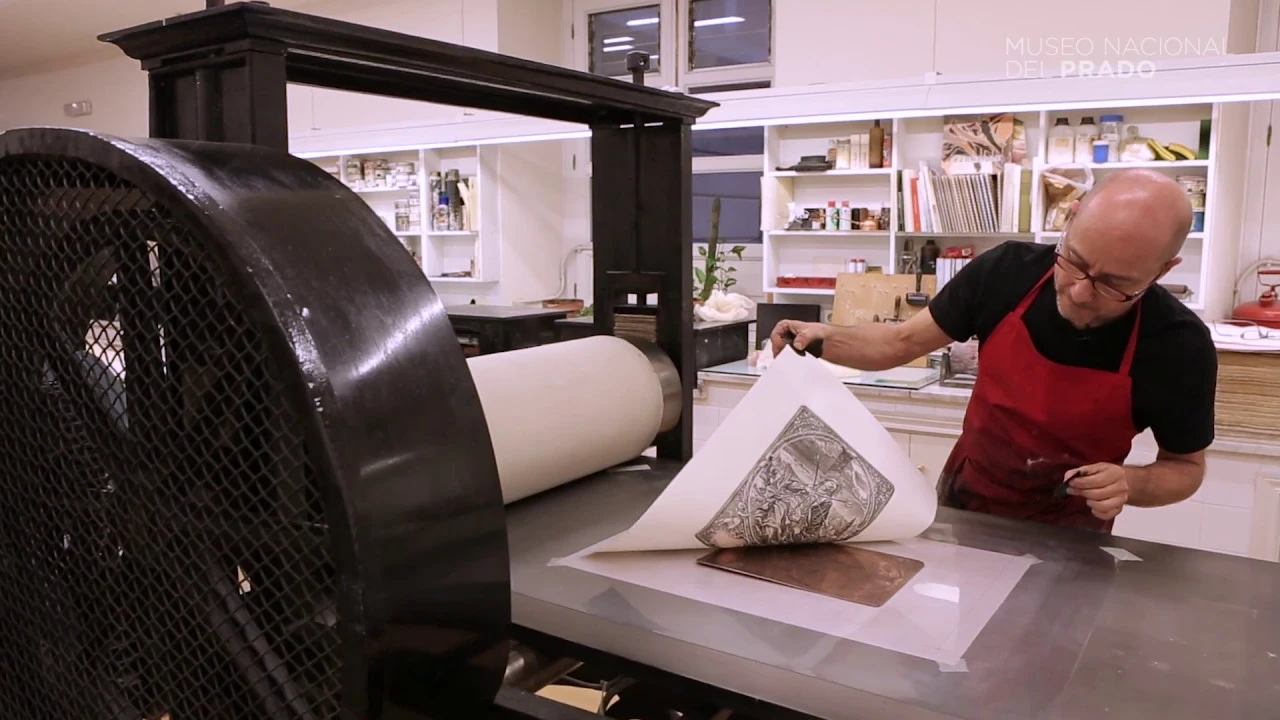
- Inked plate is placed over metal bed of press along with sheet of paper. When passed through cylinders, pressure causes ink to adhere to paper.
- Press blankets, thick cloths, are used to reduce pressure of upper cylinder and prevent splitting of plate or paper.
- After passing through the press, the printed image is carefully removed from the paper. This is the final result of the printing process.
The Importance of Drying Prints
This section highlights the importance of allowing prints to dry for at least 10 days to avoid damaging them.
- Prints are made on damp paper, and since ink is still wet, they need time to dry.
- In old printing studios, different workmen specialized in inking, printing, and preparing the paper.
No further sections were provided in the transcript.