LA ÉPOCA DORADA DE HOLLYWOOD | Historia del Cine
Introduction to Hollywood and its Popular Genres
This section provides an introduction to the golden age of Hollywood and discusses the most popular genres in American cinema.
The Rise of Hollywood as a Film Industry
- Hollywood became the most important film industry in the world, combining art and business.
- Good directors from different backgrounds were hired to maximize film quality.
- The classic narrative style established by "The Birth of a Nation" in 1915 influenced all Hollywood films.
Popular Genres in the 1930s
- In the 1930s, comedies, musicals, and gangster films dominated Hollywood.
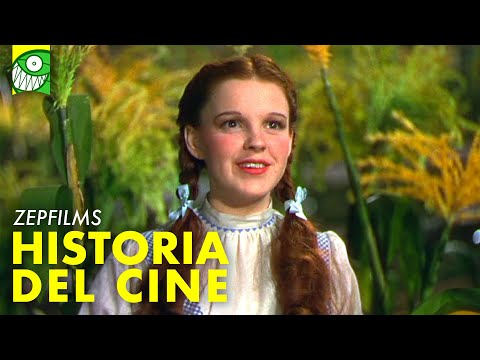
- Two iconic films released in 1939 were "The Wizard of Oz" and "Gone with the Wind."
- The outbreak of World War II in 1939 led to war-related films and propaganda.
Westerns and Film Noir
- Westerns represent the quintessential American genre, depicting the conquest of the West during the 19th century.
- John Ford became synonymous with western films, directing numerous masterpieces like "Stagecoach" (1939).
- Film noir, also known as crime or detective films, emerged during this period and reflected real-life events.
The Western Genre
This section focuses on the Western genre's significance in American cinema and its connection to historical context.
Characteristics of Western Films
- Westerns symbolize a specific period in U.S. history - the frontier era and westward expansion.
- They feature tough characters navigating a lawless environment where everything is yet to be established.
- Natural landscapes play a crucial role, particularly Monument Valley, which became synonymous with western movies.
John Ford's Influence on Western Films
- John Ford was a renowned director who dedicated himself primarily to westerns.
- His identification with the genre was so strong that he introduced himself as "John Ford, and I make westerns."
- Ford's films showcased rugged characters with a sense of honor and presented stunning natural landscapes.
Notable Western Films
- Some of John Ford's notable western films include "Stagecoach" (1939), "The Searchers" (1956), and "The Man Who Shot Liberty Valance" (1962).
- Monument Valley served as a backdrop for many iconic scenes in these films.
- Other filmmakers also made significant contributions to the western genre during this period.
Other Directors and Classic Western Films
This section explores other directors who made significant contributions to the Western genre during Hollywood's classic era.
Anthony Mann and James Stewart Collaborations
- Anthony Mann, initially an actor, became a director known for his collaborations with James Stewart.
- They worked together on five western films, including "Winchester '73" (1950) and "The Man from Laramie" (1955).
Classic Western Film: High Noon
- "High Noon" (1952) is considered one of the pinnacle western films of the classic era.
- The film tells the story of a sheriff seeking help from townspeople against vengeful outlaws but being abandoned, reflecting political events in Hollywood during McCarthyism.
John Ford's Non-Western Films
- John Ford also directed non-western films that incorporated elements from the genre.
- Notable examples include "How Green Was My Valley" (1941) and "The Quiet Man" (1952).
Conclusion
Hollywood's golden age witnessed the rise of various genres, with Westerns becoming synonymous with American cinema. Directors like John Ford and Anthony Mann left an indelible mark on this genre. The historical context of the frontier era and westward expansion provided a backdrop for these films, showcasing rugged characters and breathtaking natural landscapes. Other genres like film noir also gained prominence during this period.
Film Noir and its Origins
This section discusses the origins of film noir, a genre of dark crime films that emerged in the 1940s and 50s. It explores how the term "film noir" was coined and its connection to the detective genre.
Film Noir Defined
- Film noir refers to dark crime films made in the 1940s and 50s.
- The term was coined by French journalist Nino Frank.
- Raymond Borde and Etienne Chaumeton's essay "Panorama du film noir américain" helped define the genre.
- Film noir is not strictly a subgenre of detective stories but focuses on ambiguous characters in unpredictable and decadent settings.
Characteristics of Film Noir
- Film noir features male protagonists on the margins of the law, femme fatales who lead them astray, corrupt cities, and themes of survival.
- It often includes elements like alcohol, tobacco, and distinctive black-and-white cinematography.
- Many film noirs were influenced by literature from authors like Raymond Chandler, James M. Cain, and Dashiell Hammett.
Influential Filmmakers
- Fritz Lang, known for his work in German Expressionism, brought his experience to Hollywood and directed notable film noirs such as "Fury" and "The Woman in the Window."
- Orson Welles' groundbreaking film "Citizen Kane" incorporated expressionistic lighting techniques and innovative storytelling methods.
Pioneers of Film Noir
This section highlights key filmmakers who made significant contributions to the film noir genre.
Fritz Lang
- Fritz Lang applied his expertise in German Expressionism to create dark and complex characters through shadows and chiaroscuro lighting.
- His films like "M" (1931) and "The Big Heat" (1953) showcased his mastery of the genre.
Orson Welles
- Orson Welles, known for his radio adaptation of "War of the Worlds," directed the influential film "Citizen Kane" (1941), which revolutionized cinematic language.
- He used expressionistic lighting, unique camera angles, voice-over narration, flashbacks, and nonlinear storytelling techniques.
Alfred Hitchcock
- Alfred Hitchcock made notable contributions to film noir with movies like "Shadow of a Doubt" (1943) and "Strangers on a Train" (1951).
- His films featured ambiguous and sometimes lethal characters, creating ominous atmospheres.
Billy Wilder
- Billy Wilder excelled in various genres but made a significant impact on film noir with movies like "Sunset Boulevard" (1950).
- His films often explored dark themes and featured complex characters.
John Huston and Humphrey Bogart
This section focuses on director John Huston and actor Humphrey Bogart, who collaborated on several iconic film noirs.
John Huston's Westerns
- John Huston directed western films such as "Red River," "Rio Bravo," "Rio Lobo," and "El Dorado."
- Unlike other directors like John Ford, Huston delved into character development beyond just the protagonist.
Humphrey Bogart and Lauren Bacall
- Humphrey Bogart and Lauren Bacall formed one of the most legendary couples in Hollywood.
- They starred together in film noirs like "To Have and Have Not" (1944) and "The Big Sleep" (1946).
Bogart's Versatility
- Besides his work in film noir, Humphrey Bogart excelled in gangster films ("Scarface"), comedies ("The Adorable Cheat"), adventure films ("Only Angels Have Wings"), musicals ("Gentlemen Prefer Blondes"), and even science fiction and horror ("The Thing from Another World").
Conclusion
This section concludes the discussion on film noir, highlighting the European influence on American filmmakers and the versatility of directors like John Huston and actors like Humphrey Bogart.
European Influence
- Directors like Fritz Lang, Alfred Hitchcock, and Billy Wilder brought their European sensibilities to Hollywood.
- Their disillusionment with life in Europe resonated with the works of authors like Raymond Chandler and James M. Cain.
Versatility of Filmmakers
- John Huston successfully ventured into various genres, including westerns and film noir.
- Humphrey Bogart showcased his talent across different genres, leaving a lasting impact on Hollywood.
The transcript provided is in Spanish. The summary has been translated into English for clarity.
The Golden Age of Hollywood and the Creation of the Major Studios
This section discusses the elements of the Golden Age of Hollywood, including films like "War of the Worlds" and "Bold Cowboys. Detectives in Trouble. Duels." It also explores how Hollywood became the most important industry by hiring talented directors from different parts of the world and establishing a classic narrative style.
The Elements of the Golden Age
- Films during this era featured elements such as war, daring cowboys, audacious detectives, desirable but dangerous women, and captivating landscapes.
- Hollywood consolidated itself as the most important industry by hiring talented directors from various backgrounds who contributed to maximizing its success.
- A classic narrative style was established that became a standard for all movies.
Film Genres in the 1930s
- Comedies, musicals, and gangster films were predominant genres during this period.
- Notable films from this time include "The Wizard of Oz" and "Gone with the Wind."
Impact of World War II on Hollywood
- World War II had a significant impact on Hollywood from 1939 to 1945.
- After the attack on Pearl Harbor, the United States actively intervened in the war.
- Hollywood produced films that depicted events happening overseas or served as propaganda.
Westerns and Film Noir
- Westerns and film noir gained prominence during this era.
- Westerns focused on two main themes: the conquest of the West during the 19th century and frontier life where everything was yet to be established.
- Los Angeles' proximity to natural landscapes made it an ideal location for western films.
John Ford's Influence on Westerns
- John Ford became synonymous with westerns and declared himself as "John Ford, I make westerns."
- He started his career in Hollywood as a director and made significant contributions to the genre.
- Some of his notable films include "Stagecoach," "The Searchers," and "The Man Who Shot Liberty Valance."
Other Directors in the Western Genre
- Anthony Mann, Budd Boetticher, and William A. Wellman were other directors associated with westerns.
- They collaborated with actors like James Stewart and Randolph Scott to create memorable films.
Film Noir: Dark and Ambiguous
- Film noir emerged as a genre characterized by dark and ambiguous themes.
- It did not always involve police or investigations but focused on morally complex characters.
- The genre explored topics such as crime, corruption, and betrayal.
Influence of Crime Fiction Writers
- Crime fiction writers like Raymond Chandler, James L. Cain, and Dashiell Hammett influenced film noir.
- Their books provided inspiration for Hollywood filmmakers who often hired them as screenwriters.
Fritz Lang's Contribution to Film Noir
- Fritz Lang was a pioneering filmmaker in the film noir genre.
- He applied his experience within Hollywood to create compelling films.
The Impact of World War II on Hollywood
This section explores how World War II affected Hollywood. It discusses the rise of film noir during this period and the impact of the Red Scare on the industry.
Rise of Film Noir
- World War II had a significant influence on the development of film noir.
- The term "film noir" was coined by journalists Raymonde Borde and Etienne Chaumeton to define this genre.
Characteristics of Film Noir
- Film noir focused on morally ambiguous characters rather than traditional detectives or police investigations.
- It delved into deeper issues such as crime, corruption, masculinity on the margins of the law, and femme fatales leading men astray.
Influence of Crime Fiction Writers
- Crime fiction writers like Raymond Chandler, James L. Cain, and Dashiell Hammett played a crucial role in shaping film noir.
- Their books provided source material for Hollywood filmmakers and some even became screenwriters themselves.
The Red Scare and Hollywood
- The Red Scare, fueled by the fear of communism, had a significant impact on Hollywood during the post-war period.
- Many actors and filmmakers were blacklisted and faced professional consequences.
- Some films during this time recycled scripts to avoid controversy.
The Creation of Major Studios
This section discusses how major studios were created in Hollywood by hiring talented directors from different parts of the world.
Hiring Talented Directors
- Major studios in Hollywood established their dominance by hiring skilled directors from various backgrounds.
- These directors contributed to maximizing the success of the industry.
Maximizing Success through Classic Narrative Style
- A classic narrative style was adopted by all movies during this era.
- This style became a standard for storytelling in Hollywood films.
New Section El lado de un film rupturista: El ciudadano, ópera prima de Orson Welles.
This section discusses the film "El ciudadano" (Citizen Kane), which is considered a groundbreaking work and the directorial debut of Orson Welles.
Film Rupturista: El ciudadano
- "El ciudadano" (Citizen Kane) is mentioned as a film that represents a rupture in the industry.
- It is noted as the directorial debut of Orson Welles.
- The significance and impact of "El ciudadano" are highlighted.
Timestamp provided at 0:08:02.
Turn any video into a summary like this
YouTube links, meetings, lectures. With transcripts, search, and chat.