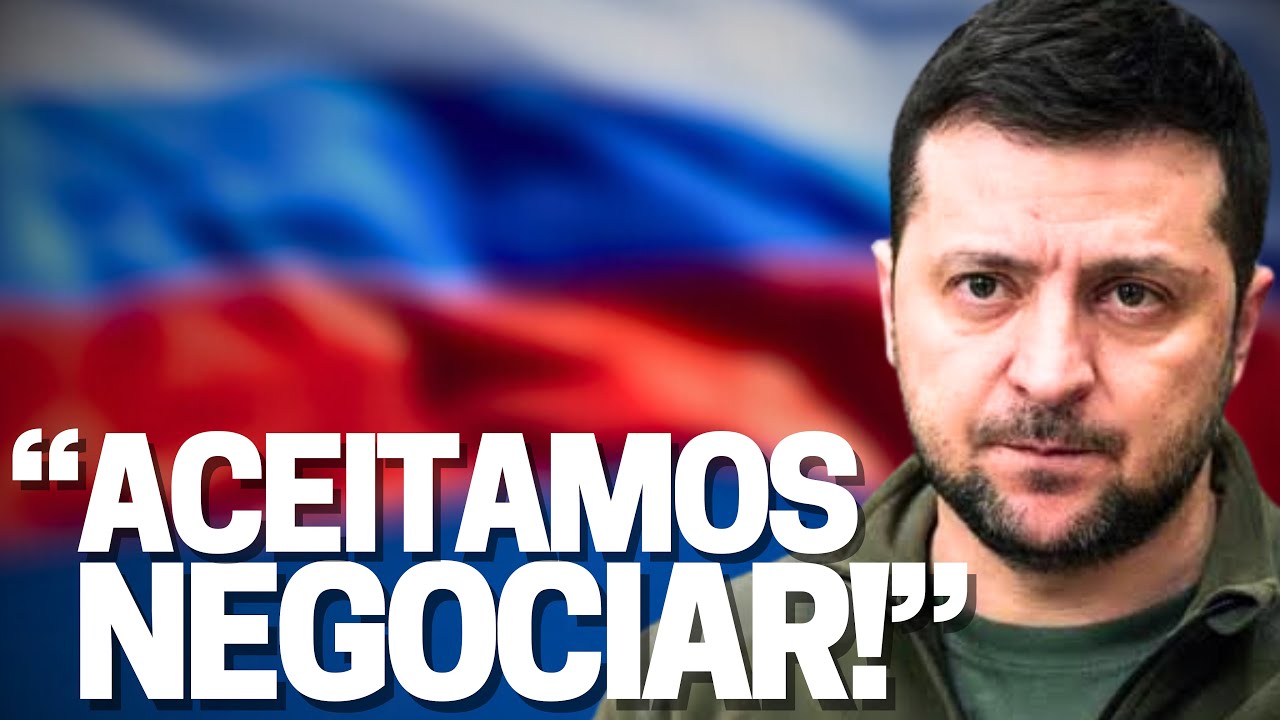
Novas condições para a paz! Ucrânia quer negociar! Zelensky aceita ceder Crimeia!?
New Section
In this section, Zelenskyy's potential shift in negotiation strategy with Russia is discussed, particularly regarding the Crimea issue and upcoming talks.
Zelenskyy's Negotiation Approach
- Zelenskyy acknowledges the possibility of negotiating with Russia without Crimea as a non-negotiable point.
- There is a discussion on Ukraine's potential change in stance towards negotiations, hinting at a willingness to engage with Putin post-summit in Switzerland.
- Zelenskyy emphasizes the need for US long-range missiles and expresses concerns over reduced military capabilities without US support due to political disputes.
New Section
The perspectives on Ukraine's military situation and international support are explored, including Elon Musk's comments and EU assistance.
Military Situation and International Support
- Elon Musk criticizes Zelenskyy for not negotiating earlier with Russia due to disparities in military capabilities.
- Despite EU infrastructure aid, there is a trend of Russian territorial gains in Ukraine, posing challenges for Ukrainian forces.
New Section
The evolving negotiation conditions between Ukraine and Russia are analyzed, focusing on territorial claims and peace talks.
Evolving Negotiation Conditions
- Zelenskyy's initial demands for Russian troop withdrawal from Ukrainian territories since 2014 are discussed.
New Section
In this section, the speaker discusses Ukraine's potential involvement with Moscow post the Switzerland Summit and emphasizes the importance of Zelenski's Peace formula. The conversation also touches upon India's role in geopolitics, particularly within the BRICS framework.
Ukraine's Relations with Moscow and India
- Ukraine may engage with Moscow after the Switzerland Summit but stresses voting on Zelenski's Peace formula.
- India, an emerging nation aspiring for a permanent seat on the UN Security Council, is viewed as geopolitically favorable alongside Brazil and Turkey.
- India is perceived neutrally by both Russia and Western powers, making it a crucial voice in global negotiations.
- Kuleba suggests that Indian support for peace could influence other nations to follow suit.
New Section
This segment delves into the ongoing conflict between Russia and Ukraine, exploring the likelihood of war resolution based on geopolitical analyses rather than moral considerations.
Geopolitical Analysis of Russia-Ukraine Conflict
- Unlikelihood of war resolution due to both sides' belief in potential victory.
- Discussion shifts from morality to geopolitical analysis regarding military strategies employed by both parties.
- Ukraine shows willingness to negotiate independently due to skepticism towards US assistance in regaining territories.
New Section
The discussion extends to Ukraine's negotiation stance, including considerations around Crimea and recent political maneuvers amidst escalating tensions.
Negotiation Strategies and Political Maneuvers
- Ukraine displays readiness for negotiation amid doubts about US military support efficacy.
- Speculation arises about Ukraine potentially conceding Crimea for peace talks, prompting varied reactions.
New Section
Insights are shared regarding Ukrainian elections under martial law conditions and Israel's proposal for Arab coalition intervention in Gaza.
Ukrainian Elections and Israel's Proposal
- Zelenski cancels elections during wartime to boost popularity amid significant human losses.
- Israel proposes Arab coalition intervention in Gaza for humanitarian aid access under US-Israel approval.
New Section
The discourse shifts towards Palestinian rejection of proposed alliances due to concerns over indirect governance implications by external powers.
Palestinian Response to Proposed Alliances