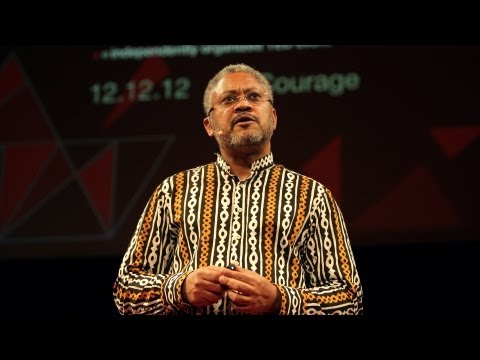
Afra Raymond: Three myths about corruption
Introduction to Corruption
In this section, the speaker introduces the topic of corruption and highlights the need to understand its true nature. The speaker challenges common misconceptions about corruption and emphasizes its significance as an economic crime.
Understanding Corruption
- Corruption is defined as the abuse of a position of trust for personal gain or benefitting friends, family, or financiers.
- The speaker acknowledges that society has been miseducated about corruption and urges people to have the courage to admit this in order to bring about change.
- One common myth is that corruption is not considered a serious crime when discussing issues such as crime rates in different areas or when government officials address security concerns.
- However, corruption is indeed a crime with significant economic implications as it involves the misappropriation of taxpayers' money.
- The speaker notes that corruption exists not only in the public sector but also in the private sector, where bribery and under-the-table dealings are prevalent.
Historical Context of Corruption
This section provides historical context by referring to Trinidad and Tobago's experience with corruption during a period of economic growth fueled by oil revenues. The speaker highlights past government-to-government arrangements and their consequences.
Petrodollars and Government-to-Government Arrangements
- In the early 1970s, Trinidad and Tobago experienced a significant increase in wealth due to rising global oil prices.
- This period was marked by government-to-government arrangements with countries like the United States, Britain, France, etc., for large-scale development projects.
- Notably, even the Central Bank building where the speech takes place was part of these arrangements known as Twin Towers.
- Due to excessive abuses within these arrangements, a commission of inquiry was appointed in 1982 (Ballah Report), revealing that two out of every three dollars spent were wasted or stolen.
- This demonstrates that corruption is not a small problem but a pervasive issue with severe financial implications.
Recent Constitutional Outrage
The speaker discusses a recent constitutional controversy in Trinidad and Tobago known as the Section 34 fiasco. This event highlights the seriousness of corruption and its impact on the country's institutions.
The Section 34 Fiasco
- Four months prior to the speech, Trinidad and Tobago experienced a constitutional outrage referred to as the Section 34 fiasco.
- This involved the suspicious passage of a law at an opportune time to free certain suspects known as the Piarco Airport accused.
- The speaker labels this incident as a plot to pervert Parliament, emphasizing how corruption can infiltrate even the highest institutions of a country.
- Massive protests ensued, including international complaints from entities like the American embassy, leading to swift reversal and repeal of the law.
- However, it exposed how Parliament was outwitted due to suspicious circumstances surrounding its passage.
Due to limitations in available timestamps, some sections may be shorter than others.
New Section
The speaker discusses the case of the Piarco Airport accused and their accusations related to bid-rigging, suspicious activity, and corrupt practices in the construction of an outdated airport project.
Accusations against Piarco Airport accused
- The Piarco Airport accused were involved in bid-rigging, suspicious activity, and corrupt practices during the reconstruction of an outdated airport project.
Tracing offshore bank accounts
- Out of the $1.6 billion cost of the airport project, one billion dollars has been traced to offshore bank accounts. This revelation raises concerns about taxpayer money being located in offshore accounts.
Parallel with Occupy Wall Street movement
- The speaker recalls a sign seen during the Occupy Wall Street movement that read, "If you're not outraged, you haven't been paying attention." This resonates with the current situation and highlights the need for public awareness and outrage regarding corruption and financial misconduct.
Construction sector corruption
- The speaker mentions their involvement in leading a not-for-profit organization focused on developing a new public procurement system to ensure transparency and accountability in how public money is transacted. They also mention their campaign for transparency around the bailout of CL Financial, which collapsed in January 2009.
Lack of context in comparing bailouts
- The speaker emphasizes that Trinidad and Tobago's situation is unique compared to other places like Wall Street or Europe when it comes to bailouts. They highlight that all creditors were bailed out beyond their statutory entitlements, which is unprecedented globally. Further investigation into this generosity is needed.
Freedom of Information Act limitations
- The speaker shares their experience with making a Freedom of Information application to the Ministry of Finance but notes that the Central Bank is immune from the provisions of the Freedom of Information Act. This raises concerns about transparency and accountability in accessing information related to financial matters.
New Section
In this section, the speaker discusses the lack of transparency and accountability in the government's financial dealings. They highlight the need for clarity on the figures being relied upon by the Minister of Finance and question who has been repaid as creditors of a certain group.
Lack of Transparency in Financial Matters
- The speaker raises concerns about not being able to see the accounts and figures that the Minister of Finance is relying on.
- They compare it to a joke where they want whatever drink the Minister is having, indicating a lack of transparency.
- The speaker emphasizes the importance of knowing who are the creditors that have been repaid with 24 billion dollars of public money.
New Section
In this section, the speaker provides context regarding an individual who used Freedom of Information Act to expose a secret scholarship scandal. They draw parallels between that case and their current request for disclosure about 24 billion dollars.
Contextualizing Disclosure Requests
- The speaker mentions an individual who made a career out of using Freedom of Information Act to advance their political cause.
- They refer to a previous case known as the Secret Scholarship Scandal involving 60 million dollars in government money dispersed through undisclosed scholarships.
- The speaker questions why it was considered right and proper to use Freedom of Information Act for disclosing 60 million dollars but not for disclosing 24 billion dollars.
New Section
In this section, the speaker highlights their request for information regarding directors' filings under Integrity in Public Life Act. They express concern over public officials not filing and how it undermines integrity and accountability.
Lack of Filings Under Integrity in Public Life Act
- The speaker mentions their request for information about directors' filings under Integrity in Public Life Act.
- They reveal that public officials are not filing as required by the act, and the Minister of Finance has not taken any action to enforce it.
- The speaker emphasizes that the basic safeguards of integrity, accountability, and transparency have been discarded.
New Section
In this section, the speaker defines the current situation as the single largest expenditure in the country's history and highlights the lack of accountability and transparency. They express their determination to continue pressing for resolution.
Lack of Accountability and Transparency
- The speaker describes the current situation as the single largest expenditure in the country's history.
- They assert that when public money is spent without accountability and transparency, it equates to corruption.
- The speaker expresses their commitment to continue working towards resolution, even if it means going to court personally.
New Section
In this section, the speaker introduces Alaveteli.com as a platform for open databases for Freedom of Information applications. They also mention IPaidABribe.com as an important website to combat government corruption.
Open Databases for Freedom of Information
- The speaker introduces Alaveteli.com as a platform for open databases where individuals can share their Freedom of Information applications and responses.
- They emphasize the importance of building a collective database and understanding to progress further.
- The speaker recommends IPaidABribe.com from India as an essential website to visit in order to combat corruption.
Timestamps are provided at appropriate points throughout each section.
Turn any video into a summary like this
YouTube links, meetings, lectures. With transcripts, search, and chat.