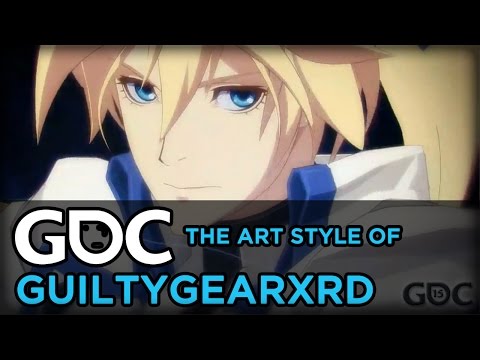
GuiltyGearXrd's Art Style : The X Factor Between 2D and 3D
Guilty Gear Exard: Art Style and Development
Introduction to the Session
- The speaker expresses gratitude for the audience's presence and interest in discussing the art style of Guilty Gear Exard.
- The focus will be on the challenges of creating a 3D game that mimics a 2D aesthetic, particularly regarding character art and animation.
Audience Engagement
- The speaker surveys the audience about their familiarity with the game, revealing a significant number have played it.
- Questions posed include interest in anime and non-photorealistic rendering, indicating a diverse audience background.
Speaker Background
- Junior Christopher Motomura introduces himself as a technical artist at ARC System Works with 13 years of experience across various roles including game design and localization.
- His role in Guilty Gear Exard involved lead character development, focusing on shaders, rigging, and overall character appearance.
Transition from 2D to 3D
- Guilty Gear Exard marks a significant shift from traditional 2D sprites to a fully realized 3D environment while retaining classic charm.
- The goal was to maintain the look and feel of previous titles while enhancing visual fidelity through higher resolutions.
Artistic Choices
- The art style is heavily influenced by Japanese anime traditions, utilizing custom cell shaders designed specifically for this project.
- Transitioning to 3D allowed for improved resolution (1080p for PS4), which enhanced gameplay visuals significantly compared to older sprite-based games.
Dynamic Gameplay Experience
- A key advantage of using 3D graphics is dynamic camera angles during gameplay, providing dramatic perspectives during special attacks and finishing moves.
- Positive feedback from audiences has validated this new approach, contributing to the speaker's opportunity to present at GDC.
Rationale Behind Art Style Choice
- The decision to move away from traditional sprites was influenced by existing competition within their own franchise (BlazBlue) which also uses high-quality sprites effectively.
- Cell-shaded 3D was chosen after exploring various styles; it offered potential benefits like dynamic cutscenes while maintaining an anime aesthetic.
Challenges in Development
- Achieving a convincing 2D look in a 3D space presented significant challenges; extensive research into both art forms was necessary.
Game Development Insights: Engine Choices and Character Design
Choosing the Right Engine
- The team faced a strict deadline, making it impossible to build an engine from scratch. They opted for Unreal 3 due to its artist-friendly design and stability as it was nearing the end of its life cycle.
- Unreal 4 was on the horizon, but the well-debugged nature of Unreal 3 provided a reliable foundation for development. This choice allowed for significant customization with full source code access.
Tools for Quality Production
- Autodesk Softimage played a crucial role in modeling and animation flexibility, enabling continuous asset improvement throughout production without destructive workflows.
- The built-in Shader editor facilitated experimentation with cell shading, which was essential for achieving the desired visual style. Without these tools, maintaining quality would have been challenging.
Character Design Principles
- Characters were identified as the most critical assets; their design needed to resonate with 2D aesthetics while appealing to audiences. The principle of "killing everything 3D" guided artists in avoiding any unintended three-dimensional appearances in character models.
- Achieving a convincing 2D look required handcrafting by artists since mathematical calculations alone could not deliver satisfactory results; every visual element had to be an intentional choice rather than a mere calculation outcome. Instant feedback through real-time Shader previews was vital in this process.
Real-Time Shading and Model Details
- Artists utilized real-time shading during model creation, allowing them to visualize how changes would appear in-game without needing exports, ensuring that modifications aligned with game aesthetics. Models averaged around 40,000 triangles to maintain detail during close-ups in cutscenes.
- Unique aspects of character models included being texture-independent; instead of relying on traditional textures like normal maps, they used vertex properties (normals, colors) which are resolution-independent and suitable for high-detail scenarios like extreme close-ups.
Challenges of Cell Shading
- Cell shading presents challenges due to its binary lighting approach—either lit or unlit—which requires precise control over light distribution; even minor surface noise can disrupt visual coherence significantly. Artists must carefully manage surface normals within shaders to achieve desired effects effectively.
Understanding Normals and Shading in Cell Shading
The Challenge of Normals in Cell Shading
- Normals are crucial for achieving the best results in cell shading; inconsistencies can lead to noticeable artifacts.
- Automatic normal calculations often do not align with the artist's intentions, making manual control necessary.
- Handcrafted normals on character faces are essential for a clean anime look, as demonstrated by comparing edited and unedited models.
Intentionality in Artistic Expression
- Reflecting the artist's intention is key to stylized art, particularly regarding color selection.
- In anime, colors are deliberately chosen to convey material properties and character traits, rather than simply applying ambient colors.
Color Dynamics in Anime Art
- The interplay of lit and shaded colors communicates various characteristics beyond just material appearance.
- Shades can indicate material solidity; lighter shades suggest more light transmission through less solid materials.
Shader Implementation Techniques
- Two textures are utilized: a base texture for lit areas and a tint texture for shaded areas, allowing artists full control over color choices.
- Textures serve as lookup tables without intricate details since most information resides within the mesh itself.
Line Work Techniques in Cell Shading
Importance of Lines in Visual Style
- Lines play a significant role in cell shading; they define boundaries between surfaces much like traditional manga styles.
Outline Creation Methods
- An inverted hull method is used to create outlines around characters, generating darker polygons expanded along normals for effective outlining.
- This method allows real-time previewing within modeling software, providing better control over line aesthetics compared to post-processing effects.
Inner Line Strategies
- Different techniques are required for inner lines on surfaces since the inverted hull method does not apply effectively here.
Addressing Resolution Challenges
- Drawing lines directly onto textures poses resolution limitations that could lead to pixelation during close-ups.
Art Style Development in 3D Animation
Texture and UV Mapping
- The initial appearance of the model may seem acceptable from a distance, but it fails to hold up under close scrutiny.
- UV mapping allows for precise control over line width at each U point, resulting in sharp edges without noticeable pixelation.
- Texture filtering enhances the visual quality both up close and from a distance, contributing to a clean aesthetic.
Animation Techniques
- The team adopted "Limited Animation," a style prevalent in Japanese animation that uses fewer frames to create a 2D illusion.
- Full animation was initially explored but deemed unsuitable as it made the visuals appear more 3D rather than maintaining a 2D feel.
- Each frame is treated as a keyframe, akin to stop-motion animation, allowing for distinct poses that reflect traditional sprite work.
Rigging and Bone Structure
- A complex rig with approximately 500 bones per character was developed to facilitate detailed frame-by-frame animations.
- Scale animation techniques were implemented manually due to engine limitations, enabling exaggerated actions and dynamic movements.
Imperfection in Animation
- To mimic 2D animation effectively, mesh deformation at every keyframe introduces imperfections that prevent the model from appearing rigidly 3D.
- This approach enhances expressiveness by breaking perfect transitions between frames, making each keyframe distinctive.
Artistic Intent and Workflow
- The principle of prioritizing expressiveness over accuracy mirrors traditional 2D practices; this philosophy guided their transition into 3D.
- A comparison between full and limited animation highlights smoother motion versus clearer poses; limited animation was chosen for its clarity.
Conclusion on Artistic Approach
- The success of the project stemmed from leveraging existing techniques while emphasizing artist intention throughout the workflow.
Game Development Insights and Character Creation Process
Overview of the Game Development Team
- The speaker emphasizes the strength of their development team, describing it as a "dream team" with the right skill sets for the project.
- Acknowledges that dedication and hard work from all involved were crucial to the project's success.
- Highlights strong support from the fan base as a significant factor in making their game possible.
Exploration of Non-Photorealistic Rendering
- The speaker advocates for more studios to explore non-photorealistic rendering, suggesting that there is untapped potential in this area.
- Argues that while photorealism is popular, it is not the only viable approach and encourages innovation beyond conventional methods.
Character Creation Process
Timeframe and Resources
- Responding to a question about character creation, it's noted that each character takes approximately two months for modeling and another two months for animation.
- Clarifies that three or four modelers typically work on character models simultaneously.
Unique UV Layout Techniques
- Discusses how unique UV layouts are created based on 2D concept art, emphasizing individual design considerations for each character's texture.
- Describes initial stages of UV layout as similar to other projects but highlights specific techniques used to align UV maps effectively.
Animation Techniques and Challenges
Key Frame Considerations
- Addresses concerns regarding interpolation between keyframes leading to an artificial look; discusses balancing frame counts in animations.
- Mentions efforts to maintain quality while managing labor intensity in animation processes.
Comparison with Other Games
- Compares labor intensity of their models with sprite-based games like "BlazBlue," noting differences in complexity due to facial expressions being added post-modeling.
Technical Aspects of Animation
Normals and Camera Movement
- Explains use of separate normals for hull polygons versus shading normals during extraction processes.
Limited Animation Choices
Character Animation and Performance Optimization in Guilty Gear
Model Adjustments and Character Details
- The speaker discusses the need to swap out models for character features, specifically mentioning Millia's hair, which requires significant time investment.
- Characters like Zato and Millia utilize complex morphing animations that necessitate multiple meshes to achieve desired shapes due to the limitations of a single mesh.
Performance Challenges and Shader Management
- Achieving solid performance was manageable on PS4 with 60 FPS due to fewer characters on screen; however, adjustments were made for PS3 by reducing shader complexity and polygon count.
- Textures are designed efficiently, allowing low-resolution textures (one 2K and two 1K per character) without compromising visual quality.
Specular Highlights and Texture Usage
- The speaker clarifies that no separate texture is used for specular highlights; instead, they derive from base color mixing with tint color.
- Normals used in shading calculations also apply to specular effects, ensuring consistency across visual elements.
Effects Animation Techniques
- Most effects are animated particles rather than static images; hit effects use a series of 2D images switching every frame for animation realism.
- Smoke effects during character jumps are created using a brute-force method where each frame is modeled separately, leading to effective results despite initial doubts about the approach.
Software Utilization for Modeling
- The speaker emphasizes the advantages of using XSI software over others like Maya or 3D Studio Max due to its flexibility in model editing without needing extensive rework on skins or UV maps.
Lighting Solutions in Character Design
- Each character has individual lighting separate from global stage lighting; shadows cast by characters rely on pre-rendered background shadows rather than dynamic global lighting.
Lighting Techniques in Fighting Games
Fixed Lighting Set Design
- The lighting set remains static across all stages, intentionally designed to maintain a consistent impression of actions. Changing the shape of shadows from stage to stage could mislead players regarding the action's context.
Limitations for Other Game Genres
- The customized lighting approach is specifically tailored for fighting games with fixed cameras, making it unsuitable for genres like RPGs that require more dynamic global or local lighting interactions.
Use of Vertex Color Information
- The game utilizes vertex color information extensively for outlines and character lighting. This involves using RGBA channels effectively to manage both outline definition and lighting thresholds.
Normals Editing Considerations
- Currently, normals are kept at unit length during editing to avoid unpredictability in shading effects. Non-unit normals were considered but deemed too complex to control effectively.
Texture Sampling Techniques
- Textures are sampled without treating them as traditional images; point sampling is used primarily, avoiding mipmaps due to potential blurring issues at distance views. Texture filtering is applied in shaders for better visual quality.
Self Shadowing Challenges
- Self-shadowing was initially considered but ultimately not implemented due to its uncontrollable nature, especially with characters having large hair or coats. Instead, shadow areas are manually defined through vertex painting techniques.
Future Improvements on 2D Aesthetics