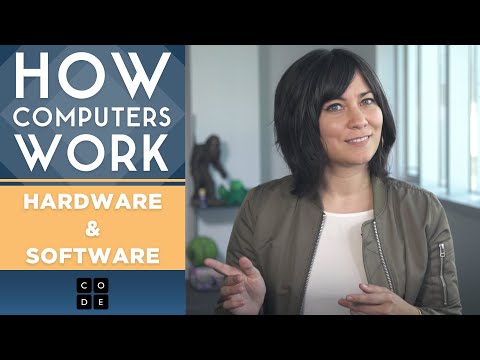
How Computers Work: Hardware and Software
Introduction
In the introduction, two professionals, Erica Gomez and Jerome Holman, introduce themselves and their roles in the tech industry.
Erica Gomez - Engineering Manager at Amazon
- Erica Gomez is an engineering manager at Amazon.com.
- She highlights the perk of being able to bring her dog to work.
- Describes her role as ensuring software delivery while her dog naps under her desk.
Jerome Holman - Program Manager on Team Xbox
- Jerome Holman works as a Program Manager on Team Xbox.
- He explains his role in integrating hardware and software for Xbox games.
- Discusses the components of computing devices like circuits, chips, and wires.
Hardware and Software Interaction
This section delves into how hardware and software interact within a computer system.
Central Processing Unit (CPU) Functionality
- The CPU controls all parts of the computer.
- It comprises smaller parts for specific tasks like math and logic operations.
- Receives commands to execute tasks using different circuits.
Binary Code Execution
- Commands such as "add" or "store" are executed by the CPU using binary code.
- Binary commands represent simple instructions stored in memory.
- Sequential execution of binary commands forms basic computer programs.
Programming Languages and Software Development
Exploring programming languages, software development, and their impact on computer functionality.
Evolution of Programming Languages
- Binary code is fundamental but impractical for modern use.
- Contemporary programming languages resemble English for ease of coding.
- High-level commands are translated into binary instructions understood by the CPU.
Multitasking with Software
- Computers run multiple software simultaneously for various tasks.
- Operating systems manage program execution on CPUs efficiently.
Operating System Functions
Understanding the critical role of operating systems in managing hardware resources and software applications.
Operating System Management
- The operating system controls hardware access for software programs.
- Facilitates program installation and memory allocation.
- Regulates program execution by allocating CPU resources effectively.
Multitasking Mechanism
- Enables seamless switching between multiple programs sharing CPU time.
- Ensures efficient utilization of computer resources through task prioritization.
Computer Intelligence
Highlighting that human interaction is essential for harnessing a computer's potential intelligence effectively.
Human-Centric Computer Utility
- Computers possess vast capabilities but require human input to be useful.
Turn any video into a summary like this
YouTube links, meetings, lectures — with transcripts, search, and chat.