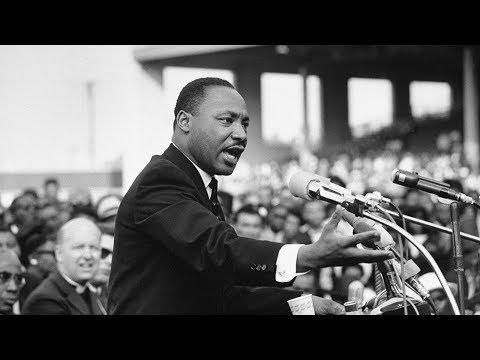
How Martin Luther King Jr. Changed the World | Full Documentary
America: A Dream and Its Reality
The Essence of the American Dream
- America is portrayed as a dream where individuals of all races and nationalities can coexist harmoniously. This ideal is encapsulated in the belief that "all men are created equal."
Historical Context of Racial Inequality
- For over 300 years, African Americans were subjected to slavery, with their rights and freedoms denied even after the Civil War. The struggle for true freedom continued well into the 20th century.
- African Americans faced systemic barriers preventing them from accessing quality education, decent jobs, and voting rights, resulting in a racially segregated society.
Martin Luther King Jr.'s Early Life
- Martin Luther King Jr., born in Atlanta in 1929 to a family of preachers, was encouraged to express himself through language and music. He excelled academically, entering Morehouse College at just 15 years old.
- By age 18, he was ordained as a minister and pursued graduate studies in theology at Crozer Theological Seminary and Boston University, where he met Coretta Scott. They married in 1953.
Influences on King's Philosophy
- While studying in Boston, King was inspired by Mahatma Gandhi's nonviolent resistance against British rule in India, which emphasized mass boycotts and civil disobedience as effective means for social change.
The Montgomery Bus Boycott
- In December 1955, following Rosa Parks' arrest for refusing to give up her bus seat to a white passenger, King became president of the committee organizing a one-day boycott of Montgomery buses. This marked his emergence as a leader in the civil rights movement.
- King's first speech during this boycott called for active resistance against segregation while promoting love and compassion towards oppressors rather than violence. He believed that victory lay in maintaining nonviolence amidst adversity.
Challenges Faced by King
- Despite advocating for love over hate amidst threats against his life and family safety concerns were prevalent; he emphasized Jesus' teachings on loving one's enemies despite personal suffering caused by systemic oppression.
- King defined 'agape'—a selfless love seeking nothing in return—as essential for overcoming hatred and injustice within society; it reflects divine love operating through humanity's heart.
Dr. King's Journey in the Civil Rights Movement
Early Challenges and Nonviolent Philosophy
- Dr. King emphasizes love for all humanity, rooted in God's love, rather than personal preferences.
- Following his first arrest during the 1956 bus boycott, King advocates for nonviolence, quoting Jesus: "He who lives by the sword will perish by the sword."
- He distinguishes between hating evil deeds and loving individuals caught in oppressive systems.
Achievements of the Montgomery Bus Boycott
- The Montgomery bus boycott gains national attention; on November 13, 1956, the Supreme Court declares bus segregation illegal.
- In 1957, King co-founds the Southern Christian Leadership Conference (SCLC), promoting nonviolent resistance training among leaders.
Personal Struggles and Growth
- Throughout the late 1950s, King faces multiple arrests but views them as a proud stand against injustice.
- He articulates that seeking dignity and rights through nonviolent protest is a moral duty.
Violence Against King and International Influence
- In late 1958, King survives a stabbing incident while promoting his book "Stride Toward Freedom," highlighting societal hatred.
- His visit to India in early 1959 reinforces his belief in nonviolent resistance as essential for oppressed peoples globally.
The Rise of Student Activism
- By 1960, signs of oppression are evident; students in Greensboro challenge segregation through sit-ins at lunch counters.
- King's support for student movements marks a shift towards youth involvement in civil rights activism.
Political Landscape and Election Year Dynamics
- The civil rights movement gains momentum with student-led initiatives under organizations like SNCC (Student Nonviolent Coordinating Committee).
- King critiques America's failure to uphold equality principles while emphasizing that all men are created equal.
Presidential Elections and Legislative Hopes
- In the pivotal election year of 1960, African Americans largely support John F. Kennedy over Richard Nixon due to hopes for civil rights progress.
- Despite Kennedy's narrow victory, comprehensive civil rights legislation remains slow due to conservative congressional opposition.
Civil Rights Movement: Key Events and Insights
The Freedom Riders and Early Resistance
- White individuals joined demonstrations against discrimination, supporting the Freedom Riders who traveled together by bus throughout the South to challenge segregation laws.
- In May 1961, Dr. King and his followers were trapped in a Montgomery church by white racists until federal marshals intervened under Attorney General Robert Kennedy's orders.
Legal and Moral Challenges
- While morality cannot be legislated, behavior can be regulated; laws can prevent violence even if they can't force love or acceptance.
- The admission of James Meredith as the first black student at the University of Mississippi led to riots resulting in two deaths, highlighting the escalating violence surrounding civil rights.
Birmingham: A Turning Point
- In 1963, Dr. King focused on Birmingham, Alabama, deemed "the most segregated city," planning visible demonstrations for equality.
- On April 12th, 1963, King and others marched despite police orders against demonstrations; mass arrests ensued including King's solitary confinement.
Confrontation with Law Enforcement
- Police Commissioner Bull Connor's aggressive tactics included using dogs and fire hoses against peaceful demonstrators, showcasing extreme resistance to civil rights efforts.
- The violent response was broadcast nationwide, revealing the stark contrast between nonviolent protestors and brutal law enforcement actions.
Impact of Media Coverage
- Dr. King's philosophy of nonviolence gained traction as Americans witnessed police brutality against peaceful protestors on television.
- During his imprisonment, King wrote "Letter from Birmingham Jail," emphasizing that justice delayed is justice denied—a powerful message about urgency in civil rights activism.
Children's Marches and Federal Response
- On May 2nd, 1963, a large group of children joined protests; many were arrested using buses originally meant for transporting them to segregated schools.
- Following violent confrontations with authorities during subsequent marches, President Kennedy recognized the need for significant civil rights legislation to address systemic injustices.
Civil Rights Movement: A Turning Point in American History
The Call for Action
- Dr. King emphasizes the need for a commitment to racial equality, stating that race should have no place in American life or law.
- In June 1963, civil rights leaders met with President Kennedy to plan a march on Washington, despite his concerns about its potential negative impact on the cause.
The March on Washington
- The historic march took place in August 1963, drawing hundreds of thousands of participants advocating for an end to discriminatory treatment of black Americans.
- Dr. King reflects on returning to Alabama and Mississippi with hope, believing they are moving towards freedom despite ongoing violence and suffering.
King's Vision and Impact
- At the march, Dr. King reminds attendees that their struggle is not over; he envisions a day when all people can unite regardless of race or religion.
- King's speech at the march is highlighted as one of the most significant orations in history, inspiring many Americans to feel free for the first time.
Violence and Tragedy
- Following the march, violence continued as a black church was bombed in Birmingham, resulting in the deaths of four young girls; King urged nonviolence among his followers.
- As President Kennedy committed to passing civil rights legislation, he was assassinated in Dallas, leaving a nation shocked and mourning both him and their lost hopes.
Reflections on Violence
- Dr. King mourned Kennedy's death but also pointed out that societal violence contributed to this tragedy; he emphasized that America had created an atmosphere where hatred thrived.
- He warned that such violence could lead to further tragedies within society if left unchecked.
Legislative Progress
- Under President Lyndon Johnson's leadership following Kennedy's assassination, there was renewed commitment to civil rights legislation despite initial resistance from Johnson himself.
- The Civil Rights Act of 1964 was passed as one of Johnson’s major achievements; it prohibited discrimination based on race and guaranteed voting rights for all male citizens.
Recognition of Leadership
- For his pivotal role in advancing civil rights, Dr. King was named Time magazine's Man of the Year in 1964 and became the youngest recipient of the Nobel Peace Prize later that year.
Civil Rights Movement: The Ongoing Struggle
Violence and Resistance in the Civil Rights Movement
- Despite the passage of the Civil Rights Act, violence against civil rights activists persisted, with bombings and murders occurring regularly in the South. Three civil rights workers were murdered in Mississippi in August 1964.
- A sheriff and six others were eventually found guilty of these murders, but only after Martin Luther King Jr. exposed a pattern of murder and conspiracy in Mississippi through media coverage. This brought national attention to the issue.
- Martin Luther King Jr.'s receipt of the Nobel Prize did not lead him to retire; instead, he continued his activism, being arrested during a demonstration in St. Augustine, Florida, in May 1964.
- King emphasized non-violence as a means to achieve justice without replacing one form of tyranny with another, asserting that black supremacy is as dangerous as white supremacy. However, some within the movement grew impatient with this approach.
Rising Tensions and New Leadership
- Malcolm X's message of black nationalism gained traction among those frustrated with King's nonviolent methods; new leaders like Stokely Carmichael and Bobby Seale called for more decisive action against ongoing injustices.
- In 1964, King faced violence from within his own community when he was assaulted by Black Muslims during an event in Harlem but remained committed to peaceful resistance and civil disobedience despite increasing challenges to consensus within the movement.
Voting Rights Campaign
- Following the Civil Rights Act, King's next major goal was securing full voting rights for African Americans; at that time, only one out of every hundred Black residents could register to vote due to discriminatory practices enforced by local officials.
- To highlight voting inequities in Alabama, King planned a march from Selma to Montgomery; authorities attempted to prevent this march which ultimately drew more attention to their cause after King's arrest following a voting rights demonstration.
Assassination Impact and Marches
- Malcolm X's assassination on February 21st, 1965 marked a pivotal moment for the militant faction of the civil rights movement; it intensified fears among whites regarding Black political power while galvanizing support for voting rights among African Americans nationwide.
- The attempt at marching from Selma met with violent police resistance resulting in arrests and even murder; however, each incident increased national focus on Selma's struggles for justice and equality under law.
Achievements and Future Focus
- Dr. King received numerous death threats yet remained resolute about continuing his fight for justice rather than compromising his principles; he prepared for another march aimed at presenting demands related to voting rights directly to Governor George Wallace amidst federal lobbying efforts by President Johnson for legislation supporting these rights.
- The successful march culminated at Alabama’s State Capitol where King addressed thousands about their collective struggle—this event significantly bolstered President Johnson’s push leading up to the signing of the Voting Rights Act on August 6th, 1965—a landmark achievement ensuring constitutional protections for African American voters across America.
- With this victory secured through relentless advocacy efforts alongside President Johnson’s administration support, King shifted focus towards broader issues such as poverty alleviation and peace initiatives both domestically and globally moving forward into subsequent years post-legislation success.
Moratorium on Racial Strife
Easing of Demonstrations
- The speaker suggests that in areas where there is compliance with the 1964 Civil Rights Act and the new voting bill, there may be a decrease in demonstrations.
Growing Problems and Increased Activism
- Conversely, in communities facing ongoing issues such as housing, jobs, and education, an increase in demonstrations is anticipated to draw attention to these problems. This activism aims to ensure that these issues are not ignored by broader society.
Dr. King's Actions in Chicago
Organizing the Poor
- In early 1966, Dr. King moved into a slum dwelling in Chicago with the goal of organizing poor communities—a significant shift for southern leaders focusing on northern issues for the first time.
James Meredith's March and Violence
Hostility Encountered
- James Meredith led a march through the South after integrating the University of Mississippi but was shot during this march, highlighting the violent backlash against civil rights efforts. Dr. King decided to continue Meredith's march despite encountering hostility from Black Power militants who favored violence over nonviolence.
The Watts Riots and National Tension
Escalation of Violence
- The Watts Riots resulted in 34 deaths and extensive property damage over five days, followed by riots in Detroit and Newark that left dozens dead and thousands homeless—indicating a nation on edge amid rising tensions.
King's Opposition to Vietnam War
Speaking Out Against Violence
- Amidst social unrest at home and U.S. involvement abroad, Dr. King felt compelled to speak out against America's actions in Vietnam despite warnings from advisors about potential alienation from allies within the civil rights movement. He emphasized that one cannot oppose violence domestically without addressing government-sanctioned violence abroad.
Call for Repentance
Acknowledging Past Wrongs
- Dr. King called for America to repent for its actions in Vietnam, urging young men considering military service to recognize their moral choices regarding participation in war—highlighting historical context around Vietnamese independence declared by Ho Chi Minh post-WWII before communism took hold.
Criticism Faced by King
Backlash from Mainstream Media
- Following his anti-war stance, Dr. King faced criticism from various sectors including mainstream media which questioned his leadership role; President Johnson felt personally betrayed due to his commitment to both civil rights legislation and military action abroad. However, public opinion shifted against the war shortly thereafter leading Johnson not to seek re-election.
Demonstration in Memphis
Violent Turn of Events
- In late March 1968, during a demonstration organized by Dr. King with 8,000 participants in Memphis Tennessee, tensions escalated resulting in violence among demonstrators—reflecting ongoing struggles within civil rights movements amidst societal challenges faced by African Americans across America.
Final Speech Before Assassination
Non-Violence vs Existence
- On April 3rd before his assassination, Dr. King delivered a powerful speech linking domestic struggles with international conflicts; he asserted that humanity faces a choice between nonviolence or extinction while expressing hope for future progress despite personal risks involved.
The Legacy of Martin Luther King Jr.
The Vision of Non-Violence
- Dr. King emphasizes the importance of freedom for all, advocating for a society where everyone lives together without hatred or violence.
- He draws parallels between Jesus' teachings on love and Gandhi's principles of non-cooperation with evil, highlighting moral obligations in the fight against injustice.
- King acknowledges that non-violence may lead to suffering but asserts that maintaining a pure soul is more important than physical safety.
The Impact of King's Assassination
- On April 4th, 1968, Dr. King was assassinated at the age of 39, leaving behind a legacy as a courageous leader and visionary for equality.
- His death sparked riots across over 100 cities in America, showcasing the deep divisions and unrest within society.
The Power of Non-Violence
- Dr. King's philosophy posits that non-violence is a unique weapon that can cut through oppression without causing harm to others.
- He reflects on the significant progress made since his activism began, including milestones like Edward Brooke becoming the first black US senator.
Continuing King's Legacy
- Despite advancements in civil rights, King’s legacy serves as a call to action for ongoing personal and societal change.
- The anthem "We Shall Overcome" symbolizes hope and resilience among those fighting for justice.
A Call to Action
- Dr. King encourages perseverance in the face of adversity, asserting that some will need to endure hardships before achieving victory.
- He stresses the importance of striving for excellence beyond racial identity, urging individuals to pursue their work with dedication and integrity.