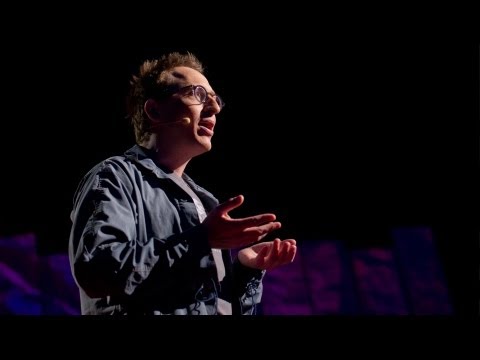
Strange answers to the psychopath test | Jon Ronson | TED
Understanding Mental Disorders and Self-Diagnosis
The DSM Manual and Personal Reflection
- The speaker discusses the DSM (Diagnostic and Statistical Manual of Mental Disorders), noting its growth from a slim pamphlet in the 1950s to an extensive 886-page manual listing 374 mental disorders.
- The speaker humorously reflects on self-diagnosing with 12 mental disorders, including generalized anxiety disorder and nightmare disorder, highlighting the absurdity of casual self-assessment.
Critique of Psychiatry
- The speaker questions whether it is wise to self-diagnose without professional training or if psychiatry tends to label normal behaviors as disorders.
- To explore this further, the speaker decides to meet a critic of psychiatry, leading to a lunch with Scientologists who oppose psychiatric practices.
Encountering Tony at Broadmoor
- Brian, a Scientologist, introduces Tony, a patient at Broadmoor Hospital known for housing criminally insane individuals.
- Tony's backstory reveals he faked madness after committing a minor crime but ended up institutionalized for over a decade due to his convincing act.
Insights from Tony's Experience
- Tony explains how he initially feigned insanity by claiming bizarre thoughts influenced by movies and literature, which ultimately led him to Broadmoor instead of prison.
- He shares that it's easier to convince others you're crazy than sane; despite trying normal conversations about everyday topics like football, he was still perceived as mentally ill.
Reflections on Perception of Sanity
- Tony discusses the challenges of appearing sane in an environment where nonverbal cues are scrutinized. He humorously questions how one can sit or cross their legs "normally."
Understanding Psychopathy and Its Manifestations
Encountering a Psychopath in Broadmoor
- The speaker describes their experience with a patient at Broadmoor, noting the fear induced by being around someone labeled as a "rapist," which is perceived as madness by others.
- After returning home, the speaker emails clinician Anthony Maden to inquire about the patient's history, revealing that he faked madness to escape prison.
- Maden confirms that the patient is indeed a psychopath, highlighting that faking mental illness aligns with psychopathic traits such as cunning and manipulation.
Characteristics of Psychopathy
- The clinician explains that typical behaviors exhibited by the patient—such as avoiding other patients—are indicative of grandiosity and lack of empathy, reinforcing his psychopathic diagnosis.
- The speaker attends a psychopath-spotting course led by Robert Hare, who created the psychopath checklist, becoming adept at identifying these traits.
Prevalence of Psychopathy in Society
- Statistics reveal that approximately 1% of the general population are psychopaths; this figure increases to 4% among CEOs and business leaders.
- Hare suggests that capitalism rewards psychopathic behavior due to its inherent lack of empathy and manipulative nature, making corporate environments breeding grounds for such traits.
Investigating Corporate Psychopathy
- The speaker shifts focus from individual cases to corporate settings after being advised by Hare to explore corporate psychopathy instead of isolated incidents like those at Broadmoor.
- Attempts to interview Enron executives yield no response; however, an email to "Chainsaw Al" Dunlap results in an invitation for an interview regarding his alleged psychopathic tendencies.
Interviewing Chainsaw Al Dunlap
- During the visit to Dunlap's mansion filled with predatory animal sculptures, he showcases his personality through humor while discussing his ruthless business practices.
- The speaker confronts Dunlap with potential psychopathic traits from a checklist during their conversation; Dunlap responds positively and humorously deflecting each trait presented.
Observations on Normalcy vs. Psychopathy
- As they converse about various topics including personal relationships and past actions, Dunlap’s responses oscillate between normalcy and classic signs of psychopathy.
Understanding Psychopathy and Its Complexities
The Journey of a Psychopath Spotter
- The speaker reflects on their experience as a "psychopath spotter," realizing that this role has influenced their own perspective, leading to a desire to categorize individuals strictly as "psychopaths."
- They discuss the nature of journalism, emphasizing how journalists often focus on the most extreme traits of interviewees, neglecting the more mundane aspects of their personalities.
- A critique is made about the over-diagnosis of mental disorders in society, particularly childhood bipolar disorder, where young children are labeled based on temper tantrums.
Encounter with Tony: A Case Study
- The speaker recounts a conversation with Tony, who challenges the label of psychopath by pointing out contradictions in the diagnostic criteria related to remorse and manipulation.
- Tony describes the diagnostic process as akin to witchcraft, suggesting that it distorts reality by flipping definitions upside down. He invites the speaker to attend his tribunal after 14 years in Broadmoor.
Release and Reflections
- After being released from Broadmoor, Tony shares his belief that everyone possesses some psychopathic traits. This statement prompts laughter but also raises questions about human behavior.
- For 20 months post-release, Tony appears to lead a normal life until he encounters legal trouble again due to an incident at a bar. Despite this setback, it is noted that he only served one month in jail.
Complexity Beyond Labels
- The speaker concludes that defining people solely by their most extreme behaviors is unjust. They argue for recognizing individuals like Tony as semi-psychopathic—existing within a gray area rather than fitting into strict categories.
Turn any video into a summary like this
YouTube links, meetings, lectures. With transcripts, search, and chat.