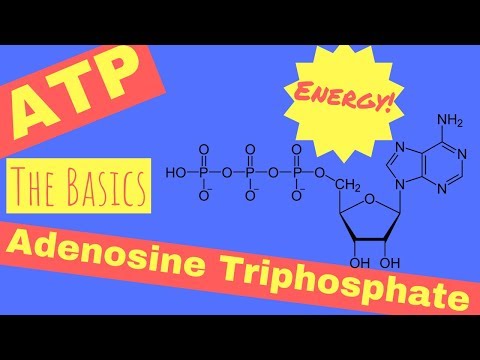
Adenosine triphosphate (ATP) is described as the energy currency of the cell, essential for powering most reactions in living organisms.
ATP consists of three main components: adenine (a nitrogenous base), ribose (a sugar), and three bound phosphates.
Energy Release and Conversion
When ATP donates one phosphate group, it converts to adenosine diphosphate (ADP), releasing energy that fuels various cellular reactions.
The process of reattaching the phosphate to regenerate ATP will be discussed in a separate video.
Sources of Energy for ATP Production
The primary source of energy for ATP synthesis is sunlight; plant cells generate ATP through light reactions during photosynthesis.
Animal cells produce ATP by breaking down glucose via glycolysis and cellular respiration, primarily occurring in mitochondria.
Recap on Key Points
Video description
ATP basics like where ATP energy comes from and what ATP's structure is.
Subscribe:http://bit.ly/2wJ0DHa
More in depth ATP info: http://hyperphysics.phy-astr.gsu.edu/hbase/Biology/atp.html
https://en.wikipedia.org/wiki/Adenosine_triphosphate
Thanks for stopping by, today we are going to talk about Adenosine Triphosphate, more commonly known as ATP.
ATP is the energy currency of the cell, that is to say, it provides the energy for the vast majority of reactions that take place in living organisms.
ATP is made up of three main components. The nitrogenous base adenine, the sugar ribose, and three bound phosphates.
ATP gives a phosphate and becomes ADP (adenosine diphosphate). This phosphate provides energy for the reaction (i’ll make a separate video about how this happens and link it below). The phosphate is reattached in a separate reaction.
Essentially, ATP is a high energy compound that gives off some of its energy and becomes ADP, a low energy compound. But where does ATP get this energy?
The sun is the main and major source of energy for all living things.
Plant cells produce ATP through light reactions in the chloroplast during photosynthesis. They then use that ATP to produce sugars, like glucose. It’s a complicated process that, unfortunately, will not be covered in this video.
Animal cells form ATP by breaking down glucose in glycolysis and cellular respiration. Most of this take place in the mitochondria.
So the energy your body uses everyday literally came from the sun! Pretty rad huh?
Let’s do a quick recap.
ATP is the energy currency of the cell.
ATP is produced in animal cells by breaking down glucose.
The energy in ATP ultimately comes from the sun.
And finally, ATP gives off a phosphate in chemical reactions to become ADP.
I’ll link a video here about how this energy is transferred in chemical reactions, because it’s pretty cool.
If this video was helpful, give it a like a subscribe for more great content.
I’ll catch you next time.