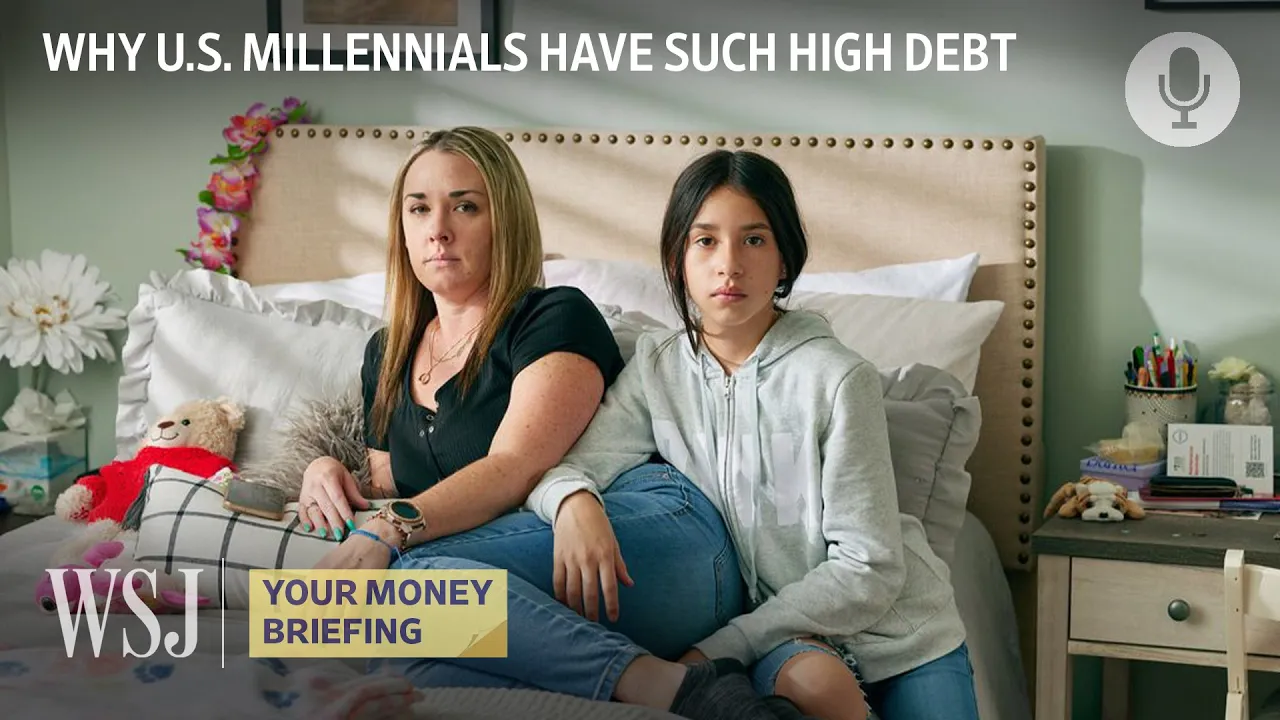
Why Americans in Their 30s Are Racking Up Historic Debt | WSJ Your Money Briefing
Millennials Falling Deeper into Debt
In this video, WSJ reporter Gina Chon discusses how millennials are falling deeper into debt at a faster rate than any other segment. She talks about the reasons behind this trend and interviews a 31-year-old mother of two who is struggling to make ends meet.
Millennials Taking on Debt at a Remarkable Pace
- Americans in their 30s have taken on debt at a remarkable pace since the pandemic.
- Total balances rose to more than $3.8 trillion in Q4 2020, which is a 27% jump from three years ago before the pandemic.
- This is also the fastest pace of debt accumulation over a three-year period since the FED started this survey in 1999 (excluding the financial crisis).
- The rate at which Americans in their 30s are taking on debt is higher than any other generation.
Millennials' Debt Profile Compared to Other Age Groups
- The average credit card balance for millennials rose to about $6,750 in January, a 26% rise from 2019 levels.
- Balances didn't really change for Gen X and for older generations; they actually fell between 11% and 15%.
Reasons Behind Millennials' Tough Debt Situation
- Households did better than expected during lockdown due to stimulus payments and being stuck at home.
- However, those benefits are over now that economies have reopened and people are back to traveling and commuting.
- Stimulus payments have ended at a tough moment for the economy with inflation pressuring people's budgets.
- Many millennials spent thousands of dollars on unplanned childcare costs when schools were closed.
- Some relied heavily on a pandemic-era child tax credit program that stopped.
- A lot are trying to buy homes.
Interview with Struggling Millennial Mother
Personal Finances Before vs. After the Pandemic
- Before the pandemic, she didn't really have any debt and had fewer credit cards.
- From the start of the pandemic to now, she has gotten three more credit cards, and now they're all pretty much maxed out.
- She has been able to tackle two of them this year and get them down to a zero balance.
Managing Debt
- She has cut out eating out and doesn't go out anymore.
- She doesn't buy anything that she doesn't need.
- She lives like she has absolutely nothing.
- She is putting extra money towards her debt by using the snowball effect with her credit cards.
Changes in Spending Habits
- Her kids were in sports before the pandemic, but after it, costs increased significantly due to an Aftercare program at school.
The Debt Picture for Millennials
In this section, Wall Street Journal reporter Gina and Miami area resident Stacy Copeland discuss the debt picture for millennials going forward.
Wealth Gap Between Millennials and Other Generations
- There is a significant and growing wealth gap between millennials and other generations before the pandemic.
- This rapid build-up of debt that we've seen in the past few years could actually worsen that trend.
Good Financial Footing
- It's important for people of prime working age to feel like they're on good financial footing because it empowers them to take risks that can empower the broader economy.
- For millennials in their 30s, they haven't been feeling that way. They weren't before the pandemic, and they certainly aren't now.
Home Ownership Rates
- Millennials have much lower rates of homeownership than other generations, and that's the main way that we build wealth in this country.
- A lot of millennials feel like homeownership is out of reach for them. The housing boom over the pandemic drove up prices as well as mortgage rates, making monthly payments unaffordable for many people in this group.
Lasting Effect
- This current experience can have a lasting effect on millennials' finances going forward.
Turn any video into a summary like this
YouTube links, meetings, lectures. With transcripts, search, and chat.