Could The Atmotube Pro Be The Best Portable, Wearable Air Quality Sensor Out There?!
Introduction and Overview
In this video, IAQ Josh reviews the Atmatube Pro, a wearable air quality monitor and weather station. He provides background information about the device, its features, and specifications.
Background Information
- The Atmatube Pro is a wearable portable air quality monitor and weather station.
- It measures temperature, relative humidity, PM1, PM2.5, PM10, VOC (volatile organic compounds), and barometric pressure.
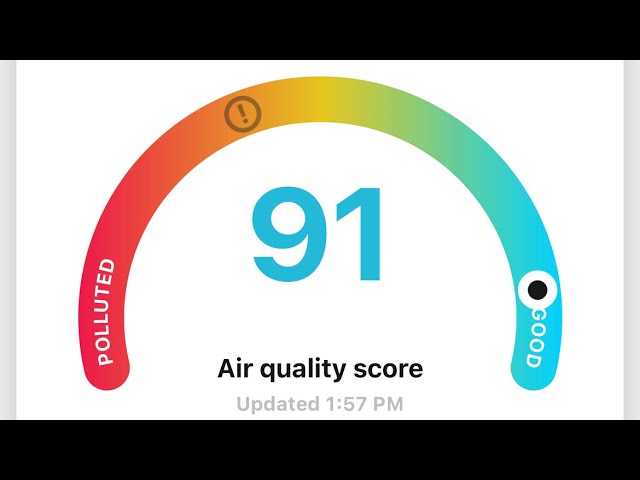
- The device requires zero calibration and provides real-time air quality scores (AQS).
- Historical data can be accessed through the application on a smartphone.
- Battery life is rated at 10 days with 15-minute sampling intervals.
Use Case and Sensor Details
IAQ Josh shares his experience using the Atmatube Pro over the past three months. He discusses various environments where he tested the device and highlights two important sensors - PM sensor (Sensorian AGSPS 30) and VOC sensor (Sensorian SGP C3).
Use Case
- IAQ Josh used the device indoors, outdoors, during professional assessments, mold investigations, and mold assessments.
- The device was attached to his hip or backpack in different environments.
Sensors
- The PM sensor (Sensorian AGSPS 30) has a 10-year or greater life expectancy.
- The VOC sensor (Sensorian SGP C3) is no longer made but has a 10-year or greater life expectancy.
Performance in Real-Life Conditions
IAQ Josh discusses how the Atmatube Pro performs in real-life conditions regarding temperature, relative humidity, particulate matter (PM), and volatile organic compounds (VOC).
Temperature and Relative Humidity
- The temperature took a little longer to acclimate when transitioning between different environments.
- Relative humidity was more responsive but slightly off compared to industrial-grade equipment.
Particulate Matter (PM)
- Using a smoke generator, IAQ Josh observed rapid increases in PM levels on the application.
- Another instance of high PM levels was when someone used a blow dryer.
Volatile Organic Compounds (VOC)
- The device didn't pick up an open bottle of alcohol next to it, but higher-level instruments did.
- Spraying cologne and using a lavender-based cleaning product caused the device to detect VOCs.
- Applying spray paint to paper outdoors and bringing it indoors resulted in rapid detection of VOCs.
Conclusion
IAQ Josh concludes his review by comparing the performance of the PM sensor and VOC sensor in the Atmatube Pro.
PM Sensor vs. VOC Sensor
- The PM sensor performed well, detecting changes in particulate matter levels accurately.
- The VOC sensor had mixed results, sometimes failing to detect certain substances but performing well with others.
Timestamps are approximate and may vary slightly.
Exploring the PM Sensor and Battery Pack
In this section, the presenter introduces the PM sensor made by Sincerion and showcases the battery pack that powers the device.
PM Sensor and Battery Pack
- The PM sensor is manufactured by Sincerion.
- The battery pack provides power to the device.
- The device contains a 200 milliamp hour battery.
- The back side of the circuit board features a USBC input.
Examining the Circuit Board and Components
This section focuses on examining the circuit board and various components of the device.
Circuit Board and Components
- The circuit board has a USBC input.
- There are multiple circuits present on the board.
- A push button on the front of the device controls LED status updates.
- A sensor for volatile organic compounds (VOCs) is located in the lower left corner.
- Close-up views of different components, including VOC sensor and USB input, are provided.
Benchmark Testing with Particle Counter and Q Track Meter
This section discusses benchmark testing using a particle counter and Q Track meter to measure particulate matter (PM) levels and VOCs respectively.
Benchmark Testing
- The particles plus 8306 model is used as a six-channel particle counter to measure PM levels from 0.5 to 10 micrometers.
- The Q Track XP meter, specifically its newest model 7585, is utilized for measuring VOCs as a baseline comparison.
- One of the devices used for testing is Cirrus smoke generator, which produces smoke for exposure testing.
Testing with Isopropyl Alcohol and Spray Paint
This section focuses on testing the device's response to isopropyl alcohol and spray paint.
Testing with Isopropyl Alcohol and Spray Paint
- Isopropyl alcohol is used to generate an aroma in the air for testing VOC detection.
- The device shows a better response to spray paint compared to isopropyl alcohol.
- The fan in the device may contribute to the difference in detection sensitivity.
Indoor Air Quality Testing
This section discusses indoor air quality testing conducted in Atlanta, Georgia.
Indoor Air Quality Testing
- The presenter tests indoor air quality at a facility in Atlanta, Georgia.
- The results indicate relatively good indoor air quality despite ongoing construction activities.
Timestamps are provided for each section based on the available information from the transcript.
Walking around a Department Store
The speaker walks around a department store and discusses the excellent indoor air quality due to good ventilation. They mention using a Carabiner clip to attach an Atmotube sensor for monitoring air quality.
Indoor Air Quality and Ventilation
- The department store has excellent indoor air quality despite having many new clothing items.
- The speaker speculates that the good ventilation in the store contributes to the low levels of carbon dioxide (CO2).
- They express interest in measuring the CO2 levels with their Atmotube sensor, but it is not capable of doing so.
Features of the Device
The speaker highlights some features they love about the device, including its portability, 360-degree swivel Carabiner clip, and LED status button for quickly checking air quality.
Portability and Swivel Carabiner Clip
- The device is portable and has a small form factor, making it easy to carry around.
- It features a 360-degree swivel Carabiner clip that allows users to attach it anywhere they go.
LED Status Button
- By pushing and holding the status button on the device, users can see LED lights indicating different air quality levels.
- Blue and green represent better air quality, while yellow, orange, and red indicate poorer air quality.
Build Quality and Notifications
The speaker discusses the build quality of the device, mentioning its plastic body with a metal Carabiner clip. They also mention how it sends push notifications to alert users about high pollution levels in their immediate area.
Build Quality
- Despite having a plastic body, the device feels sturdy due to its metal Carabiner clip and metal retainer ring.
- It has an aluminum inset face that adds to its overall appearance and quality.
Notifications and Air Quality Map
- The device sends push notifications to the user's phone when there is excessive pollution in their vicinity.
- It also actively communicates with the phone, creating an air quality map based on the user's geolocation data.
Conclusion and Farewell
The speaker concludes the video by thanking viewers for watching. They encourage viewers to like the video, subscribe to their channel for future content, and bid farewell.
Conclusion
- The speaker thanks viewers for watching the video.
- They request viewers to like the video and consider subscribing to their channel for more content.
- The speaker bids farewell to the audience.
Timestamps are provided in seconds (s) format.