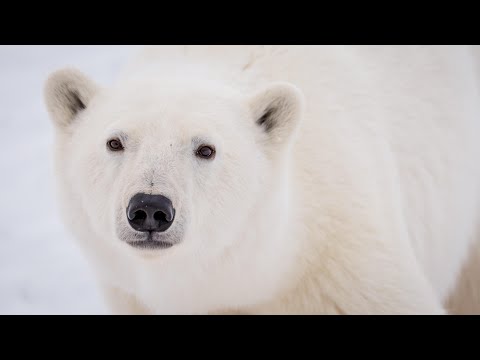
What to Do When There's a Polar Bear in Your Backyard | Alysa McCall | TED
New Section
This section introduces the topic of polar bears and their distant reality for most people. It highlights the impact of melting ice on polar bears and the importance of coexisting with them.
Understanding Polar Bears
- Polar bears are often associated with being white, cold, cute, fuzzy, and huggable.
- Melting ice floes pose a threat to polar bears as they get stuck on land and become more desperate for food.
- For those living in the Arctic, polar bears are a daily reality that can be either safe or scary depending on preparedness.
Coexisting with Polar Bears
- Coexisting with polar bears is a challenge that will become more difficult due to climate change.
- The speaker's organization, Polar Bears International, focuses on conserving wild polar bears while assisting those who share their coastlines.
- Understanding how polar bears are doing is crucial to coexistence efforts.
Status of Polar Bears
- Currently, there are approximately 25,000 polar bears spread across 19 different populations in Canada, Russia, Norway, Greenland, and Alaska.
- If no action is taken to address climate change and habitat loss, most of the world's polar bear population could be lost by the end of the century.
Impact of Climate Change
- The warming Arctic poses a significant threat to polar bear populations.
- Different populations are experiencing changes at varying rates due to climate change.
- Switching to cleaner energies is essential for mitigating these impacts.
Challenges for Coexistence
- One of the biggest hurdles for coexistence is human behavior and its impact on polar bear habitats.
- Polar bears rely on sea ice for traveling and hunting seals but face challenges when ice loss occurs.
Food Challenges for Polar Bears
- Polar bears need sea ice for sustenance and survival.
- When polar bears lose access to ice, they get stuck on land and become hungry.
- Finding enough food becomes difficult as their primary prey, seals, are not readily available on land.
Human Food as a Substitute
- When polar bears can't find enough food, they resort to eating human food.
- Human food is considered "junk food" for polar bears.
- This behavior poses risks for both humans and bears.
Safety Concerns and Indigenous Knowledge
- The increase in human presence in the Arctic due to warming temperatures raises safety concerns for both humans and polar bears.
- Indigenous cultures have deep knowledge of polar bears but may face challenges with the changing environment.
- Protecting the rights of Indigenous peoples to practice their traditions is crucial.
Non-lethal Tools for Coexistence
- Non-lethal tools are available and being developed to help limit negative encounters between humans and polar bears.
- Churchill, Manitoba, serves as a testing ground for these tools due to its high concentration of polar bears.
Conclusion
This summary provides an overview of the transcript's key points. It highlights the challenges faced by polar bears due to climate change, the importance of coexistence efforts, and the need for non-lethal tools to ensure human safety while protecting these magnificent creatures.
Impact on Polar Bear Population
This section discusses the impact of environmental changes on the polar bear population.
Decline in Population
- The decline in the polar bear population is not due to starvation but rather difficulties in reproduction and survival.
- The population has decreased from around 1,200 bears in the 1980s to just over 600 today.
Polar Bears in Churchill
- Churchill is home to about 900 people, but during tourist season, it grows by thousands.
- Polar bears do come into town, posing risks and challenges for both bears and humans.
Waste Management as a Solution
- Churchill implemented effective waste management strategies to protect both polar bears and residents.
- The garbage dump was moved indoors to prevent bears from accessing it.
- Residential bear-resistant bins were installed to avoid attracting bears with food rewards.
Innovative Technologies for Coexistence
This section explores innovative technologies being developed for coexistence between humans and polar bears.
GPS Tracking
- GPS tracking provides critical data on polar bear movement patterns.
- Currently, only adult females have been successfully collared due to challenges with adult males and subadults.
- Collaboration with 3M is underway to develop "burr on fur" tags that can be temporarily attached to any bear's fur for tracking purposes.
Conservation Game Changer
- These tags could help reduce negative human-bear encounters by allowing early relocation of bears approaching communities.
- They may also be used for other species that require support in avoiding human interactions.
Importance of Education and Coexistence Tools
This section emphasizes the significance of education and various tools for coexisting with polar bears.
Coexistence Tools
- Different coexistence tools are being developed based on specific needs across different regions.
Importance of Education
- Education plays a crucial role in promoting coexistence with polar bears and other wildlife.
- Individuals venturing into bear country should be bear aware, stay together, secure snacks, and carry deterrents like flares or bear spray.
Addressing Climate Change for Polar Bear Conservation
This section highlights the importance of addressing climate change to protect polar bears.
Urgency of Action
- Cutting carbon emissions and reducing heat trapped in the atmosphere is crucial for preserving polar bear habitat.
- Polar bears serve as indicators of climate change, urging immediate action.
Optimism and Coexistence
- Despite concerns, taking action against climate change is the best antidote to anxiety.
- By transitioning to cleaner energies, future generations of both polar bears and humans can be protected.
Conclusion
The conclusion emphasizes the need for coexistence between humans and polar bears.
Ensuring Safety for All
- Coexistence is the only option, and efforts must be made to make it safe for both species.
Final Thoughts
- The speaker acknowledges worries but remains committed to preventing climate change from permanently separating humans from polar bears.
Turn any video into a summary like this
YouTube links, meetings, lectures. With transcripts, search, and chat.