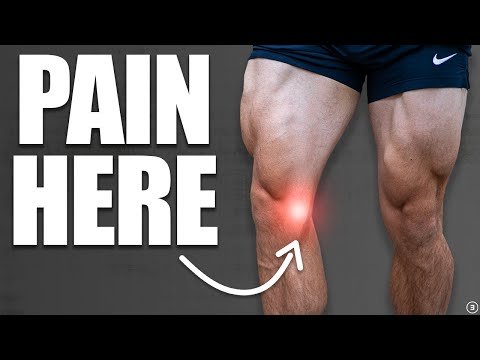
MCL Injury Rehab & Exercises (Medial Collateral Ligament Sprain)
Comprehensive MCL Rehab Program
Understanding the MCL and Its Injuries
- The medial collateral ligament (MCL) is located on the inner part of the knee, consisting of a superficial and deep layer. The superficial portion is a long flat band, while the deep portion connects to the joint capsule and medial meniscus.
- The MCL stabilizes the knee against valgus and rotational forces, with common injuries resulting from direct blows to the outer thigh or leg while the foot is planted. This can lead to a valgus movement.
- Injuries may also occur during activities like skiing or sports involving cutting and pivoting, often leading to damage in other structures such as ACL, PCL, or menisci. Most MCL sprains occur in isolation.
Grading MCL Injuries
- MCL injuries are graded from one to three based on clinical examination:
- Grade 1: Tenderness with minimal/no joint laxity.
- Grade 2: Minor joint laxity with partial disruption.
- Grade 3: Gross joint laxity with complete disruption; often associated with damage to other knee structures like ACL.
- Non-operative treatment is typically effective for isolated MCL injuries due to their high healing potential. Surgery may be considered for grade 3 injuries under specific conditions such as avulsion fractures or severe instability.
Management Strategies for Acute MCL Injuries
- Conservative treatment is recommended for grades one and two; surgery may be indicated if symptoms persist after conservative management in grade three cases. Decisions depend on clinical signs, imaging results, symptom severity, and functional goals.
- In cases where an ACL tear accompanies a grade 3 injury, surgical intervention is usually necessary; rehabilitation of the MCL typically precedes ACL reconstruction once healing has progressed adequately.
Rehabilitation Principles
- The rehab program focuses primarily on non-operative cases since most isolated MCL injuries do not require surgery; those who have undergone surgery should consult healthcare professionals before starting exercises due to potential restrictions. A hinge brace may be used during rehab but lacks strong evidence supporting its necessity for all cases.
- Early rehabilitation stages aim at minimizing stress on healing tissues while gradually increasing exposure to lateral and rotational movements as recovery progresses through early, middle, and late phases of rehab tailored according to injury severity and individual goals.
Goals of Early Stage Rehabilitation
- The initial phase focuses on four main goals:
- Control swelling
- Regain knee range of motion
- Restore quadriceps function
- Normalize walking patterns
- Protect injured tissues immediately post-injury while integrating exercises that align with these goals without exacerbating pain or swelling; adjustments should be made based on symptom response during sessions.
Exercises for Range of Motion
- To improve knee extension:
- Perform quad sets by straightening your leg and squeezing your quadriceps for ten seconds multiple times daily.
- Gradually increase intensity by pulling up on your toes during this exercise session.
This structured approach ensures clarity in understanding how best to manage an MCL injury through appropriate rehabilitation strategies tailored specifically towards individual needs based upon injury grading and personal recovery objectives.
Knee Rehabilitation Exercises
Stretching Techniques
- Two options for stretching: using a towel or strap, or propping the heel on an elevated surface. Adding weight above the knee can enhance the stretch; hold for 10 to 15 minutes daily.
- For flexion improvement, use a stationary bike starting with a higher seat and half revolutions. Gradually lower the seat as range of motion improves to complete full revolutions.
Quadriceps Strengthening
- Common exercises include squats, split squats, and step-ups. If these are too challenging initially, consider alternatives like supine straight leg raises or isometric knee extensions.
- Isometric knee extensions can be performed using bands or balls against walls. Progress intensity while minimizing pain; if single-leg variations are difficult, start with both legs.
Walking Normalization
- The goal is to walk unassisted without limping, requiring full knee extension and good quadriceps function. Practice standing on one leg for balance; aim for 60 seconds.
- In severe cases where full weight-bearing isn't possible, crutches may be used initially to relieve pressure on the knee joint.
Mid-stage Rehabilitation Focus
- This stage includes strength training, dynamic balance, and plyometric exercises aimed at enhancing knee stability in preparation for running and sports.
- Most exercises will have two to four progression levels that must be completed with minimal pain before advancing. Tolerance rather than time dictates readiness for mid-stage exercises.
Advanced Quadriceps Exercises
- Progress from early stage exercises like straight leg raises and quad sets to more advanced movements such as split squats.
- Level one involves bodyweight squats aiming for three sets of 20 reps; if too hard, start with assisted squats until comfortable progressing unassisted.
Split Squat Progressions
- Level two involves lowering back knees toward the ground in a split stance; level three adds front foot elevation during splits aiming for three sets of 15 reps per leg.
- Level four introduces weights (dumbbells/kettlebells/barbells), performing three to four sets of six to twelve challenging repetitions per side.
Lateral Step Down Progressions
- Start with step-ups on a six-to-seven-inch high object focusing weight through the front leg; aim for three sets of 20 reps per leg.
- Level two involves lateral step downs from an elevated position gently tapping the floor before standing up again; target three sets of 20 reps each leg.
Control in Single Leg Exercises
- Emphasize control in single-leg options due to increased risk of dynamic knee valgus which could load affected tissues. Begin with bodyweight squats progressing through goblet then barbell back squats over time.
Additional Strength Considerations
Knee Stability and Strengthening Exercises
Hamstring Strengthening Options
- To enhance knee stability, various exercises targeting the hamstrings can be performed, including:
- Standing knee flexion with ankle weights.
- Seated hamstring curls.
- Romanian deadlifts or variations using a Roman Chair.
- Slider exercises for dynamic movement.
Progressions for Knee Flexion
- Start with double leg eccentric slider bridges, gradually increasing range of motion by straightening knees while lowering down.
- Transition to single leg eccentric sliders after mastering double leg variations, aiming for three to four sets of four to eight reps on each leg.
Calf Strength Progressions
- For calf strength, two main progressions are suggested:
- Option One: Begin with double leg heel raises from the floor, progressing to single-leg and then deficit single-leg heel raises.
- Option Two: From a seated position with weights above the knees, perform bent-knee heel raises starting from the floor and progressing onto an elevated surface.
Glute and Adductor Training
- Three progressions focus on glutes and associated trunk muscles:
- Hip Thrust Progression: Move from double leg bridges to weighted single-leg hip thrusts.
- Side Plank Progression: Start with isometric holds and advance to side planks incorporating hip abduction.
- Copenhagen Plank Progression: Gradually increase difficulty through isometric holds at varying levels of support.
Dynamic Balance Exercises
- Once able to balance on one leg for at least 30 seconds, progress to dynamic balance exercises that introduce rotational and lateral stress:
- Three-Way RDL Progression: Perform single-leg RDLs followed by reaching in three directions (left, middle, right).
- Y Balance Exercise: Stand on one leg while reaching in three directions forming a 'Y' shape.
Plyometric Training Considerations
- Before engaging in plyometrics post-MCL injury, ensure you meet specific criteria such as full knee extension and adequate quadriceps strength compared to the uninjured side.
- Suggested plyometric progressions include:
- Starting with box jumps before advancing to vertical jumps without a box.
- Single-leg progression involving controlled lunges leading into forward step jumps.
MCL Rehabilitation: Key Insights and Strategies
Importance of Lateral and Curtsy Lunges
- Lateral and curtsy lunges are often discussed in MCL rehabilitation for enhancing confidence in lateral and rotational movements, particularly those requiring deeper knee flexion.
- However, these exercises may not be optimal for developing strength adaptations due to their mobility requirements.
Progressing to Sport-Specific Drills
- Transitioning to lateral and rotational movements is crucial for plyometric training and return-to-sport drills, which are generally adequate for most individuals aiming to resume sports.
- Two essential components before returning to full competition include:
- Linear running (starting with jogging, progressing to sprinting).
- Cutting and multi-directional drills that expose the knee to various forces at increasing speeds.
Understanding the Return-to-Sport Continuum
- The return-to-sport process follows a continuum; it begins with sport-specific drills before advancing back to competitive levels.
- This progression can take several months as athletes build up volume and intensity safely.
Early Stage Rehabilitation Focus
- In the early stage of rehabilitation, focus on regaining knee flexion/extension range of motion, restoring quadriceps function, and normalizing walking while monitoring symptoms closely.
- Recommended exercises include split squats, hamstring sliders, Copenhagen planks, standing heel raises, and three-way RDL progressions performed daily as tolerated.
Mid-stage Exercise Programming
- In mid-stage rehabilitation (2–3 times per week), incorporate strength dynamic balance exercises alongside optional plyometrics once specific criteria are met.
- Maintain overlap between stages; continue working on knee range of motion even after starting strength or plyometric exercises.
Summary of Key Takeaways
- Six main points regarding MCL injuries:
- Most MCL injuries occur in isolation; graded from one to three based on severity.
- Non-operative management is typically recommended first if no other ligaments like ACL are involved.
- Rehabilitation consists of three overlapping stages focusing on gradual exposure to stressors.
- Early stage emphasizes regaining motion while minimizing flare-ups.
- Mid-stage includes strength training two to three times weekly for improved function.