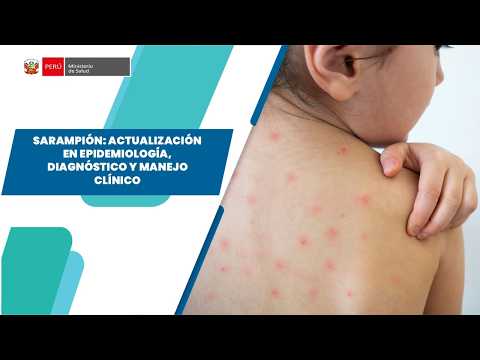
SARAMPIÓN: ACTUALIZACIÓN EN EPIDEMIOLOGÍA, DIAGNÓSTICO Y MANEJO CLÍNICO
Introduction to Measles Teletraining
Welcome and Overview
- The session is introduced by the Ministry of Health, focusing on measles epidemiology, diagnosis, and clinical management.
- Dr. Carlos Benítez opens the event, expressing gratitude for the participation of health personnel.
Importance of Measles Discussion
- The General Directorate of Strategic Interventions in Public Health emphasizes the rising cases of measles globally and in Peru due to decreased vaccination coverage.
- An epidemiological alert has been issued nationally due to reported cases primarily in southern regions like Puno.
Clinical Recognition and Management
Key Concepts in Case Management
- Understanding basic concepts for recognizing measles cases clinically is crucial for effective diagnosis and management procedures.
- Complications from measles require proper handling within healthcare services to ensure patient safety and care quality.
Expert Contributions
- Two infectious disease experts, Dr. Javier Valencia and Dr. Víctor Fiestas, are invited to share their insights on public health challenges related to measles control.
Epidemiology of Measles
Presentation by Dr. Javier Valencia
- Dr. Valencia discusses key aspects of current measles outbreaks in Peru, highlighting its viral nature as an RNA virus with human-only reservoirs that spreads via respiratory droplets.
- The high transmissibility rate makes it one of the most contagious diseases; achieving over 95% vaccination coverage can establish herd immunity within communities.
Historical Context
- Peru had achieved a state of elimination until recent years when new cases emerged due to low vaccination rates; this includes a significant rise in community transmission observed particularly in Puno region since 2021 onwards.
Current Situation Analysis
Rising Cases Across Americas
- Over 200,000 cases were reported across the Americas by 2025; Peru's confirmed cases have increased significantly from 10 to 25 recently amid ongoing investigations into suspected cases.
- Bolivia serves as a source for imported cases affecting border regions like Puno where vaccination coverage remains critically low at under 95%.
Symptoms and Diagnosis
Recognizing Symptoms
- Common symptoms include fever, rash (exanthema), cough, conjunctivitis, which may precede rash appearance by several days; Koplik spots are also indicative but not always present early on.
Healthcare Professional Responsibilities
- Health professionals must identify suspicious cases promptly, notify authorities immediately for rapid response actions including infection control measures within healthcare settings.
Clinical Management Insights
Presentation by Dr. Víctor Fiestas
- Dr. Fiestas elaborates on clinical management strategies emphasizing understanding the viral structure and pathogenesis essential for effective treatment protocols against measles infections.
Pathogen Characteristics
- The measles virus targets immune cells leading to immunosuppression which can result in secondary bacterial infections such as pneumonia or otitis media post-infection.
Transmission Dynamics
- The virus can remain airborne for up to two hours after being expelled through coughing or sneezing making it highly contagious even without direct contact between individuals.
This structured summary provides a comprehensive overview while maintaining clarity regarding timestamps linked directly back to specific parts of the transcript for further reference or study purposes.
Overview of Measles Symptoms and Progression
Initial Symptoms and Exanthema Development
- The oral mucosa temperature increases significantly, reaching around 40ºC, leading to the appearance of exanthema. This rash typically starts on the head and progresses to the lower limbs by day three, a pattern known as céfalo caudal.
- The order of rash appearance corresponds with the virus's entry route through the respiratory system, reflecting how symptoms develop in relation to viral infection.
Classic Signs of Measles
- A child exhibiting conjunctivitis may show classic prodromal symptoms of measles, including Koplik spots visible with a tongue depressor; these spots can disappear quickly.
- The exanthema is described as morbiliform—raised lesions that tend to merge together, characteristic of classic measles presentations. Lesions are rarely found on palms or soles due to thicker skin in those areas.
Complications Associated with Measles
Severity in Adults vs Children
- While children have developing immune systems that may struggle against measles infections, adults often have robust immune responses that can lead to severe complications from the virus. An example includes a university student without vaccination history who contracted measles after exposure at a gathering.
- Two doses of vaccine are necessary for complete immunity against measles; cases without vaccination history are highlighted as particularly concerning during outbreaks.
Respiratory Complications
- Respiratory symptoms preceding exanthema can be intense and may lead to serious conditions like pneumonia, which accounts for 60% of measles-related deaths due to secondary bacterial infections such as Staphylococcus aureus and Streptococcus pneumoniae. Other complications include otitis media and encephalitis, which can result in long-term neurological issues or even death in severe cases.
Importance of Vaccination and Nutrition
Impact of Malnutrition on Measles Outcomes
- Malnourished children face heightened risks when infected with measles; malnutrition exacerbates disease severity and creates a vicious cycle leading potentially to fatal outcomes. This emphasizes the need for preventive measures against both malnutrition and infectious diseases like measles.
Modified Measles Presentations
- Modified forms of measles occur in individuals with partial immunity (e.g., previous vaccinations), resulting in milder clinical presentations that may be less contagious but complicate diagnosis due to atypical symptomatology lasting shorter durations than classical cases. Examples include infants exposed indirectly through vaccinated mothers transferring antibodies that mitigate disease severity.
Differential Diagnosis Considerations
Distinguishing Measles from Other Conditions
- Differential diagnoses include rubella (characterized by specific lymphadenopathy patterns), roseola (with distinct fever patterns), parvovirus B19 (notable facial rashes), dengue fever (which presents differently despite some overlapping symptoms). Understanding these distinctions is crucial for accurate diagnosis during outbreaks where multiple febrile illnesses circulate simultaneously.
Laboratory Testing Protocol for Measles
Sample Collection Guidelines
- Essential samples include nasopharyngeal swabs for PCR testing alongside serum samples for serological analysis aimed at detecting IgM/IgG antibodies against the virus within specified timeframes post-exposure or symptom onset for effective diagnosis confirmation purposes. Optimal timing is critical: nasopharyngeal swabs should ideally be collected within ten days post-symptom onset while serum samples remain viable up until thirty days later if needed for follow-up testing purposes regarding antibody levels over time post-infection or vaccination status assessment efforts undertaken by health authorities involved in outbreak management strategies across regions affected by recent surges observed locally or internationally among populations susceptible due lack adequate immunization coverage rates historically recorded prior events occurring recently impacting public health initiatives aimed reducing incidence rates overall effectively improving community resilience against future threats posed similar pathogens circulating globally today still posing significant challenges healthcare systems worldwide face continuously adapting response protocols accordingly based emerging evidence-based practices established through ongoing research collaborations between various stakeholders engaged combating infectious diseases collectively striving achieve better outcomes communities served ultimately enhancing quality life standards achieved sustainably long term basis ensuring equitable access resources necessary support recovery processes initiated promptly whenever required addressing needs identified throughout course treatment plans developed tailored individual circumstances encountered each case presented clinicians tasked managing them diligently ensuring optimal care delivered consistently every patient treated regardless background socioeconomic status influencing their experiences navigating healthcare landscape today facing unprecedented challenges brought forth pandemic era reshaping norms expectations surrounding delivery services provided patients seeking assistance navigating complexities associated living chronic conditions requiring specialized attention focus placed maintaining continuity care essential preserving well-being individuals impacted directly indirectly situations arise necessitating intervention timely manner fostering trust relationships built upon transparency accountability shared responsibility taken seriously all parties involved working collaboratively towards common goal achieving positive results desired ultimately benefiting society whole moving forward together united front tackling obstacles lie ahead determined overcome adversity faced along journey toward healthier brighter future awaits us all!
Complications and Management of Measles
Initial Signs and Risk Factors
- The patient may exhibit early signs such as altered sensorium, lethargy, irritability, convulsions, dehydration, and progressive clinical deterioration before the rash appears. These are considered alarm signs.
- High-risk groups include infants under 6 months, immunosuppressed individuals, pregnant women, and those with moderate to severe malnutrition. These factors can lead to more severe measles presentations.
Classification of Measles Severity
- If a patient does not present risk factors or alarm signs, they may be classified as having a mild case of measles with symptoms like fever and rash that do not require hospitalization; home isolation and vitamin A supplementation are recommended.
- In cases where alarm signs or risk factors are present, the patient is categorized as moderate to severe and will require hospitalization for monitoring and treatment. Vitamin A administration is also necessary in these cases.
Specialized Evaluation
- Patients may need specialized evaluations from ophthalmologists or pulmonologists if complications arise; chest X-rays can help identify bacterial co-infections during clinical management. Continuous hydration is crucial for recovery.
Post-exposure Prophylaxis
- Post-exposure prophylaxis involves administering the measles vaccine within 72 hours after exposure; immunoglobulin G can be given within six days post-exposure for those who cannot receive vaccines (e.g., immunosuppressed individuals).
Vaccination Queries
- Adults unsure about their vaccination status should ideally receive two doses of the vaccine if there’s no certainty about prior vaccinations; one booster dose suffices for those who have been vaccinated in childhood but lack documentation.
Vaccination Guidelines for Children
Dosing Requirements
- Unvaccinated children aged 5 years should receive two doses of the measles vaccine to ensure protection against the disease (99% efficacy). Even with both doses, complete immunity isn't guaranteed but significantly reduces risks.
Special Cases: Infants Under Six Months
- Infants under six months cannot receive the SPR vaccine; if exposed to measles without vaccination history, they must be taken to a hospital for potential immunoglobulin administration instead of vaccination for protection purposes.
Current Vaccination Strategies
Zero Dose Initiative
- Due to an outbreak in Puno, a "zero dose" vaccination strategy has been implemented for children over six months old; this dose is not part of the regular schedule but aims to control outbreaks effectively until standard vaccinations begin at 12 months old.
Immunocompromised Individuals
- Immunocompromised patients (e.g., undergoing chemotherapy) cannot receive live attenuated vaccines due to safety concerns; they should be protected through other means like immunoglobulin G if exposed to measles virus.
Vaccine Composition and Reactions
Vaccine Components
- The SPR vaccine protects against three viruses: measles, mumps, and rubella (trivalent); allergic reactions are rare but possible primarily in individuals sensitive to components unless contraindicated by immunosuppression status.
Testing Protocol
- Molecular tests (PCR) are used directly to identify the virus while serological tests measure antibodies indirectly; both methods complement each other in diagnosing active infections effectively within specific time frames post-symptom onset.
Vaccination Recommendations
Target Groups
- Vaccinations are being administered progressively across various age groups prioritizing high-risk populations including healthcare workers who frequently interact with potentially infected patients amidst ongoing outbreaks in certain regions like Puno.
Impact on Immunocompromised Patients
- Individuals with HIV face increased risks when contracting measles due to compromised immune systems which could lead to more severe illness or prolonged viral shedding without typical symptoms like rashes appearing as immune responses fail adequately activate defenses against infection.
Key Takeaways on Measles Management
Importance of Vigilance
- Healthcare professionals must remain vigilant regarding potential cases of measles especially among vulnerable populations since even one case indicates lapses in surveillance systems necessitating immediate action towards infection control measures.
Conclusion Remarks
The discussion emphasized critical aspects surrounding prevention strategies through effective vaccination campaigns aimed at maintaining herd immunity levels above 95% while addressing current outbreaks efficiently through targeted interventions tailored towards high-risk demographics.