Somos documentales Rol & Rol
Introduction
The speaker introduces themselves and talks about their family background, including the strong women who have influenced them.
Family Background
- The speaker's grandmother was named María Luisa López and was born in September 1907.
- Their mother was named María Luisa Ortiz and was born in May 1936.
- The speaker has a daughter named Alva Fernández, born in February 1994.
- The speaker acknowledges being raised by women from the 20th century and raising a child in the 21st century.
Motivation for Making the Documentary
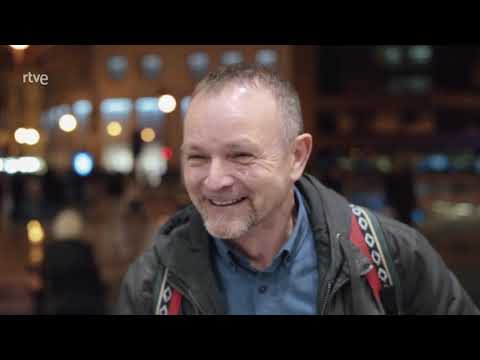
The speaker shares their name, birthdate, and their motivation for making this documentary. They express a desire to contribute to changing an egocentric and predatory structure and mention their mother's influence.
Personal Motivation
- The speaker's name is Luis Gutiérrez, born in November 1962.
- They are driven by curiosity and questions, which led them to create this documentary.
- Their goal is to bring about change in an egocentric and predatory system.
- They also mention doing it for their mother, as they believe she would have appreciated it.
Filming "Retorno a Hansala" and Women Empowerment
The speaker discusses a previous film project called "Retorno a Hansala" that focused on immigrants' dangerous journey across the Mediterranean. They highlight how women took on leadership roles during the filming process.
Filming Experience
- In 2008, the speaker worked on a film called "Retorno a Hansala," which depicted the perilous Mediterranean journey of many immigrants.
- During filming, there was a diverse team with women occupying positions of responsibility.
- After the film was completed, local women from Hansala approached the council of elders to request their inclusion, but no one came forward to help them.
- This experience made the speaker reflect on the lack of representation and opportunities for women.
Lack of Representation
The speaker briefly mentions a specific incident related to representation but does not provide much detail.
Incident
- The speaker mentions an incident that occurred but does not provide further information.
Lack of Female Role Models
The speaker discusses the importance of having female role models and references a personal experience related to this topic.
Importance of Role Models
- The speaker emphasizes the significance of having visible role models for girls and adolescents.
- They mention that if you can see someone like you, it becomes easier to aspire and achieve similar goals.
Media Influence on Women's Image
The speaker reflects on how media, including cinema, advertising, press, radio, television, and other forms of media shape the image projected onto women. They highlight the limited range of representations and stereotypes often portrayed.
Media Influence
- The speaker criticizes how women are often represented in media as one-dimensional characters such as mothers, seductresses, or objects.
- They mention that this limited representation is prevalent across various forms of media.
- Statistics show low percentages (8% in textbooks and 11% in Wikipedia) when it comes to female representation.
- The media can either perpetuate existing norms or push for change.
Survey Results on Role Models
The speaker shares survey results indicating young people's preferences for role models. They express surprise at the choices made by young girls and boys.
Survey Results
- In March 2017, a survey was conducted among 12,000 Spanish youths aged 16 to 19.
- The speaker highlights two surprising findings: girls wanting to emulate an 80-year-old male entrepreneur and boys not choosing any female role models.
Naming Female Public Figures
The speaker presents a list of female public figures and asks if the audience knows their names and what they do. They express frustration with their own difficulty in remembering names.
Naming Female Public Figures
- The speaker mentions several female public figures without providing further details.
- They express their own struggle with remembering both male and female names.
Historical Context on Women's Rights
The speaker briefly discusses the French Revolution's impact on women's rights, including the Declaration of the Rights of Man and of the Citizen in 1789.
French Revolution and Women's Rights
- The French Revolution brought about the Declaration of the Rights of Man and of the Citizen in 1789.
- In response to women being overlooked, Mary Wollstonecraft wrote the Declaration of the Rights of Woman and of the Female Citizen in 1791.
- These texts aimed to recognize women's rights, including their right to speak publicly.
Representation of Women in Advertising
The speaker criticizes how women are portrayed in advertisements, emphasizing that it does not reflect real women. They question why women are constantly made to feel inadequate about their bodies.
Representation in Advertising
- The speaker expresses dissatisfaction with how women are represented in advertisements, often appearing as alien or plastic dolls.
- They highlight that real women have gray hair, wrinkles, and cellulite, and question why these aspects are not represented.
- The speaker calls for strategies that make women feel good about themselves instead of constantly promoting body dissatisfaction.
Evolution of Advertising
The speaker briefly discusses the evolution of advertising from a more artisanal approach to a highly industrialized marketing industry.
Evolution of Advertising
- Marketing became an industry in itself around the 1950s, leading to the industrialization of advertising.
- This shift resulted in the creation of strict codes and rules that generated significant profits.
- The speaker suggests that these codes need to be reevaluated to promote positive representation.
This summary provides an overview of the main topics discussed in the transcript. For a more detailed understanding, please refer to the specific timestamps provided.
The Role of Women in Post-War Society
This section discusses how after World War II, governments and media worked together to push women out of the jobs they had obtained during the war and back into traditional roles as homemakers.
Women's Return to Domestic Life
- After World War II, there was a concerted effort by governments and media to encourage women to return to their roles as homemakers.
- The expectation was for women to find fulfillment in being housewives and not compete in the job market.
Seeking Help for Marital Issues
In this section, a woman seeks advice about her husband's worsening behavior and their deteriorating relationship.
Seeking Advice for Marital Problems
- The woman describes her husband's increasingly bad temper and their home becoming an unpleasant place.
- She explains that he often ignores her and has angry outbursts.
- The advisor suggests that the husband may be stressed from working long hours and recommends creating a pleasant environment at home for him.
Challenging Gender Stereotypes in Advertising
This section explores the impact of gender stereotypes in advertising and the need for change.
Changing Gender Stereotypes in Advertising
- It was challenging to change gender stereotypes in advertising since it didn't generate conflict or controversy.
- Advertisers often perpetuate stereotypes because it is comfortable for them and doesn't challenge societal norms.
- The speaker emphasizes the importance of portraying reality accurately in advertisements instead of selling products based on false representations.
Breaking Gender Stereotypes in Car Advertisements
This section highlights a pioneering car advertisement campaign that challenged gender stereotypes.
Breaking Gender Stereotypes with Car Advertisements
- Traditionally, car advertisements associated driving with masculinity or attractiveness to women.
- The speaker discusses a campaign that featured a powerful female driver and changed the perception of women's driving abilities.
- This campaign had a significant impact on car advertisements in Spain, leading to more diverse representations of women.
Lack of Representation and Stereotypes in Media
This section addresses the lack of representation and stereotyping of women in media.
Lack of Representation and Stereotyping
- The speaker expresses frustration with the limited variety of female characters portrayed in media.
- She feels that media often presents a male fantasy rather than representing the complexity and diversity of real women.
- The speaker mentions feeling excluded when she sees movie posters dominated by male characters.
Influence of Media on Women's Confidence
This section discusses how media influences women's confidence and decision-making.
Media Influence on Women
- Many women draw inspiration from movie and TV characters to gain confidence in their personal and professional lives.
- The speaker suggests that there should be more focus on showcasing achievements rather than superficial beauty trends.
- She believes that media should represent a wider range of women, including those who are not mothers or wives.
Limited Roles for Women in Media
This section highlights the limited roles available for women in media and the need for more diverse representations.
Limited Roles for Women
- The speaker criticizes the lack of varied roles for women in movies, noting that they are often reduced to one-dimensional stereotypes.
- She desires more complex portrayals that reflect real-life experiences and personalities.
- The speaker emphasizes the importance of having positive, multidimensional female characters instead of perpetuating stereotypes.
These notes provide an overview of key points discussed in each section. For further details, please refer to the corresponding timestamps provided.
New Section
This section discusses the representation of women in movies and the lack of complex and diverse female characters. It also highlights the importance of having strong female protagonists and the need for more films with women in leadership roles.
Women as Strong and Capable
- The speaker mentions that there is a stereotype that women are weak or victims, but she admires their strength in difficult situations.
- She appreciates women's ability to work hard, their resilience, and their unity.
- The speaker mentions her mother as an example of a strong and determined person who never gives up.
- She believes that women bring a unique perspective to life and have the ability to endure hardships.
Lack of Complex Female Characters
- The speaker criticizes the lack of movies with well-developed female characters.
- She mentions that most films portray women as either mistresses or mothers, without much complexity or individuality.
- The speaker refers to Lieutenant Ripley from "Aliens" as an example of a strong female character who is valued for her skills and abilities rather than her gender.
- She praises a recent film called "Arrival" for featuring a female protagonist who excels at her job without being portrayed negatively.
Underrepresentation in Leadership Roles
- The speaker points out that there are very few movies where women are shown as highly skilled professionals without negative traits.
- She mentions how rare it is to see scenes where powerful women discuss military strategy or decision-making, unlike male-dominated narratives.
- The speaker emphasizes that society tends to associate power with masculinity, leaving women marginalized and seen as exceptions rather than the norm.
Gender Disparity in Dialogue
- A study on 2000 movie scripts revealed that male characters have more lines than female characters, even in films where females are the main protagonists.
- The speaker reflects on how societal expectations still perpetuate the idea that women should find emotional fulfillment through relationships with men.
- She highlights the importance of critically analyzing the messages conveyed in films and questioning the underlying gender dynamics.
Women in Film Industry
- The speaker mentions her experience working with male directors but finds inspiration in female directors who prove that women can excel in their field.
- She praises a director named Chus Gutierrez for showing her that women can succeed as directors.
- The speaker values qualities such as teamwork, empathy, and personal concern demonstrated by female directors like Cristina Huete.
New Section
This section discusses the representation of women in the film industry and highlights efforts to promote gender equality and diversity among filmmakers.
Promoting Gender Equality
- The speaker acknowledges initiatives like film festivals dedicated to promoting women directors and increasing their visibility.
- She criticizes those who consider female-focused films as less culturally relevant or dismiss them as niche productions.
- The speaker mentions organizations that support women's access to production opportunities and advocate for equal representation.
Breaking Stereotypes
- The speaker shares her experience working with male colleagues who were knowledgeable but different from her.
- She recalls how working with director Chus Gutierrez in New York helped her overcome fears about being a female director.
- The speaker emphasizes the importance of seeing other successful female directors as role models, proving that it is possible to succeed in a male-dominated industry.
Personal and Emotional Impact
- The speaker reflects on how personal and emotional states can influence one's level of engagement and commitment to a project.
- She believes that understanding individual circumstances is crucial for effective collaboration within filmmaking teams.
Gender Disparity Statistics
- There is mention of counting words spoken by male and female characters in 2000 movie scripts, revealing a disparity where male characters have more lines than females, even when females are the main protagonists.
- The speaker highlights the importance of critically analyzing the messages conveyed in films and questioning the underlying gender dynamics.
Conclusion
- The speaker encourages viewers to consider the messages portrayed in films and be aware of how gender dynamics are represented.
- She emphasizes the need for more diverse and complex female characters, as well as increased opportunities for women in the film industry.
Timestamps have been associated with relevant bullet points to help navigate through the transcript.
The Role of Women in Filmmaking
In this section, the speaker discusses the representation of women in her films and how it relates to the themes she chooses to explore.
Women as Main Characters
- The speaker's two feature films have had female protagonists, which she believes is influenced by her choice of themes.
- She feels that this conscious decision stems from the content she wants to address in her films.
Difficulty in Writing Male Characters
- The speaker mentions that in her last film, where the male protagonist was hired, it was challenging for her to empathize with his perspective.
- She reflects on how much easier it was for her and a friend to tell stories about women and their experiences.
Portraying Diverse Female Characters
- The speaker highlights the importance of representing diverse female characters in films.
- She shares an example from one of her movies where they wanted to portray a Dominican woman with a complex past that affects her present relationships.
- Initially, they considered making her character a prostitute but found it challenging to avoid stereotypes. They eventually explored other aspects of her life.
Gender Disparity in Filmmaking
- The speaker emphasizes the need for more women filmmakers who can bring different perspectives and stories to the screen.
- She mentions that there are few films made by women featuring female protagonists or exploring various themes beyond love and romance.
Changing Representation and Gender Roles
In this section, the speaker discusses how representation in media influences societal perceptions of gender roles.
Media Influence on Gender Roles
- The speaker acknowledges the significant influence media has on shaping societal perceptions and expectations regarding gender roles.
- She specifically mentions scenes depicting women as sexual objects and how this is related to art history's portrayal of women.
Challenging Gender Stereotypes
- The speaker believes that challenging gender stereotypes in media is crucial for creating a more inclusive and diverse representation of women.
- She mentions the importance of having powerful female characters in TV shows and movies, as it can inspire young girls to see themselves in those roles.
Media's Educational and Manipulative Power
- The speaker highlights the immense power of media to educate and manipulate people's perceptions.
- She refers to her own film about domestic violence, where she believes media, including cinema, has perpetuated machismo and patriarchal values.
Representation of Women in Art History
In this section, the speaker discusses the historical representation of women in art history and their absence from mainstream narratives.
Dominance of Female Figures in Art History
- The speaker points out that throughout art history, the most repeated image representing femininity is that of the Virgin Mary.
- She mentions how advertising campaigns have used this imagery to create powerful associations with purity, motherhood, and sacrifice.
Lack of Paternal Representation
- The speaker asks if anyone can recall a famous artwork depicting a man caring for his child.
- She notes that historically, depictions of fatherhood are scarce compared to the abundance of maternal representations.
Gender Bias in Art History
- The speaker references a popular book on art history that failed to include significant female artists until recently when parallel books started introducing them.
- She shares an example of an illuminator from Spain who was one of Europe's first recognized female painters but was not included in traditional art history narratives.
Addressing Gender Bias in Art
In this section, the speaker discusses efforts to address gender bias within the art world.
Introduction of Female Artists into Art History
- The speaker mentions a book that introduces the first recognized female painter in Europe, an illuminator from Spain who preceded the Romanesque period.
- She highlights the lack of female representation in art history and how this absence was not initially felt until it was pointed out by women authors.
The Influence of Art on Society
- The speaker emphasizes the power of art to shape societal perceptions and beliefs.
- She mentions that artists have played a significant role in creating imagery and narratives that continue to influence advertising campaigns today.
Conclusion
In this section, the speaker concludes her discussion on gender representation in media and art history.
Continuing Gender Bias
- The speaker acknowledges that traditional gender roles and biases still persist in society, perpetuated by media representations.
- She reflects on how certain images and narratives have become deeply ingrained in our collective consciousness.
Importance of Diverse Representation
- The speaker emphasizes the need for diverse representation in media to challenge stereotypes and provide more varied perspectives.
- She believes that by showcasing strong women characters, especially for young girls, it can inspire them to see themselves as capable of achieving anything.
Introduction of Hildegard de Bingen
The speaker introduces Hildegard de Bingen as one of the most important figures of the Middle Ages. She was recently named a doctor of the church and was a poet, playwright, musician, scientist, pharmacist, physician, and abbess. Her writings included topics such as female orgasm.
Hildegard de Bingen
- Hildegard de Bingen is considered one of the most important personalities of the Middle Ages.
- She has been recently named a doctor of the church.
- Hildegard was a multi-talented individual who excelled in various fields including poetry, music, and science.
- She wrote about topics such as female orgasm in her work "El hombre en la rueda de los mundos".
- The speaker recommends listening to her music.
Importance of Finding Female Role Models
The search for female role models is essential due to the need for representation and lack thereof. Creating a personal genealogy helps women find inspiration and cleanse themselves from societal biases.
Importance of Female Role Models
- Finding female role models is crucial due to the need for representation and inspiration.
- Creating a personal genealogy helps women find inspiration and cleanse themselves from societal biases.
- The speaker emphasizes that each woman needs to create her own genealogy to purify herself from societal biases.
Suzanne Valadon - An Influential Artist
Suzanne Valadon was an influential post-impressionist artist from France. She started her career as a model but later became recognized for her own artistic talent.
Suzanne Valadon
- Suzanne Valadon was an important post-impressionist artist from France.
- She initially worked as a model and was encouraged by her friends to pursue painting.
- Valadon's talent was recognized by renowned artists such as Renoir and Toulouse-Lautrec.
- The speaker regrets not having had Valadon as a reference during her time in art school.
Challenges Faced by Women Artists
Women artists face challenges in the art world, including gender bias, unequal pay, and lack of recognition. However, there is a growing movement to support and empower women artists.
Challenges Faced by Women Artists
- In the art world, there are more male artists showcased in exhibitions and given better opportunities.
- Female artists often receive lower pay compared to their male counterparts.
- Gender biases exist within judging panels and can affect the evaluation of female artists' work.
- The speaker highlights the importance of women supporting each other and working together to overcome these challenges.
Historical Milestones for Women's Rights
The transcript mentions significant milestones in women's rights history, such as the Seneca Falls Declaration in 1848 and the founding of the Women's Social and Political Union in 1903.
Historical Milestones for Women's Rights
- In 1848, the Seneca Falls Declaration denounced political restrictions imposed on women, including voting rights and participation in public offices or organizations.
- In 1903, Emmeline Pankhurst founded the Women's Social and Political Union to advocate for women's suffrage through open and sometimes violent protests.
Gender Disparities in Art Institutions
There is a significant gender disparity within art institutions. The presence of female artists has decreased over time, with less investment directed towards them compared to male artists.
Gender Disparities in Art Institutions
- The presence of female artists within art institutions has decreased over time.
- The speaker mentions that even prestigious institutions like the Reina Sofia Museum have fewer female artists, and when they are present, it is often due to quotas.
- There is a need for further investigation into the financial investment directed towards female artists compared to their male counterparts.
Guerrilla Girls and Addressing Gender Bias in Art
The Guerrilla Girls are mentioned as an example of addressing gender bias in the art world through statistical analysis and activism.
Guerrilla Girls and Addressing Gender Bias in Art
- The Guerrilla Girls use statistical analysis to address gender bias within the art world.
- They raise awareness about the underrepresentation of women through artistic activism.
- The speaker suggests that more research should be done on how much funding is allocated to male versus female artists in major projects.
Timestamps may not be exact due to limitations in processing natural language.
The Power of Media Representation
In this section, the speaker discusses the power of media representation and questions the motives behind certain images and photographs that are published. They highlight how media can perpetuate patriarchal power dynamics and limit the presence of women in news coverage.
The Influence of Images in Media
- The speaker reflects on a photo published alongside an article about their film, questioning the intention behind choosing that particular image.
- They suggest that certain images are chosen to reinforce masculine power and overshadow other aspects such as intelligence or strength.
Gender Disparity in News Coverage
- The Global Media Monitoring Project has been measuring the presence of women in news coverage since 1995.
- Over the past 20 years, there has only been a 7% increase in women's presence in print, radio, and television news.
- In politics, women's representation has increased by 9%, but they still only represent 16% compared to 84% men.
- Women's presence in celebrity, arts, sports has decreased by 1%, while it has increased by 7% in crime and violence-related coverage.
- Women are often consulted for personal opinions or experiences rather than being recognized as experts.
Challenges Faced by Women in Public Spaces
- The speaker shares their personal experience of feeling marginalized as a woman working in public spaces, particularly within politics.
- They mention instances where media bias is evident through selective photography during events or award ceremonies.
- There is a need to challenge these representations and demand more accurate portrayals that reflect diverse perspectives.
Lack of Female Representation in Media
This section focuses on the lack of female representation across various fields and highlights how media decisions are predominantly made by men. It emphasizes the importance of challenging gender biases and stereotypes in media.
Media Monitoring and Representation
- The Global Media Monitoring Project has been measuring the presence of women in news coverage since 1995.
- In the past 20 years, there has only been a 7% increase in women's presence in print, radio, and television news.
- Women's representation in politics has increased by 9%, but they still only represent 16% compared to 84% men.
- In celebrity, arts, and sports coverage, women's presence has decreased by 1%, while it has increased by 7% in crime and violence-related coverage.
- Women are often consulted for personal opinions or experiences rather than being recognized as experts.
Challenges Faced by Women in Public Spaces
- The speaker shares their personal experience of feeling marginalized as a woman working in public spaces, particularly within politics.
- They mention instances where media bias is evident through selective photography during events or award ceremonies.
- There is a need to challenge these representations and demand more accurate portrayals that reflect diverse perspectives.
Gender Bias and Stereotyping
This section delves into the challenges faced by women due to gender bias and stereotyping. It emphasizes the importance of recognizing individual talents and abilities rather than focusing on irrelevant aspects such as physical appearance or personal life.
Gender Bias in Media Coverage
- Women face scrutiny not only on their talent but also on their physical appearance, personal life choices, motherhood status, etc.
- While men have a wide range of actions available to them professionally, women often feel constrained by societal expectations.
- The speaker highlights the need for awareness regarding biased reporting and representation.
Overcoming Stereotypes
- The speaker encourages individuals to stay focused on their achievements despite societal pressures to conform to certain stereotypes.
- They emphasize the importance of not allowing distractions related to physical appearance or personal life choices to undermine one's success.
Media Influence and Representation
This section discusses the influence of media on representation and highlights the need for more diverse perspectives in decision-making roles within media organizations.
Media Influence on Representation
- The speaker reflects on their experience with media coverage, where photographs predominantly feature men even in events where women are present.
- They highlight the challenges faced by women in positions of responsibility and government, where they are often judged based on physical appearance and personal life choices.
Lack of Diversity in Decision-Making Roles
- Media decisions are primarily made by men, who tend to choose content that aligns with their perspectives.
- The speaker emphasizes the need for more gender diversity in decision-making roles within media organizations to ensure a broader range of perspectives is represented.
Gender Disparity in Institutions
This section focuses on gender disparity within institutions and highlights how women's visibility and representation can be limited due to biased appointment processes.
Gender Disparity in Institutions
- While there may be a significant number of women working within an institution, their representation may still be limited.
- The speaker mentions that this is not due to a lack of qualified women but rather biased appointment processes.
- Men often appoint individuals they know or have connections with, leading to a lack of visibility for qualified women.
Challenging Gender Bias
- The speaker expresses their desire for more equal representation at important events and discussions.
- They share an example where an event recognized notable historical figures but lacked female representation.
- Challenging gender bias requires actively seeking out diverse perspectives and ensuring equal opportunities for all.
Challenges in Representation of Women in Media
In this section, the speaker discusses the challenges faced by women in media representation and highlights the lack of recognition and visibility for their work.
Lack of Recognition for Women's Work
- The speaker mentions a news article from 2009 about the Guadalajara International Film Festival where "La Teta Asustada" won the award for Best Ibero-American Film, but her film "Camino" only received recognition in the second paragraph.
- The speaker expresses frustration with being overlooked and forgotten by journalists when her work is discussed or recognized. She gives an example of her first film, which she co-wrote and co-directed with a man, but only his name was mentioned in media coverage.
- This lack of recognition extends to other fields as well, such as science and technology, where women's contributions are often overshadowed or ignored.
Gender Bias in Media Coverage
- The speaker criticizes how women are often portrayed in media, emphasizing that they are frequently reduced to their appearance rather than their achievements. She mentions how magazines focus on fashion models instead of featuring accomplished women scientists or activists.
- There is a conscious bias that prevents women's work from gaining visibility and becoming references for others. This creates a vicious cycle where women are not seen as role models because they are not featured in mainstream media.
- The speaker highlights the disparity between reporting on male and female accomplishments, noting that headlines rarely mention a woman's name when she achieves something significant. This reinforces the perception that women's achievements are exceptions rather than the norm.
Personal Inspiration and Empowerment
- The speaker acknowledges the influence of the women in her life, particularly her grandmother, aunt, and mother, who have inspired her to navigate through life with strength and determination. She admires her grandmother for being a successful businesswoman in a time when it was uncommon for women to hold such positions.
- The speaker shares a personal anecdote about questioning gender norms as a child and feeling comfortable wearing boys' clothes. This experience may have influenced her decision to become an actress and challenge societal expectations.
Challenges Faced by Women in Acting
- The speaker discusses the limitations faced by women in acting, particularly regarding ageism. She notes that there are fewer roles written for older women compared to men, creating concerns about future opportunities as she progresses in her career.
- A report from the World Economic Forum predicts that economic equality between men and women will not be achieved until 2186, highlighting the long-term struggle for gender equality.
Timestamps provided are approximate and may vary slightly depending on the source video.
The Creation of the National Organization for Women
In 1966, Betty Friedan created the National Organization for Women (NOW) in the United States, which became the most influential feminist group at that time. NOW advocated for women's rights to their bodies, sexuality, and abortion. The organization believed that if women exercised their acquired rights, they would be able to participate in public life.
The Rise of Feminism and Activism
- Betty Friedan founded the National Organization for Women (NOW) in 1966.
- NOW became the most influential feminist group at that time.
- Women began asserting their rights to their bodies, sexuality, and abortion.
- The organization believed that women's active participation in public life was essential.
The Emergence of Feminism and Reading "The Second Sex"
During a period of explosive activism and personal growth, feminism emerged as a significant movement. Influential books like Simone de Beauvoir's "The Second Sex" shaped this generation.
Exploring Feminist Literature
- Feminism gained momentum during an explosive period of personal growth.
- Books like Simone de Beauvoir's "The Second Sex" had a profound impact on this generation.
Developing Political Consciousness
University played a crucial role in developing political consciousness among young feminists. Paris became a destination for many seeking inspiration and change.
University as a Catalyst for Change
- University education fostered political consciousness among feminists.
- Paris became an important hub for inspiration and change.
Empowerment through Knowledge and Role Models
Female role models who had faced discrimination served as inspiration for young feminists. The fight for equal rights and the importance of being prepared for a challenging battle were emphasized.
Empowerment through Role Models
- Female role models, such as Jimena, who had faced discrimination, inspired young feminists.
- The importance of being prepared for a challenging battle was emphasized.
Women's Power and Horizontal Collaboration
Women exercise power in various ways, and collaboration among women is often characterized by a sense of community and support. Horizontal collaboration allows women to work together effectively.
Women's Power and Collaboration
- Women exercise power in diverse ways.
- Collaboration among women is characterized by a sense of community and support.
- Horizontal collaboration enables effective teamwork.
Changing Structures and Empowering Others
Challenging traditional structures is essential to empower others. Examples like Barack Obama's "Yes We Can" campaign highlight the importance of empowering people from within rather than exerting power from above.
Changing Structures for Empowerment
- Challenging traditional structures is crucial to empower others.
- Barack Obama's "Yes We Can" campaign exemplifies the importance of empowering people from within rather than exerting power from above.
Exercising Power with Gender Perspective
Exercising power with a gender perspective involves inclusivity and considering different experiences. It challenges the traditional masculine exercise of power by embracing diversity and knowledge sharing.
Exercising Power with Gender Perspective
- Exercising power with a gender perspective involves inclusivity.
- Embracing diversity and knowledge sharing challenges traditional notions of masculine exercise of power.
Due to limitations in the transcript provided, some sections may be shorter or less comprehensive than others.
Challenges and Efforts in Life
The speaker reflects on how life has required more effort than necessary, without any reason.
Life's Struggles
- Life has been more challenging than expected.
- Effort has been expended unnecessarily.
Importance of Comfort and Municipal Government
The speaker discusses the significance of comfort and municipal government in relation to elections.
Elections and Municipal Government
- There are 17 elections, with increasing participation each time.
- The author Eric Abidal emphasizes the importance of comfort.
- Municipal government plays a crucial role in different islands.
Challenging Unfortunate Words from Party Members
The speaker expresses disappointment over unfortunate and empty words spoken by party members.
Unfortunate Words from Party Members
- Desires to propose a toast to avoid hearing such words again.
- Mentions the loss of diversity due to discrimination.
- Expresses frustration with party members' remarks.
Diversity Program and Political Responsibility
The speaker discusses the diversity program, political responsibility, and the need for change.
Diversity Program and Political Responsibility
- Highlights the importance of diversity programs.
- Encourages individual responsibility in life choices.
- Emphasizes the power of choosing not to participate in negative situations.
Empowering Girls and Boys for Greatness
The speaker emphasizes the need to empower girls and boys, encouraging them to achieve greatness.
Empowering Girls and Boys
- Stresses the importance of empowering girls to achieve great things.
- Encourages boys to be responsible and express their emotions.
- Shares an example of an African female president inspiring young girls.
Encouraging Dialogue, Innovation, and Change
The speaker advocates for dialogue, innovation, and a proactive approach to addressing problems.
Dialogue, Innovation, and Change
- Calls for open discussions and self-reflection.
- Rejects victimhood mentality and seeks solutions instead.
- Highlights the current opportunities for positive change.
A Vision for a Better Future
The speaker envisions a future of progress, equality, and personal achievements.
A Vision for the Future
- Believes in a future of justice, equity, and personal growth.
- Acknowledges individual responsibility in shaping the world.
- Expresses optimism about the potential for positive change.
Personal Reflection on Loss and Interview with Mother
The speaker reflects on personal loss and shares insights from attempting an interview with her mother.
Personal Reflection on Loss
- Reflects on her mother's passing during filming.
- Attempts to interview her mother about living under dictatorship but is declined due to emotional wounds.
Dedication to Women Affected by Patriarchy
The speaker dedicates the documentary to her mother and all women affected by patriarchy.
Dedication to Women Affected by Patriarchy
- Dedicates the documentary to her mother and all women impacted by patriarchy.
Conclusion and Applause
The video concludes with applause.
Conclusion and Applause
- Concludes the video with applause.