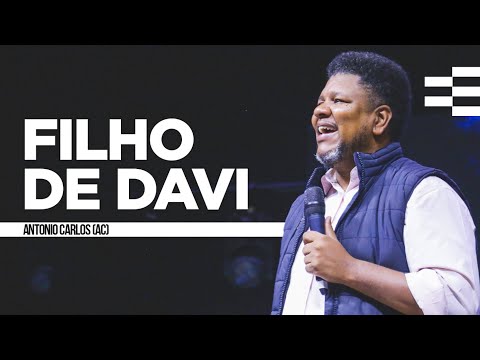
FILHO DE DAVI - Antonio Carlos (AC)
Introduction
The speaker introduces the topic of the series and greets the audience.
Series Introduction
- The series is called "Tudo em Todos" (Everything in Everyone).
- The purpose of the series is to present Jesus in various texts where he may not be obvious.
- The speaker mentions that they have already covered topics such as the cross and Moses.
- They aim to present Jesus from Moses to the prophets.
Recap of Previous Weeks
The speaker recaps what has been covered in previous weeks, including focusing on the cross and discussing Moses and Jonas.
Recap of Previous Weeks
- In the first week, they discussed Jesus' crucifixion and focused on the significance of the cross.
- In the second week, there was a musical performance and a sermon about bread in relation to Jesus breaking bread with his disciples.
- In the third week, Pastor Roberto talked about Jonas and its connection to Jesus' death and resurrection.
- Last week, Pastor Glauco preached about Acts 3 when Peter and John heal a paralyzed man at the temple gate.
Invitation to Mark 10
The speaker invites everyone to turn their attention to Mark chapter 10 as they conclude the series.
Conclusion of Series
- The speaker invites everyone to read Mark chapter 10 together.
- They are going to focus on this passage for tonight's message.
Reading Mark 10:46
The speaker reads aloud from Mark chapter 10, verse 46, setting up for further discussion.
Reading Mark 10:46
- The passage describes Bartimaeus, a blind man, calling out to Jesus for mercy.
- Despite being told to be quiet, Bartimaeus persists in his plea for help.
- Jesus stops and calls Bartimaeus to him.
Bartimaeus' Healing
The speaker describes the interaction between Jesus and Bartimaeus, where Bartimaeus is healed of his blindness.
Bartimaeus' Healing
- Jesus asks Bartimaeus what he wants, and he replies that he wants to see.
- Jesus tells him that his faith has healed him, and immediately Bartimaeus regains his sight.
- Bartimaeus follows Jesus on the way.
Prayer
The speaker leads a prayer asking for the Holy Spirit's presence during their gathering.
Prayer
- The speaker prays for the Holy Spirit's presence as they gather around God's word.
- They ask for clarity in understanding and a powerful encounter with God's voice.
- They express their desire for everyone present, including those who have never heard God's voice before, to be impacted by this gathering.
Closing Remarks
The speaker concludes the introduction and expresses their anticipation for what will happen during the gathering.
Closing Remarks
- The speaker addresses Jesus as the Son of David, King of Kings, and Lord of Lords.
- They express their invitation, desire, and need for Jesus' presence in their midst.
Understanding the Theme of "Son of David"
The speaker introduces the theme of "Son of David" and emphasizes the importance of understanding who David is in the context of biblical scriptures.
The Significance of David in the Bible
- David's story is extensively covered in both the Old and New Testaments, with 62 chapters dedicated to his biography in the Old Testament alone.
- He is mentioned at least 59 times in the New Testament, highlighting his prominence as a biblical figure.
- The speaker divides David's life into three stages: his time as a shepherd, his encounter with Goliath, and his reign as king.
Three Stages of David's Life
This section explores the three major stages of David's life - his role as a shepherd, his victory over Goliath, and his reign as king.
Stage 1: Shepherd
- At 17 years old, David is anointed by God through Prophet Samuel to become king.
- Despite being anointed, he continues working as a shepherd without any immediate changes.
Stage 2: Victory over Goliath
- While delivering food to his brothers serving in the army, David encounters Goliath challenging Israel.
- Ignoring discouragement from others, he volunteers to face Goliath and defeats him using a sling and stone.
Stage 3: Reign as King
- After Saul's death, David becomes king and establishes Jerusalem as the political and religious center.
- He names Jerusalem "Zion" and leads Israel during this period.
Contrasting Saul and David
This section highlights the contrasting character traits between Saul and David during their respective reigns.
Saul's Reign
- Saul is immediately crowned king upon being anointed, lacking the refining process.
- He faces significant character flaws and becomes one of the worst kings in Israel's history.
David's Character
- David demonstrates exceptional character by refusing to harm Saul, despite having multiple opportunities to do so.
- He values the anointing of God and shows respect for Saul as the Lord's chosen one.
Davi's Integrity and Loyalty
This section focuses on David's integrity and loyalty towards Saul, even in challenging circumstances.
- Despite being pursued by Saul, David refuses to harm him because he considers Saul as "the Lord's anointed."
- David displays his loyalty and respect for God's chosen leader throughout his life.
Conclusion of David's Life
The final stage of David's life is summarized, including his reign as king and the significance of Jerusalem (Zion).
- After becoming king, David establishes Jerusalem as the political and religious capital.
- He names Jerusalem "Zion," which holds great importance in biblical references.
David's Lineage and the Promise of a Lasting Kingdom
In this section, the speaker discusses how God promised David that his lineage would lead to a powerful and influential kingdom that would last forever.
The Promise to David
- God told David that He would transform him into a highly influential and powerful man, even though He did not ask David to build a temple.
- Solomon, from David's lineage, eventually built the temple, and God made a promise to David that his kingdom would endure forever.
Jesus' Last Week: A Unique Series
The speaker highlights the uniqueness of their series by focusing on Jesus' last week. They mention starting with Jesus' last week in Mark 10.
Focusing on Jesus' Last Week
- The series began by describing Jesus' last week in detail, which is an uncommon approach.
- The current text being discussed is from Mark 10, where Jesus and His disciples are leaving Jericho for Jerusalem.
Bartimaeus: The Blind Man Who Persisted
This section focuses on Bartimaeus, a blind man who persistently called out to Jesus despite being silenced by the crowd.
Bartimaeus Calls Out to Jesus
- Bartimaeus, a blind man sitting by the roadside, hears about Jesus passing by.
- Despite being told to be quiet by the crowd, Bartimaeus persists in calling out to Jesus for mercy as the Son of David.
Importuning Until He Comes
This section emphasizes the importance of persistently seeking after Jesus until He responds.
Not Being Silenced
- Bartimaeus refuses to be silenced and continues calling out to Jesus because he believes that if Jesus is present, he will receive mercy.
The Voice That Stands Out
This section highlights the significance of having attentive ears to hear and recognize the voice of Jesus amidst a crowd.
Recognizing His Voice
- In the midst of a large crowd, Bartimaeus's voice stands out, and Jesus hears him because He knows his voice.
- Just as a skilled maestro can identify individual instruments in an orchestra, Jesus can discern our voices even in chaotic situations.
Overcoming the Crowd's Lack of Empathy
This section discusses how the crowd tried to silence Bartimaeus but Jesus encouraged him to have courage.
The Crowd's Lack of Empathy
- The crowd tries to quiet Bartimaeus because they are focused on being with Jesus and do not have time for him.
- However, Jesus tells Bartimaeus to take heart and encourages him despite the crowd's response.
Don't Be Silent Until He Comes
This section emphasizes the importance of not remaining silent until Jesus responds to our cries for mercy.
Take Courage and Call Out
- Despite being surrounded by a large crowd, Bartimaeus is encouraged by Jesus to have courage and continue calling out until he receives what he needs.
- We should also persistently seek after Jesus without remaining silent until He responds.
God Knows Your Voice
This section highlights that God recognizes our individual voices even in the midst of chaos or confusion.
God Knows Your Voice
- Just as a skilled maestro can identify specific notes or instruments in an orchestra, God knows our voices individually.
- In any situation, we serve a powerful God who is not only God for all but also our personal God.
The transcript provided is in Portuguese.
Walking through the Valley of the Shadow of Death
The speaker talks about walking through difficult times and finding comfort in the presence of God.
Finding Comfort in God's Presence
- Even in the darkest moments, there is no need to fear because God is with us.
- We often seek validation from large crowds, but it is in our private moments with God that we find true intimacy.
- Personal meetings with God are important for our spiritual growth.
The Goodness and Mercy of God
The speaker reflects on Psalm 23 and emphasizes how God's goodness and mercy accompany us throughout our lives.
The Assurance of God's Presence
- Despite facing challenges, we can trust that God is always with us, providing comfort and guidance.
- We can find solace in knowing that God prepares a table for us even in the presence of our enemies.
- Throughout our lives, we can rely on God's goodness and mercy to be by our side.
Recognizing Our Need for Healing
The speaker discusses a blind man who recognized his need for healing and how we should also acknowledge our own needs.
Acknowledging Our Condition
- Jesus asked the blind man what he wanted Him to do, highlighting the importance of recognizing one's condition.
- Sometimes we become accustomed to living with certain struggles or limitations without realizing there is a better way.
- It is essential to have clarity about our needs before seeking help from Jesus.
Removing the Masks and Filters
The speaker encourages authenticity and vulnerability before Jesus, removing the masks we wear in front of others.
Coming as We Are
- Jesus invites us to come to Him without filters or pretenses.
- We need to let go of the masks we wear and be honest about who we truly are.
- Jesus wants to see us as we are, without any artificial enhancements.
Expressing Our Desires to God
The speaker emphasizes the importance of expressing our desires and needs to God.
Asking with Faith
- Like the blind man, we should boldly express our desires to Jesus.
- It is crucial to approach God with honesty and ask for what we truly need.
- In a world focused on material gain, it is essential to seek spiritual healing from Jesus.
Immediate Restoration through Faith
The blind man's faith led to his immediate restoration, highlighting the power of faith in receiving healing.
Faith Leading to Restoration
- The blind man's clear request for sight resulted in his immediate restoration by Jesus.
- Sometimes our past traumas or experiences hinder us from approaching God with confidence.
- We can find relief and restoration through faith in Jesus' ability to heal us.
Embracing Authenticity before God
The speaker encourages embracing authenticity before God and seeking His mercy.
Being Real with God
- This could be the day when you finally embrace your true self before God and ask for His help.
- We should approach God without any masks or filters, seeking His mercy and guidance.
- Jesus wants us to be honest about our struggles and desires, allowing Him to bring healing into our lives.
The Relief of God's Mercy
The speaker reflects on the concept of mercy as a source of relief and restoration.
Finding Relief in Mercy
- Mercy can be compared to a feeling of relief, providing comfort and alleviating burdens.
- When we ask Jesus for mercy, we are seeking relief from our struggles and limitations.
- Recognizing our need for mercy allows us to experience the freedom that comes with it.
This summary is based on the provided transcript in Portuguese language.
New Section
The speaker expresses a desire to change and become someone their parents can be proud of. They mention wanting to hear from God and verbalize their thoughts.
Wanting to Change and Seeking God's Voice
- The speaker wants to go back to being the person they used to be or become someone their parents can be proud of. They express a desire for transformation.
- They mention wanting to hear from God and ask Him to verbalize His thoughts.
New Section
The speaker continues discussing the story of a blind man who receives a miracle but chooses not to use it for societal advancement. Instead, he focuses on material possessions.
Choosing Material Possessions over Spiritual Growth
- Despite receiving a miracle that could have allowed him to improve his life, such as going back to university or catching up on lost time, the blind man prioritizes material possessions.
- He mentions upgrading his phone from an iPhone 3 to an iPhone 14 and being happy about it. He also mentions changing his car and house.
- The blind man's focus on material possessions distances him further from God.
New Section
The blind man regains his sight and sees Jesus in front of him. He expresses a desire to follow Jesus.
Regaining Sight and Seeing Jesus
- After regaining his sight, the blind man sees Jesus standing before him.
- He recognizes Jesus as someone worth following and expresses his willingness to go with Him.
New Section
The speaker shares one of the most remarkable aspects of this story - the blind man referring to Jesus as "Son of David" and asking for mercy.
Recognizing Jesus as Son of David
- The blind man addresses Jesus as "Son of David" and asks for His mercy.
- This recognition shows that the blind man understands Jesus' true identity and acknowledges Him as a king with an eternal kingdom.
New Section
The speaker transitions to another passage in Matthew 21, where the crowd proclaims "Hosanna to the Son of David" during Jesus' triumphal entry into Jerusalem.
Proclaiming Hosanna to the Son of David
- As Jesus enters Jerusalem, the crowd goes ahead of Him, proclaiming "Hosanna to the Son of David."
- The people recognize Jesus as the Son of David who showed mercy and restored sight to the blind man.
New Section
The speaker invites everyone to honor and welcome Jesus as King, emphasizing that He can transform lives just like He did for the blind man.
Honoring Jesus as King
- The speaker encourages everyone to stand up and welcome Jesus as King.
- They invite people to allow Jesus into their lives and experience His transformative power.
New Section
The speaker invites those who have experienced a personal connection with the message to raise their hands. They offer prayers for healing and restoration.
Prayers for Healing and Restoration
- The speaker acknowledges individuals who have been touched by the message on a personal level.
- They invite those facing health challenges or seeking restoration in any area of life to raise their hands.
- Prayers are offered for healing, specifically mentioning someone with kidney function at only 9%.
New Section
The speaker addresses individuals dealing with health issues, assuring them that God can regenerate their organs. They encourage support from others in prayer.
Praying for Health Issues
- The speaker addresses individuals facing health challenges, specifically mentioning someone with kidney issues.
- They encourage those in similar situations to seek help from God and believe in His power to regenerate organs.
- Support from others is emphasized, urging the congregation not to let anyone stand alone.
New Section
The speaker urges everyone not to leave anyone standing alone and invites them to pray together for their specific needs.
Praying Together for Specific Needs
- The speaker emphasizes the importance of unity and support within the congregation.
- They invite everyone to pray together, asking God for help in their individual circumstances.
Worship and Prayer
This section focuses on worship and prayer during a congregation gathering.
Raising Hands in Worship
- The speaker asks the congregation to raise their hands as a sign of surrender and seeking help from God.
- They encourage the congregation to let the Holy Spirit move and allow Jesus to work among them.
Invitation for Salvation
- An invitation is given for those who haven't accepted Jesus into their lives to do so.
- The congregation is asked to raise their hands if they want to pray with the speaker.
Praying for Healing
- Specific prayers are offered for individuals in the congregation who have health concerns.
- The speaker asks for healing touch from God, similar to what the blind man received when he encountered Jesus.
Celebration and Farewell
- The speaker expresses gratitude for the series and how God has worked during this time.
- There is a sense of joy in concluding the gathering, raising heads, and welcoming Jesus as King.
- A pastor leads a celebration of communion, inviting everyone to participate in remembering Jesus' sacrifice.
The Blind Man's Need
This section discusses the story of the blind man who was healed by Jesus and highlights his need not only for physical sight but also for eternal life.
Physical Sight vs. Eternal Life
- The blind man's immediate need was physical sight, which Jesus provided.
- However, his greater need was eternal life, just like each individual needs salvation beyond any physical healing.
Jesus' Sacrifice
- Emphasis is placed on Jesus being called "Son of David" and being king over all.
- Despite being God, Jesus humbled himself by taking human form, experiencing death on the cross to offer us eternal life.
Communion
This section focuses on the celebration of communion and its significance in remembering Jesus' sacrifice.
The Bread
- The speaker references 1 Corinthians 11:23, where Jesus took bread, gave thanks, and said it represents His body given for believers.
- The congregation is invited to partake in the bread together.
The Cup
- Referring to the same verse, the speaker mentions that the cup represents the new covenant through Jesus' blood shed on the cross.
- It is emphasized that Jesus paid all debts and invites everyone to participate in this covenant by drinking from the cup.
Conclusion of Communion
This section concludes the celebration of communion with a focus on Christ's presence within believers.
Christ Living Within
- The congregation is encouraged to acknowledge that Christ lives within them.
- They are reminded to sing and express their love for Jesus who holds their lives in His hands.
Victory in Life
The speaker talks about the importance of overcoming challenges and achieving victory in life.
Embracing Victory
- The speaker emphasizes the need to embrace victory in our lives.
Praising God
- The audience is encouraged to praise God, saying "Hallelujah" and acknowledging Jesus as the Savior who has overcome.
- Applause from the crowd.
Gratitude to God
- The speaker expresses gratitude to God for His presence, His word, and His miracles.
- Thanks are given for healing, blessings, and the power of Jesus' resurrection.
- Gratitude is expressed for all that God has done in their lives during this time.
Blessing and Conclusion
- A blessing is given for the love of God, the grace of Jesus Christ, and the comfort of the Holy Spirit to be upon everyone's life.
This summary focuses on key points related to victory, praising God, gratitude, and a concluding blessing mentioned in the transcript.