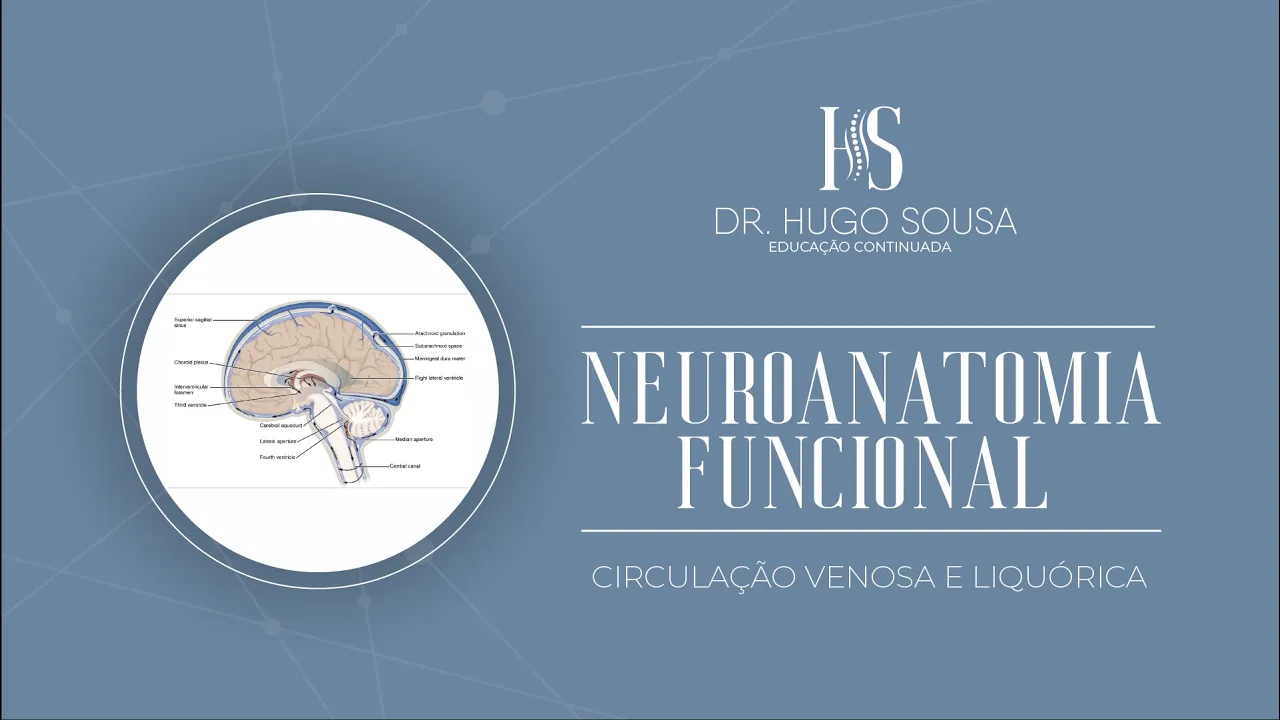
MENINGES E CIRCULAÇÃO LIQUÓRICA - PARTE 1
Overview of Meninges and Cerebrospinal Circulation
Introduction to Key Structures
- The discussion begins with an overview of the meninges and cerebrospinal fluid circulation, emphasizing the importance of reviewing key anatomical structures.
- An internal view of the cranial vault is presented, highlighting familiar structures such as the frontal crest in the frontal bone and the superior sagittal sinus.
Anatomical Features Observed
- The presentation notes small granulations known as arachnoid granulations that leave impressions on bones during their formation, indicating bone plasticity.
- Three cranial fossae are identified: anterior, middle, and posterior. Important structures like the lesser wing of the sphenoid bone are discussed.
Sphenoid Bone Details
- The lesser wings of the sphenoid bone are examined along with associated features such as anterior clinoid processes and greater wings.
- The hypophyseal fossa (pituitary fossa) is highlighted alongside lateral observations of carotid arteries near the sphenoid body.
Vascular Pathways
- Discussion includes how internal carotid arteries traverse through a cavernous sinus, which is crucial for understanding central nervous system vascularization.
- Both left and right cavernous sinuses are noted, providing context for their anatomical positioning relative to other structures.
Additional Cranial Structures
- Observations extend to important foramina such as the superior orbital fissure, round foramen, and oval foramen within temporal bone anatomy.
- The trigeminal ganglion's location is marked alongside petrosal sulci that indicate significant vascular pathways in this region.
Sinus System Overview
- Internal occipital protuberance is referenced concerning its relationship with various venous sinuses including superior sagittal sinus.
- Emphasis on transverse sinuses leading into sigmoid sinuses illustrates complex drainage systems within cranial anatomy.
Summary of Venous Drainage
- A detailed explanation follows regarding how venous sinuses drain into jugular veins; this highlights critical aspects of cerebral blood flow management.
Understanding Neural Development
Overview of the Nervous System Formation
- The discussion begins with the mention of the "veia de Galeno" and its connection to various cavernous sinuses, highlighting their anatomical significance in the brain.
- It is noted that there exists a basilar plexus at the base of the skull, which plays a role in understanding cranial anatomy.
Embryological Development of the Nervous System
- The embryonic development timeline indicates that by around 18 days, an embryo measures approximately 1.5 mm and shows thickening of ectoderm along the future dorsal midline due to notochord influence.
- A deepening neural plate forms a neural groove, which eventually leads to the creation of the neural tube essential for central nervous system (CNS) formation.
- The neural tube develops into structures constituting the CNS while lateral margins (neural crests) form peripheral nervous system components including nerves and neuroendocrine elements.
Key Stages in Neural Tube Development
- By day 25, three dilations appear in the neural tube: prosencephalon, mesencephalon, and rhombencephalon; these are crucial for further brain structure differentiation.
- The closure of neuropores occurs on day 25 with subsequent closure at caudal ends two days later, marking significant progress in embryonic brain development.
Differentiation into Secondary Vesicles
- Around day 40, five secondary vesicles emerge from three primary ones: telencephalon from prosencephalon; mesencephalon remains unchanged; rhombencephalon differentiates into metencephalon and myelencephalon.
- Telencephalon gives rise to cerebral hemispheres while diencephalon includes thalamic structures; mesencephalic structures remain stable throughout this phase.
Ventricular System Formation
- As vesicles develop, corresponding cavities known as ventricles form within CNS; these include lateral ventricles within telencephalon and third ventricle within diencephalon.
- Communication between lateral ventricles and third ventricle is established early on during development, facilitating cerebrospinal fluid circulation.
Meningeal Structures Protection
- Protective membranes surrounding CNS are introduced: dura mater (outermost), arachnoid mater (middle), each serving distinct structural roles with varying tissue compositions.
Understanding the Pia Mater and Its Role in Nervous Tissue
Structure and Composition of Pia Mater
- The pia mater is described as having a spider web-like appearance, which is reflected in its name. It consists of collagen fibers and cells rich in melanin.
- The pia mater is closely associated with nervous tissue, indicating its importance in the central nervous system's structure.
Interaction with Cerebrospinal Fluid
- The pia mater extends into the sulci (grooves) of the brain, highlighting its integration within cerebral structures.
- A significant amount of cerebrospinal fluid occupies the space around the pia mater, which plays a crucial role in cushioning and protecting the brain.
Turn any video into a summary like this
YouTube links, meetings, lectures. With transcripts, search, and chat.