Biochar Workshop Part 4, The Biochar Facility
Introduction to Char Production Process
Overview of the Team and Equipment
- Dan introduces himself and Abraham, highlighting their roles in managing the char production process. They are involved in daily operations, including making char and maintaining equipment.
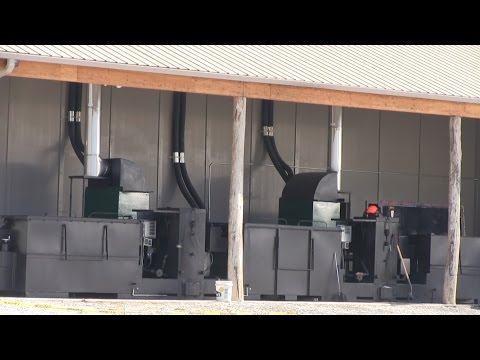
- The equipment used for char production includes three retort units, which resemble dumpsters. Two of these were recently filled with char from a previous run.
Energy Pathway in Char Production
- The process begins with gasifiers that utilize wood chips to create fire in a burn chamber, generating gas that travels through channels beneath the retorts.
- As the gas moves through a water-to-air heat exchanger, it heats water for other uses while cooking the contents of the retorts, leading to moisture removal and pressurization.
Gas Management and Collection
Condensation Process
- The dirty gas produced is condensed using another shell-and-tube heat exchanger where it passes over cold water, allowing for collection of condensible gases like pyrolytic acid and wood vinegar into tanks.
- Non-condensible gases such as hydrogen and carbon monoxide are redirected back into the burn chamber for reuse in sustaining the process. This cycle captures energy efficiently while heating water again before returning it to storage.
Char Extraction Methodology
- To extract char from the retorts, they use a large vacuum system that grinds and collects char into super sacks while minimizing dust generation by adding liquids during processing.
- The entire process operates without combustion within the chambers; instead, it relies on pyrolysis where only charcoal remains after moisture is removed from wood over an eight-hour period.
Innovative Ideas Around Char Use
Future Applications of Char Production
Crowd Sourcing and Biochar Production
Insulation and Heat Management
- The facility utilizes advanced insulation materials, similar to those used on the space shuttle, allowing for high internal temperatures (1,000°F) while maintaining a safe external temperature of around 150°F.
- The heat generated is effectively contained and managed to control gas emissions by regulating oxygen levels during combustion processes.
Economic Considerations in Biochar Production
- The speaker aims for a market value of $1.50 to $2 per pound for biochar, despite industry skepticism about this pricing compared to the average market rate of $250 per ton.
- Factors influencing profitability include transportation costs, equipment capabilities, and local economic conditions which can significantly affect overall feasibility.
Startup Costs and Regulatory Challenges
- Initial investment varies greatly depending on location; for instance, land prices in New England can reach $300,000 for just three-quarters of an acre. This complicates financial justification for new ventures.
- Navigating regulatory environments poses additional challenges that can delay project initiation and impact profitability due to extensive red tape involved in compliance processes.
Energy Cycling and System Design
- The facility features two 9,000-gallon tanks designed to cycle energy efficiently throughout the operation by distributing heat as needed across various systems including kilns and greenhouses.
- A network of pumps facilitates heating through floor tubing in the greenhouse while also preparing for future refrigeration needs using waste heat from production processes.
Temperature Management Strategies
- Water storage temperatures are monitored closely; optimal ranges are between 150°F to 180°F with considerations made to prevent overheating which could lead to wasted energy or system failures.
Biochar Sauna and Its Benefits
Introduction to Biochar Sauna
- The discussion begins with the introduction of a biochar sauna, highlighting its unique features and benefits.
- The speaker notes that many people in southwest Virginia have outdoor saunas, often incorporating char into their health regimen post-sauna.
Characteristics of Biochar
- It is emphasized that the biochar produced has undergone a clean burn, resulting in minimal volatiles and pure carbon content.
- A personal anecdote is shared about crushing biochar for use in compost to enhance garden soil quality.
Applications of Biochar
- The speaker mentions feeding biochar to pigs, noting their strong preference for it, likening it to a treat.
- Using biochar in chicken coops is suggested as a method to absorb ammonia from manure, thus improving soil nitrogen retention.
Encouragement for Experimentation
- Viewers are encouraged to learn more about biochar applications and share their experiences for collective learning.
- A comparison is made between different methods of producing biochar; one method involves using an inner barrel while another relies on top-down burning.
Technical Insights on Production Methods
- The speaker discusses various gasifier designs like the T-Udd (top lit updraft gasifier), which can be used for making biochar but requires active monitoring during operation.
- The advantages of the discussed method include reduced labor compared to other techniques, allowing for unattended cooling until the next day.
Research and Future Studies
- Collaboration with PhD Kelly Roberts from Cornell University is mentioned regarding life cycle studies on the production process and its environmental impact.
- Emphasis is placed on understanding fossil fuel usage in production processes as part of ongoing research efforts.
Transitioning to Practical Applications
Turn any video into a summary like this
YouTube links, meetings, lectures — with transcripts, search, and chat.