ICT Mentorship 2023 - Deep Dive Into Institutional Order Flow
Introduction to Institutional Order Flow
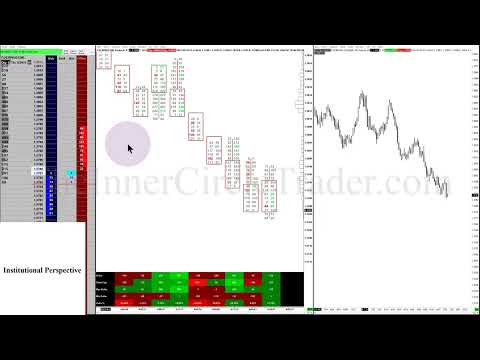
In this section, the speaker introduces the topic of institutional order flow and discusses the use of depth of market (DOM) and footprint charts.
Understanding Order Flow Tools
- The speaker mentions that some traders are interested in using tools like DOM and footprint charts for order flow analysis.
- These tools provide technical information about institutional trading activity.
- However, the speaker emphasizes that adding too many indicators can make trading more complicated.
Importance of Learning from the Speaker
- The speaker encourages viewers to reflect on what they are learning from him.
- He acknowledges that his teachings may seem daunting or complicated at first, but rushing through the learning process is not beneficial.
- The focus should be on understanding concepts rather than adding multiple indicators to a chart.
Necessity of Order Flow Tools
- The speaker states that he does not believe it is necessary to use order flow tools like DOM or footprint charts.
- He compares these tools to other indicators, stating that they are faith-based premises applied to trading decisions.
- Prices in the market are not influenced by these tools alone.
Limitations of Depth of Market (DOM)
- The speaker explains that when using DOM, orders can be spoofed, creating false impressions of buying or selling interest in a market.
- Traders still face the challenge of predicting market direction based on this information.
Focus on Predicting Market Direction
- The speaker highlights the importance of knowing where the market is likely to move rather than focusing on small price fluctuations indicated by DOM or level two data.
- He teaches his students to primarily focus on predicting market direction and reaching specific support or resistance levels.
Do You Need Order Flow Tools?
In this section, the speaker continues discussing whether order flow tools are necessary for successful trading.
Opinion-Based Trading
- The speaker states that using order flow tools, such as DOM or footprint charts, still requires traders to have an opinion about market direction.
- This opinion may be incorrect, just like any other trading approach.
Knowing Market Direction
- The speaker emphasizes that the first rule he teaches his students is to know where they trust the market is more likely to move.
- Order flow tools may indicate more buyers or sellers at a given time, but this does not guarantee market movement in a specific direction.
Avoiding Short-Term Trading Approaches
- The speaker mentions that he is not interested in short-term trading strategies focused on making small profits.
- His focus is on understanding where the market is likely to reach and teaching his students the same.
Understanding Market Predictions
In this section, the speaker discusses the importance of predicting market movements and challenges common statements made by some traders.
Challenging Common Statements
- The speaker questions statements made by some traders who claim that predicting market direction is unnecessary.
- He argues that it makes no sense because having an opinion about market movement is crucial for successful trading.
Depth of Market vs. Market Predictions
- The speaker compares depth of market (DOM) data with predictions about where the market will go.
- He highlights that knowing where the market will reach is more important than focusing on small fluctuations indicated by DOM data.
Importance of Trusting Market Direction
- The speaker reiterates that trusting where the market is likely to move plays a significant role in successful trading.
- Order flow tools can provide additional information, but they should not replace understanding and predicting overall market direction.
Evaluating Market Movement
In this section, the speaker continues discussing how order flow tools relate to evaluating potential market movement.
Evaluating Market Direction
- The speaker poses a question about whether it is more likely for the market to move down towards orders below the marketplace or up towards orders above the marketplace.
- He emphasizes that small price fluctuations indicated by order flow tools should not be the primary focus.
Focus on Market Reach
- The speaker states that his primary interest is knowing where the market will reach, rather than making short-term trades based on order flow data.
- He teaches his students to focus on predicting market direction and reaching specific support or resistance levels.
Limitations of Order Flow Tools
- The speaker acknowledges that order flow tools may indicate more buyers or sellers at any given time.
- However, this does not guarantee market movement in a specific direction.
Understanding Depth of Market (DOM)
In this section, the speaker explains depth of market (DOM) and its implications for trading decisions.
Depth of Market Ladder
- The speaker refers to DOM as a depth of market ladder.
- It shows orders stacking above and below the marketplace, indicating potential buying or selling interest.
Likelihood of Market Movement
- The speaker highlights that while DOM may suggest more buyers or sellers at a particular time, it does not guarantee market movement in a specific direction.
- Small fluctuations indicated by DOM should not be overemphasized when making trading decisions.
Importance of Predicting Market Reach
- The speaker reiterates that his focus is on predicting where the market will reach, rather than short-term price movements indicated by DOM data.
- Trusting one's prediction about overall market direction is crucial for successful trading.
The Use of Crutches in Trading
In this section, the speaker discusses the use of "crutches" in trading and emphasizes that they can be helpful for learning and focusing on specific aspects of the market. However, relying solely on these tools for making trading decisions is considered narrow-minded.
- Using crutches, such as bias indicators or order flow tools, can help traders focus on specific areas of the market.
- It is acceptable to use these tools if they assist in sticking to a particular trading strategy or bias.
- However, using them as the sole basis for buying or selling decisions is myopic.
- The presence of these tools on institutional terminals does not make them more reliable or accurate.
- Traders should focus on identifying where liquidity is most likely to be found rather than getting caught up in the details provided by these tools.
The Limitations of Order Flow Tools
In this section, the speaker expresses skepticism about the effectiveness of order flow tools like depth of market (DOM) and highlights their limitations. They argue that even when watching live streams or recorded trades with these tools, it doesn't necessarily lead to accurate predictions.
- Watching YouTubers who use order flow tools like DOM may not provide significant advantages in predicting market movements.
- These tools can trick traders into thinking that certain price levels will attract more buyers or sellers based on visible orders.
- The speaker's teaching approach focuses on visually analyzing charts and understanding time-based charts rather than relying heavily on order flow data.
- Different traders may have different preferences regarding chart formats and additional data augmentation techniques.
Manipulation and Trustworthiness of Order Flow Data
In this section, the speaker raises concerns about the trustworthiness of order flow data and highlights the potential for manipulation. They caution against relying too heavily on this data, as it can be spoofed or manipulated by trading firms and institutions.
- Many trading firms and institutions have been fined for manipulating order flow data to create false buying or selling interest.
- The speaker questions the reliability of order flow data that can be easily manipulated.
- Placing orders above or below market prices can create a false impression of market sentiment.
- The interpretation of order flow data may lead retail traders to believe there is more interest in certain price levels than there actually is.
- While some traders may argue that these tools have worked for them in specific instances, the speaker believes their own approach outperforms such tools consistently.
Personal Opinion on Order Flow Tools
In this section, the speaker reiterates their personal opinion about order flow tools while acknowledging that different traders may find value in using them. They emphasize that their goal is not to convince others to abandon these tools but rather to present an alternative perspective.
- The speaker acknowledges that some traders may find value and comfort in using order flow tools.
- Traders should use these tools if they help them focus and trust their trading models.
- However, the speaker does not consider these tools as a reliable source for reading institutional order flow.
- Manipulation and potential inaccuracies make it difficult to fully trust the basis of this data.
- Traders are encouraged to develop their own understanding and not solely rely on these tools.
This summary provides an overview of the main points discussed in the transcript. It is important to refer back to the original transcript for complete accuracy.
New Section
In this section, the speaker discusses the importance of understanding price action and predicting future price movements rather than focusing on past market data.
Understanding Price Action and Predicting Price Movements
- The speaker emphasizes the need to focus on predicting where price is going to go rather than analyzing past market data.
- They explain that their approach involves drawing liquidity above or below the marketplace based on predictions of future price movements.
- Specific factors such as volume imbalances, institutional overflow entry drills, and wicks are mentioned as indicators to consider when predicting price movements.
- While not every market or chart fractal will have all these indicators, it is important to recognize and navigate them effectively.
New Section
In this section, the speaker explains how their approach teaches traders how to predict price movements using institutional order flow analysis.
Predicting Price Movements with Institutional Order Flow Analysis
- The speaker asserts that they teach traders how to predict price movements because it is essential for utilizing information effectively.
- They pose a question about being bearish in the marketplace and highlight the importance of expecting more orders below the current market price based on directional bias.
- Traders are encouraged to look for evidence in depth of Market (DOM) data that supports their analysis and justifies their directional bias.
- The speaker distinguishes between their concept of institutional order flow analysis and other approaches that focus solely on DOM data.
New Section
In this section, the speaker provides insights into historical trends related to level two data and highlights its limitations in terms of generating consistent profits.
Historical Trends and Limitations of Level Two Data
- The speaker recalls a time when level two data became popular among traders during the transition from open outcry to electronic trading.
- They express skepticism about the effectiveness of level two data in generating substantial profits and question the absence of notable success stories.
- The speaker clarifies that while some traders may find value in using level two data alongside their approach, they personally do not rely on it for analysis.
- They emphasize the contrast between institutional order flow analysis and level two data, highlighting the importance of understanding this distinction.
New Section
In this section, the speaker discusses their teaching methodology and emphasizes the significance of providing accurate predictions of future price movements.
Teaching Methodology and Accurate Price Predictions
- The speaker emphasizes their teaching approach, which focuses on accurately predicting where the market is going to go and how it will get there.
- They highlight that their predictions are not vague or general but rather specific price moves with considered expectations.
- The speaker encourages traders to reflect on their teaching examples that demonstrate accurate predictions made before market events occurred.
- They stress that their approach does not require level two data and urge traders to consider the effectiveness of their methodology compared to others.
This summary covers only a portion of the transcript.
New Section
The speaker discusses the lack of required tools in trading and emphasizes the simplicity of using a candlestick chart to analyze market conditions.
Lack of Required Tools in Trading
- The speaker highlights that while other traders may feel the need for various tools, they personally only use a candlestick chart.
- They emphasize that as long as they can see the time and understand where the market stands within its range, it is sufficient for their analysis.
New Section
The speaker reflects on their previous bullish stance and successful predictions regarding higher prices on e-mini S&P, NASDAQ, lower prices on the dollar index, and euro dollar.
Successful Predictions
- The speaker mentions their bullish stance from last Sunday (July 9th, 2023) and confirms that their expectations of higher prices on e-mini S&P, NASDAQ, and lower prices on the dollar index were accurate.
- They highlight that these moves were significant rather than small fluctuations.
New Section
The speaker provides an explanation for their belief in NASDAQ's upward movement by analyzing a weekly chart.
Analysis of Weekly Chart
- The speaker directs attention to a specific candle on the upper left-hand corner of the weekly chart.
- They explain that this candle represents a mitigation block which is essentially opposite to a breaker but still serves as mitigation.
- By observing a high, low, and higher high with no lower high between them, they identify this area as a mitigation block.
New Section
The speaker compares bearish breakers with mitigation blocks in terms of resistance levels and how they utilize them in trading strategies.
Bearish Breakers vs. Mitigation Blocks
- Bearish breakers are stronger in terms of resistance compared to mitigation blocks.
- Mitigation blocks can be traded through, while breakers pose more formidable resistance.
- The speaker primarily uses mitigation blocks as targets rather than entry points in their trading strategy.
New Section
The speaker further explains the use of mitigation blocks and breakers in trading, highlighting their preference for targeting purposes with mitigation blocks.
Utilizing Mitigation Blocks and Breakers
- Mitigation blocks are better suited for targeting purposes, as they can be traded through.
- Breakers are more resistant to price action but can still be penetrated.
- The speaker used a specific mitigation block as a target for NASDAQ's potential upward movement.
New Section
The speaker emphasizes that they are not calling a high in NASDAQ or ES and advises against attempting to predict market tops. They express their opinion on the current market conditions.
Avoiding Predictions of Market Highs
- The speaker firmly states that they are not predicting a high in NASDAQ or ES.
- They caution against trying to call market tops and highlight the continuous upward grind of the market.
- While acknowledging that current equity prices may seem unjustified, they emphasize the importance of trusting order flow and focusing on where the market is likely to go.
New Section
The speaker discusses their ability to predict price movements based on experience, tools, and understanding order flow dynamics.
Predicting Price Movements
- The speaker asserts their proficiency in predicting price movements due to their experience and tools.
- They mention having insights into order flow dynamics before ladders or depth-of-market confirmations.
- Their predictions align with what they expect from themselves and their students.
New Section
The speaker emphasizes the importance of having a directional bias in trading and the necessity of predicting price direction for profitability.
Having a Directional Bias
- The speaker highlights that having a directional bias is crucial in trading, except for those who trade options with delta neutral strategies.
- They stress the need to predict price direction to achieve consistent profitability.
- Without the skill of predicting where prices are likely to go, it is unlikely to be consistently profitable.
New Section
The speaker explains their opinion at the beginning of the week regarding NASDAQ's movement towards a specific mitigation block and how it aligned with their expectations.
Expectations for NASDAQ's Movement
- At the start of the week (Sunday, July 9th, 2023), the speaker anticipated NASDAQ's movement towards a particular mitigation block.
- This target was above previously cleared relative equal highs.
- The market followed this expectation and reached into the mitigation block, closing right on it.
New Section
The speaker addresses arguments against predicting price direction and emphasizes its importance for profitable trading.
Predicting Price Direction
- The speaker questions why one would argue against predicting price direction when attempting to be a buyer or seller in futures trading.
- They emphasize that predicting price direction is essential for profitability and understanding where markets may gravitate towards.
- Their teaching focuses on helping students develop skills in predicting likely price movements.
New Section
The speaker reiterates that understanding price direction is necessary for consistent profitability and applies their teachings across different asset classes.
Consistent Profitability through Price Direction
- The speaker reaffirms that consistently profitable trading requires an understanding of where prices are likely to move.
- They assure viewers that their teachings apply universally to all asset classes, including forex trading.
- The speaker's approach remains consistent regardless of the specific asset being traded.
New Section
The speaker concludes by emphasizing the importance of having a directional bias and understanding where prices are likely to gravitate towards.
Importance of Directional Bias
- The speaker concludes that having a directional bias is crucial for profitable trading.
- They reiterate the necessity of understanding where prices are likely to move and gravitate towards.
- Without this skill set, consistent profitability becomes challenging to achieve.
New Section
The speaker discusses how futures index trading works in various markets, including forex, commodities, and metals. They mention that some students have been profitable trading crypto using this information.
Futures Index Trading
- Futures index trading works in forex, commodity, gold, and metal markets.
- Some students have been successful in trading crypto using this information.
New Section
The speaker analyzes a down closed candle on the daily chart and explains its significance in relation to an older bullish block.
Analysis of Down Closed Candle
- A down closed candle is observed on the daily chart.
- This candle is digging into an older bullish block.
- The down closed candle is considered a propulsion block because it digs into a previous down closed candle.
- Propulsion blocks are characterized by not closing below the mean threshold level (50 level).
New Section
The speaker explains the concept of gaps and tails on candlesticks and how they relate to market movements.
Gaps and Tails on Candlesticks
- Movements returning back into a gap or tail on a candlestick are common.
- Wicks and tails on candlesticks are treated as gaps.
- The midpoint of the gap or tail is considered significant for future price movements.
New Section
The speaker discusses the importance of closing prices in determining the validity of propulsion blocks.
Validity of Propulsion Blocks
- Closing prices below the mean threshold level invalidate propulsion blocks.
- Although there may be movement through the mean threshold level, as long as it doesn't close below it, the propulsion block remains valid.
New Section
The speaker explains that recent market movements were just a return to a previous gap and discusses the impact of news events on price.
Recent Market Movements
- Recent market movements were a return to a previous gap.
- The movement did not violate the rules that make a propulsion block invalid.
- News events had an impact on price, causing it to rally higher.
New Section
The speaker emphasizes the importance of conducting one's own analysis and not solely relying on others' observations or advice.
Conducting Independent Analysis
- It is important to conduct one's own study and verify observations made by others.
- Relying solely on someone else's word is not advisable when investing or seeking financial advice.
New Section
The speaker discusses the expected bullishness in higher prices for NASDAQ and explains how price movements are framed based on current levels and future expectations.
Expected Bullishness in NASDAQ
- Bullishness in higher prices for NASDAQ is expected.
- Price movements are framed based on current levels and future expectations.
- If the price is expected to gravitate towards a certain level, daily candles are expected to move towards that level.
New Section
The speaker explains that the weekly chart's mitigation block indicates a risk-on scenario, allowing all asset classes to potentially move higher.
Risk-On Scenario
- The weekly chart's mitigation block suggests a risk-on scenario.
- In a risk-on scenario, all asset classes have the potential to move higher.
- A recent risk-on event supports this expectation.
New Section
The speaker encourages viewers to challenge their own observations and analyze whether their charts show similar patterns as discussed in the video.
Challenging Observations
- Viewers are encouraged to challenge their own observations and verify if their charts show similar patterns.
- It is important to have personal confirmation rather than blindly accepting someone else's word.
New Section
The speaker explains that the market is more likely to move higher based on the bullish pattern observed in the weekly and daily charts.
Likelihood of Market Moving Higher
- The market is more likely to move higher based on the observed bullish pattern in the weekly and daily charts.
- The bearishness in the dollar further supports this expectation.
New Section
The speaker discusses the potential for a larger sell-side liquidity pool and how it indicates a risk-on scenario for all asset classes.
Sell-Side Liquidity Pool
- A larger sell-side liquidity pool is expected, indicating a risk-on scenario.
- In a risk-on scenario, all asset classes have the potential to move higher.
New Section
The speaker explains that price movements are likely to gravitate towards a specific level, even if not explicitly identified, due to fair value gaps or other factors.
Gravitating Towards Specific Levels
- Price movements tend to gravitate towards specific levels, even if not explicitly identified.
- Fair value gaps or other factors can influence this movement.
New Section
The speaker emphasizes that expanding higher or lower on the weekly candlestick sets the bias for the week and determines future price expectations.
Weekly Candlestick Bias
- Expanding higher or lower on the weekly candlestick sets the bias for the week.
- Future price expectations are determined based on this bias.
New Section
The speaker highlights that recent consolidation and rejection patterns indicate a high probability of aggressive upward movement.
Aggressive Upward Movement
- Recent consolidation and rejection patterns suggest a high probability of aggressive upward movement.
- Buy orders are expected to be resting above the relative equal highs on the daily chart.
New Section
The speaker reiterates that markets do not top abruptly and emphasizes the bullish pattern observed in both weekly and daily charts.
Market Behavior and Bullish Pattern
- Markets do not top abruptly; they exhibit gradual movements.
- The bullish pattern observed in both weekly and daily charts supports the expectation of further upward movement.
New Section
The speaker explains that being bearish on the dollar contributes to the overall risk-on scenario, allowing all asset classes to potentially move higher.
Bearishness on Dollar
- Being bearish on the dollar contributes to the overall risk-on scenario.
- All asset classes have the potential to move higher in this scenario.
New Section
In this section, the speaker discusses the market structure and identifies a shift in market structure based on price action on the hourly chart.
Market Structure and Price Action
- The speaker points out a shade layer on the hourly chart, which represents the propulsion block.
- The propulsion block is characterized by relative equal lows and a short-term high.
- A shift in market structure occurs when price trades above this short-term high, indicating a potential move higher.
New Section
In this section, the speaker explains that once there is a shift in market structure, it sets in motion the expectation of higher prices.
Expectation of Higher Prices
- A close above the short-term high is not necessary for a shift in market structure.
- Once there is a shift in market structure, it indicates that higher prices are likely to follow.
New Section
In this section, the speaker discusses retracements and how they relate to the propulsion block.
Retracements and Propulsion Block
- Retracements can occur after a shift in market structure.
- The mean threshold of the propulsion block serves as a target for retracements.
- Price often retraces to this mean threshold before continuing its upward movement.
- Smooth edges in candlestick bodies indicate strong price action without significant retracements.
New Section
In this section, the speaker emphasizes the importance of reading candlestick bodies and wicks/tails for understanding price action.
Reading Candlestick Bodies and Wicks/Tails
- Candlestick bodies provide important information about price action and tell the narrative of the market.
- Wicks or tails can cause damage as traders get stopped out due to volatility.
- Focusing on candlestick bodies without wicks or tails can provide a clearer view of price action.
New Section
In this section, the speaker explains how price action confirms the shift in market structure and identifies key levels.
Confirmation of Market Structure Shift
- The speaker points out a slightly higher high compared to a previous high, indicating a shift from sell side to buy side.
- This confirms the bullish bias and sets the stage for higher prices.
- Key levels are identified based on the propulsion block and mean threshold.
New Section
In this section, the speaker discusses the minimum criteria for a high probability directional bias and predicts higher prices.
High Probability Directional Bias
- Meeting the minimum criteria for a high probability directional bias indicates that higher prices are likely.
- The speaker predicts that prices will move towards a specific level known as the mitigation block.
New Section
In this section, the speaker analyzes price action around the mean threshold and observes support at key levels.
Price Action around Mean Threshold
- Price drops down to touch the mean threshold after meeting the minimum criteria for a bullish bias.
- Candlestick bodies indicate respect for the propulsion block and support at key levels.
- Depth of Market or footprint tools may provide further justification for expecting higher prices.
New Section
In this section, the speaker explains that prior analysis already predicted higher prices before any market activity occurred.
Predicting Higher Prices
- Prior analysis using experience and institutional order flow allowed for predicting higher prices before any market activity.
- Depth of Market or footprint tools are not necessary when prior expectations have already been established based on price action analysis.
New Section
In this section, the speaker emphasizes the importance of reading price action and understanding market dynamics.
Reading Price Action and Market Dynamics
- Reading price action involves observing how price reacts to specific levels.
- The speaker's analysis focuses on how price gyrates off PD arrays to understand market dynamics.
- Depth of Market or order book information becomes relevant once prior expectations have been established.
New Section
In this section, the speaker highlights the advantage of having a broader perspective and prior knowledge.
Advantage of Prior Knowledge
- Having prior knowledge and experience allows for a better perspective on market movements.
- Depth of Market or footprint tools provide historical data but do not offer a better perspective than prior analysis.
New Section
In this section, the speaker emphasizes the use of experience, institutional order flow, and reading price action to predict market movements.
Using Experience and Institutional Order Flow
- Experience and institutional order flow analysis allow for predicting market movements before any activity occurs.
- Reading price action and understanding market dynamics provide valuable insights without relying solely on depth of Market or footprint tools.
New Section
In this section, the speaker discusses the importance of understanding price action and market structure without relying on additional tools or indicators. They emphasize the need to develop skills in reading charts and predicting market movements.
Can You Trust These Tools?
- The speaker asserts that they can read charts and predict market movements without relying on additional tools or indicators.
- They claim to have proven their ability through live executions and calling the market minute by minute on a live stream.
- The speaker believes that relying solely on tools like order books, ladders, depth of market, harmonic patterns, Elliott wave, etc., is not necessary for successful trading.
- They argue that these tools do not provide a clear picture of where prices will go or how the market will behave.
Understanding Price Action
- The speaker emphasizes the importance of focusing on price action alone to determine market direction.
- They suggest ignoring other factors such as order books, depth of market, footprint analysis, etc.
- The speaker claims that understanding price action simplifies the process of predicting price movements.
Confidence vs. Arrogance
- The speaker addresses accusations of arrogance and clarifies that they are confident in their trading approach.
- They assert that their confidence comes from being profitable and having successful students who have learned their methods.
- The speaker encourages viewers to learn how to analyze markets themselves rather than relying solely on others' opinions.
Advantage of Experience
- The speaker acknowledges that starting out in trading can be confusing and overwhelming.
- They highlight their advantage as an experienced trader who understands how price will deliver and how market structure works.
- The speaker claims to have knowledge about specific patterns called PD arrays that others may not be aware of.
Order Books and Tools
- The speaker states that order books are not advantageous to them and they do not rely on such tools.
- They acknowledge that some traders may find value in using these tools, but they emphasize that it is not necessary for successful trading.
- The speaker suggests focusing on price action and understanding the narrative it presents.
New Section
In this section, the speaker discusses how they analyze price action to identify potential buying opportunities. They contrast their approach with what most people on platforms like YouTube, Twitter, Instagram, and Discord would do.
Analyzing Price Action
- The speaker explains their approach to analyzing price action to identify potential buying opportunities.
- They focus on identifying propulsion blocks and order blocks as confirmation of market direction.
- The speaker highlights the importance of interpreting candlestick patterns and understanding the narrative they convey.
Contrasting Approaches
- The speaker contrasts their approach with what most people on social media platforms would do.
- They suggest that many traders would be hesitant to buy during a bearish candle like the one described by the speaker.
- The speaker attributes this hesitation to a lack of understanding or confidence in reading price action.
Please note that these summaries are based solely on the provided transcript.
Candlestick Analysis and Price Prediction
In this section, the speaker discusses candlestick closure, rejection blocks, and price prediction based on market structure analysis.
Candlestick Closure and Rejection Blocks
- The closure of a candlestick indicates a willingness for the price to go higher. A rejection block signifies a potential resistance level.
- The speaker analyzes candlestick patterns on an hourly basis to observe how price action performs.
- Multiple time frames are considered to gain a comprehensive understanding of market behavior.
Predicting Price Movement
- The speaker emphasizes the importance of considering daily and weekly charts for context in predicting price movement.
- Liquidity levels and specific price points are monitored to anticipate market reactions.
- Reacting to new information is only allowed if it contradicts the initial prediction.
Bullish vs Bearish Predictions
- Being bullish means predicting higher prices, while being bearish implies expecting lower prices.
- The speaker highlights the need for accurate predictions rather than reacting to every price fluctuation.
Market Structure Analysis and Liquidity Levels
This section focuses on analyzing market structure and identifying liquidity levels for trading decisions.
Analyzing Market Structure
- Market structure analysis involves observing how price moves within specific ranges or thresholds.
- Time of day and how price responds at certain levels are crucial factors in predicting future movements.
Liquidity Levels
- Liquidity levels can be identified by analyzing short-term highs or lows on the chart.
- Depth of Market ladders or order applications are not necessary as liquidity levels can be anticipated without them.
Reading Tape and Anticipating Price Movements
This section discusses reading tape, anticipating price movements, and focusing on specific price points.
Reading Tape
- The speaker emphasizes the importance of reading tape and observing how price delivers at different levels.
- The focus is on anticipating price movements rather than reacting to every order or market fluctuation.
Anticipating Price Movements
- The speaker predicts that price will roll back up to a specific inefficiency level based on tape analysis.
- Specific price points are identified as potential entry or exit points for trades.
Market Efficiency and Predicting Future Prices
This section explores market efficiency, predicting future prices, and the speaker's trading approach.
Market Efficiency
- Market efficiency refers to the balance between supply and demand in the market.
- The speaker focuses on identifying fair value areas and inefficiencies for trading opportunities.
Predicting Future Prices
- The speaker emphasizes that trading involves predicting future prices based on bullish or bearish expectations.
- Reacting to new information is only allowed if it contradicts the initial prediction.
Trading Approach
- The speaker uses various methods (81 ways) to enter trades with precision.
- Focus is placed on specific price levels and anticipated movements rather than relying solely on order book data.
New Section
In this section, the speaker discusses the limitations of using depth of market and footprint to understand market behavior. They emphasize the importance of tape reading and understanding price action.
Importance of Tape Reading
- The algorithmic nature of depth of market and footprint tools limits their ability to provide insights into market behavior.
- Counting the number of buys and sells at a specific price level is considered irrelevant information by the speaker.
- Tape reading, which involves studying price action, provides a more valuable skill set for understanding market behavior.
- Volume and buying/selling activity have no bearing on the speaker's belief system regarding why prices move.
New Section
In this section, the speaker highlights their superior results in predicting market movements compared to others. They encourage listeners to consider their approach and trust their expertise.
Superior Results and Expertise
- The speaker claims that others are wrong in their understanding of market dynamics compared to their own results.
- The speaker emphasizes that they can predict markets with a high degree of precision on a weekly basis.
- Listeners are encouraged to set aside skepticism and listen to the speaker's teachings based on their demonstrated results.
New Section
In this section, the speaker emphasizes that learning their approach requires effort and practice. They stress the importance of studying charts and understanding price behavior without relying on demo or live trades.
Learning Process
- Developing tape reading skills requires active engagement rather than passive video watching.
- Studying price behavior without placing trades or participating in combines or funded accounts is crucial.
- The speaker suggests studying price action based on the time of day and day of the week to anticipate market movements.
New Section
In this section, the speaker discusses a specific market scenario and explains the concept of balanced price ranges.
Balanced Price Ranges
- The speaker identifies an ICT bullish breaker as a classic support and resistance level.
- Referring to a previous market review video, the speaker mentions other highs to the left of the current level.
- The range from a previous high to low becomes a balanced price range when it is revisited and broken through.
- Breaking above a balanced price range indicates potential for further upward movement.
New Section
In this section, the speaker explains why there is no reason to expect prices to drop below a certain level. They discuss mile markers and rest stops along the way in predicting market movements.
Predicting Market Movements
- Once prices break above a certain level, there is no expectation for them to return below that level.
- Mile markers and rest stops are metaphorical references used by the speaker to explain levels of significance in predicting market movements.
New Section
In this section, the speaker discusses the concept of breakaway gaps and their significance in price action analysis.
Breakaway Gaps
- A breakaway gap is a specific pattern in candlestick charts where there is an area between two candlesticks that represents inefficiency.
- When a candlestick trades down into this area, it erodes some of the inefficiency and creates a breakaway gap.
- The speaker mentions that breakaway gaps are not invented by ICT (the speaker) but are discussed in John Murphy's book, which is considered the retail Trader's Bible.
- The speaker suggests challenging the patterns taught in Murphy's book as his concepts may offer alternative perspectives.
- It is emphasized that understanding price action and considering multiple time frames are crucial for accurate analysis.
- Traders should not solely rely on one Candlestick chart or time frame but incorporate information from higher time frames to support trade ideas.
New Section
In this section, the speaker explains why breakaway gaps indicate a lack of interest in filling orders below a certain level and emphasizes the importance of context in analyzing price movements.
Breakaway Gaps and Depth of Market
- Breakaway gaps signify that even if there are large orders below the market, they will not be filled because price is likely to move higher.
- This occurs when price has already dug into a daily propulsion block and is running out of its current range.
- The speaker advises against relying solely on depth of market or footprint tools to anticipate price movements based on breakaway gaps.
- Traders who expect these areas to be filled may misunderstand their significance due to incomplete knowledge or following misleading mentorships.
New Section
In this section, the speaker highlights the importance of using tools like book maps or depth of market to identify liquidity levels and support trade decisions.
Reading the Tape and Identifying Liquidity
- The speaker emphasizes that reading the tape is not about institutional order flow or having access to an order book.
- Instead, it involves analyzing price action and looking for evidence that supports a bullish or bearish bias.
- Traders should focus on identifying periods where price runs aggressively higher, indicating potential market direction.
- Tools like book maps or depth of market can provide insights into liquidity levels and orders resting at or above certain highs.
- These tools help traders make informed decisions without solely relying on external sources for information.
New Section
In this section, the speaker discusses the importance of confirmation in trading decisions and cautions against blindly following mentorships.
Confirmation and Independent Learning
- Confirmation is crucial in trading decisions. If bodies stay at or above a certain high, it indicates a confirmation of the bullish bias.
- Traders should not expect areas above breakaway gaps to be filled but rather anticipate further upward movement.
- The speaker advises against paying for mentorships that put a price tag on concepts they may not fully understand themselves.
- Independent learning is encouraged as traders can acquire knowledge without relying on questionable mentorships.
Timestamps are approximate and may vary slightly.
Studying Traders and Market Navigation
The speaker expresses their fascination with studying traders and how they navigate the market. They mention trying to offer advice to traders but often not being well-received. They emphasize their ability to predict market movements.
Observing Trader Behavior
- The speaker enjoys watching how traders manage or mismanage themselves in the marketplace.
- They sometimes try to counsel traders on where to focus their attention and how to correct their approach, but this advice is often disregarded or ridiculed.
- Despite this, the speaker claims to have a track record of accurately predicting market events.
Analyzing Price Action
- The speaker discusses specific candlestick patterns and price action indicators.
- They highlight the significance of gaps with wicks, suggesting that when there is a gap with a wick, it is likely to be filled in by subsequent price movement.
- The midpoint of a candlestick's wick is referred to as "consequent encroachment" and is treated as a gap.
- The speaker emphasizes the importance of respecting certain levels and not allowing prices to go below half of a particular wick.
Stop Loss Management
- The speaker shares their approach to stop loss management.
- They suggest placing stop losses within a balanced price range, typically around 75% of that range.
- Some viewers may find the speaker's use of tight stop losses uncomfortable, but they emphasize the need for dedicated learning and practice in order to master trading skills.
Trading Strategies Based on Price Range
The speaker discusses trading strategies based on balanced price ranges. They explain how these ranges can provide confidence in setting stop losses.
Balanced Price Ranges
- When a price range becomes balanced after breaking through certain levels, it provides an opportunity for trading strategies.
- The speaker suggests that once a balanced price range is established, they are not concerned about prices retracing within that range.
- Stop losses can be placed anywhere within the balanced price range, with 75% of the range being a comfortable choice.
Importance of Learning and Mastering Trading Skills
The speaker emphasizes the importance of dedicated learning and mastering trading skills. They encourage viewers to put in the effort as it will be worth it in the long run.
Commitment to Learning
- The speaker acknowledges that their trading methods may appear risky or unconventional to some viewers.
- They emphasize that learning and mastering these skills require dedication and hard work.
- Despite potential skepticism or jokes from others, having a solid skill set in trading is invaluable.
Market Analysis on Different Time Frames
The speaker discusses market analysis on different time frames, specifically focusing on hourly and 15-minute charts.
Market Analysis on Different Time Frames
- The speaker compares an hourly chart with a 15-minute chart.
- They mention a balance price range observed on the hourly chart.
- The 15-minute chart shows sideways trading leading up to Friday.
This summary provides an overview of the main points discussed in the transcript. It is important to refer back to the original transcript for complete context and understanding.
Market Rally and Buy Side Imbalance
The speaker discusses the market rally and buy side imbalance, explaining that it indicates a fair value gap with a classification of buy side imbalance and sell side inefficiency.
Market Rally and Buy Side Imbalance
- The market is experiencing a strong rally, indicating a buy side imbalance.
- This buy side imbalance suggests more upside potential in the market.
- The term "bissy" refers to "buy side imbalance" (B-I-S-I).
- There is an inefficiency on the sell side, further supporting the expectation of upward movement in the market.
Breakaway Gap and Sell Side Delivery
The speaker discusses a breakaway gap and sell side delivery, highlighting its occurrence after a news driver at 10:30 AM.
Breakaway Gap and Sell Side Delivery
- A breakaway gap is observed in the price action following a news driver at 10:30 AM.
- This segment of price action indicates partial sell side delivery.
- The drop in price action suggests a breakaway gap formation.
- It is important to consider the time of day when analyzing such patterns.
Sibby Sell Side Imbalance and Anticipating Price Movement
The speaker explains sibby sell side imbalance, which involves offering the market on sell side delivery while anticipating re-pricing towards higher levels.
Sibby Sell Side Imbalance and Anticipating Price Movement
- A swing low is observed in the price action, indicating a sibby sell side imbalance.
- This segment of price action offers the market on sell side delivery but also shows an inefficiency on the buy side.
- Based on this pattern, it is anticipated that the market will re-price upwards towards a specific candlestick or higher.
New York Lunch Macro and Buy Side Liquidity
The speaker discusses the New York lunch macro and buy side liquidity, emphasizing the importance of considering liquidity levels during different times of the day.
New York Lunch Macro and Buy Side Liquidity
- Above a certain high point, there is buy side liquidity in the market.
- The time of day is New York lunch macro, which typically involves running for liquidity.
- Liquidity during this time is expected to be located in a specific area below the morning lows.
- Traders who were long before a market report have their sell stops resting just below the swing low after the news driver.
Breakaway Gap and Continuous Upside Delivery
The speaker explains how a breakaway gap indicates continuous upside delivery and emphasizes that price action on different time frames supports this expectation.
Breakaway Gap and Continuous Upside Delivery
- A breakaway gap formation is observed in a specific segment of price action.
- This breakaway gap suggests that there is no necessity for prices to trade back down into that area.
- Even on a five-minute chart, price action respects the bullish breaker line, indicating continuous upside delivery.
- The overall context points towards further upward movement and gravitation towards higher highs.
Trading Overnight Sessions Using Context
The speaker discusses how traders can use context to anticipate price movements during overnight sessions in different regions such as Asia or London.
Trading Overnight Sessions Using Context
- Traders can apply these ideas when trading overnight sessions in regions like Asia or London.
- Liquidity levels do not change based on the region being traded.
- The context of the market, such as buy side liquidity and expected price movement, remains relevant regardless of the trading session.
- Traders should focus on moving higher if the context indicates upward movement.
Gravitating Towards Higher Highs
The speaker explains how the market gravitates towards higher highs throughout the day and into overnight sessions.
Gravitating Towards Higher Highs
- Throughout the day, the market shows a tendency to trade higher, experience consolidation, and then move towards higher highs again.
- When trading resumes after an hour break at 6 PM, traders can expect a continuation of this pattern.
- Overnight session traders in regions like Asia or London can use these expectations in conjunction with their specific trading times.
Analyzing Price Action on Different Time Frames
The speaker emphasizes analyzing price action on different time frames and focuses on a specific segment of price action on a five-minute chart.
Analyzing Price Action on Different Time Frames
- It is important to compare and contrast price action across different time frames.
- A specific segment of price action is highlighted for analysis.
- By shading in from high to low and observing subsequent delivery upwards, it becomes evident that there is no necessity for prices to return to that area.
- The overall indications suggest order flow supporting further upward movement.
Understanding Fractals and PD Arrays
In this section, the speaker discusses the concept of fractals and focuses on identifying PD (Price Distribution) arrays within a shaded area on different timeframes.
Fractals and Shaded Area
- The speaker explains that they only focus on specific elements that stand out in a fractal.
- They can only analyze PD arrays within a shaded area on the five-minute chart.
Transition to Different Timeframes
- The speaker suggests reviewing this part independently or referring to one's own chart.
- They mention that the video may be watched years later, so it is important to study the content thoroughly.
Analyzing Different Timeframes
- The three-minute chart shows price action within a specific range.
- The two-minute chart displays the same range but with a different appearance.
- Finally, the one-minute chart highlights an hourly bullish breaker line and a swing high.
Understanding Bullish Order Blocks
This section focuses on understanding bullish order blocks and their significance in market analysis.
Definition of Bullish Order Block
- A bullish order block is defined as a down closed candle prior to a shift in market structure.
- It is identified by the opening price crossing an hourly bullish breaker line.
Importance of Opening Price
- The speaker emphasizes that engulfing patterns or volume are not relevant for identifying order blocks.
- Only the change in state of delivery at the opening price validates an order block.
Characteristics of Bullish Order Blocks
- A bullish order block is characterized by trading down into an hourly breaker before seeing a shift in market structure.
- It should not be confused with other candlestick patterns like Fu candles or engulfing kings.
Validating Bullish Order Blocks
- Once the opening price of a down closed candle crosses the bullish breaker, it validates the candle as a bullish order block.
- The low of the order block should not be violated.
Applying Bullish Order Blocks in Trading
This section discusses how to apply bullish order blocks in trading and identifies potential buying opportunities.
Buying Opportunities
- Buying opportunities can be found within the area where the opening price of a bullish order block is located.
- Traders can place buy orders with stop losses just below the opening price.
Adjusting Entry Strategy
- If the stop loss range is too wide, traders can wait for another run higher and look for inefficiencies or fair value areas.
- Different entry strategies, such as waiting for breakers or institutional orders, can also be used based on individual models.
Trusting Price Range
- Traders should trust that the low of an order block will not be violated once it has been validated by the opening price crossing an hourly breaker.
- The speaker encourages studying price action and looking for instances where there is a shift in market structure to confirm this trust.
Understanding Price Ranges
This section focuses on understanding different price ranges and their significance in trading analysis.
Gradient of Price Range
- The speaker explains that 75% of a range represents gradient, 50% represents fair value, and 25% represents discount.
- When price approaches 25% of the range, it indicates a potential movement towards discount levels.
Understanding Market Ladders and Footprints
In this section, the speaker discusses the importance of using market ladders and footprints to analyze price order flow. They explain that when the market is bullish, it is ideal to see down closed candles supporting price and short-term lows being taken out as stop runs.
Analyzing Bullish Order Flow
- When analyzing bullish order flow, look for down closed candles that support price.
- If a short-term low is taken out, it is expected to be a stop run before price reverts back higher.
- The depth of Market ladder can provide insights into how orders above the market price are being eaten into.
Predicting Price Movement
- It is anticipated that candlesticks, range bars, and algo bars will start moving higher in response to bullish order flow.
- Down closed candles above previous highs indicate support for price and potential continuation of an upward trend.
Understanding Premium and Discount Ranges
- The range between a high and low level determines whether the current price is at a premium or discount.
- Buying orders should ideally be placed below equilibrium or at a discount level for higher probability trades.
- Buying above equilibrium carries more risk as it falls within the premium range.
Short-Term Lows and High Probability Trades
This section focuses on short-term lows being taken out as potential stop runs before seeing price move higher. The speaker emphasizes the importance of not rushing to place stop losses between random swing lows when expecting prices to go higher.
Stop Runs and Price Leg Higher
- Short-term lows being taken out are expected to be rejected, leading to a subsequent move higher in price.
- Placing stop losses between random swing lows may result in getting stopped out by algorithmic trading activity.
- Once price sweeps below swing lows and reaches equilibrium, it is likely to enter another leg higher.
Fair Value Gaps and Buy Side Delivery
- Fair value gaps indicate areas where buy side delivery is lacking liquidity.
- When price runs higher, it respects the inefficiency of previous candles' highs and lows.
- Price tends to drop down into the midpoint of previous candles' lows and highs before rallying towards fair value gaps.
Using Inversion Fair Value Gaps for Bullish Market Analysis
This section explains how inversion fair value gaps can be used as reference points for finding footing in a bullish market. The speaker compares this process to a mountain climber searching for pockets to hold onto while climbing a mountain.
Climbing the Bullish Mountain
- Inversion fair value gaps act as footholds for traders in a bullish market.
- These gaps provide opportunities for deeper discounts before price resumes its upward movement.
- Traders should wait for these pockets to form before entering trades.
Retracement and Buy Programs in a Bullish Market
The speaker discusses retracements and buy programs in a bullish market. They highlight that retracements allow for deeper discounts while keeping the low intact, leading to more pronounced upward movements once price returns to order blocks.
Retracement and Buy Programs
- Retracements create opportunities for deeper discounts without breaking the previous low.
- During retracements, buy side delivery may lack liquidity, causing imbalances in price movement.
- Price tends to rally towards fair value gaps after dropping down into the midpoint of previous candle's lows and highs.
These notes provide an overview of key concepts discussed in the transcript.
Using Trading View and Camtasia for Price Delivery
The speaker discusses the limitations of Trading View in terms of live price action monitoring. They suggest using screen recording software like Camtasia from techsmith.com to record the marketplace while away and watch real-time price delivery later.
Using Camtasia for Recording Screens
- It is recommended to use Camtasia, an application from techsmith.com, to record screens.
- Camtasia allows users to set up recordings while they are away and play them back later to watch real-time price delivery.
- This method can be used for journaling and helps shorten the learning curve.
Understanding Fair Value Gaps
The speaker explains fair value gaps and how they indicate changes in the state of delivery. They discuss how these gaps can influence market movements and trading strategies.
Fair Value Gaps
- Fair value gaps occur when there is a change in the state of delivery.
- If the market is bearish, a fair value gap indicates an expectation for prices to go up before selling off.
- Downward movements without fair value gaps indicate a lack of buy-side delivery, which may cause prices to gravitate towards those levels once reached.
- Inversion fair value gaps occur when a market retraces into previously closed gaps.
Identifying Short-Term Lows and Sell-Side Liquidity Stop Hunts
The speaker discusses how short-term lows can be identified based on swing lows and inefficiencies. They explain that these lows often lead to sell-side liquidity stop hunts.
Short-Term Lows
- Short-term lows can be identified by looking at swing lows outside the range of relative equal highs.
- When a short-term low is formed, it is probable that there will be a rally for a short-term sell-side liquidity stop hunt.
Anticipating Stop Hunts at Equilibrium
The speaker explains how equilibrium levels can indicate the likelihood of stop hunts. They emphasize the importance of observing historical price moves to understand this pattern.
Equilibrium and Stop Hunts
- When the market reaches equilibrium, stop hunts are anticipated.
- Historical price moves consistently show stop hunts occurring at equilibrium levels.
- By observing these patterns, traders can predict and expect stop hunts.
Using Inversion Fair Value Gaps as Entry Points
The speaker discusses using inversion fair value gaps as entry points for trades. They explain how these gaps can be identified and used in conjunction with other factors like order blocks and candlestick patterns.
Inversion Fair Value Gaps as Entry Points
- Inversion fair value gaps can be treated as entry points for trades.
- These gaps are identified by their respect for order blocks and candlestick patterns.
- Market movements that respect old fair value gaps indicate potential entry opportunities.
Simplifying Price Analysis
The speaker emphasizes the simplicity of understanding price analysis without relying on complex indicators or theories. They discourage incorporating unnecessary elements like Elliott wave theory or harmonic patterns into analysis.
Simplifying Price Analysis
- Price analysis can be simplified by focusing on liquidity, inefficiency, discount/premium time of day, and other key factors.
- Unnecessary elements like Elliott wave theory or harmonic patterns have no reliable basis for predicting price movements.
- Understanding the underlying narrative derived from market dynamics allows for more accurate analysis.
Tape Reading and Predicting Price Movements
The speaker explains the concept of tape reading and how it can be used to predict price movements. They highlight the importance of understanding market dynamics and waiting for specific patterns to form.
Tape Reading and Price Prediction
- Tape reading involves analyzing market dynamics, including liquidity, inefficiency, and time of day.
- By understanding these factors, traders can predict price movements without relying on gimmicks or complex indicators.
- Profitable traders are able to anticipate price movements by observing specific patterns before they occur.
Timestamps may not align perfectly due to differences in transcription length.
Understanding Price Action
In this section, the speaker emphasizes the importance of studying and understanding price action in order to gain experience and make informed trading decisions.
Importance of Studying Price Action
- The speaker highlights that one cannot truly experience trading until they have studied and observed price action.
- It is acknowledged that mistakes can happen, even for experienced traders.
- The speaker mentions that there is no foolproof way to avoid losing trades.
Analyzing Market Structure on a 15-Minute Time Frame
This section focuses on analyzing market structure using a 15-minute time frame. The speaker explains how to identify key levels and anticipate future price movements.
Analyzing Market Structure
- Once a balance price range is cleared and the bullish breaker line is hit, there are opportunities for potential targets.
- Gradients can be used to predict future price points by drawing Fibonacci retracement levels from previous highs to targets.
- Anticipating bullish movements when prices are in the lower quadrant of the range between draw-in liquidity and the broken high.
- Consolidation often occurs at equilibrium levels (50% level).
Understanding Consolidation Patterns
This section delves into consolidation patterns and their significance in predicting future price movements.
Consolidation Patterns
- Consolidation forms at equilibrium levels (50% level).
- Anticipating new price points surging higher from the upper quadrant of the draw-in liquidity to the high.
- Market consolidation on a 15-minute time frame indicates a bullish run and an expectation for capitulation.
Analyzing Market Rally and Fair Value
This section focuses on analyzing market rallies, fair value, and potential reversals.
Market Rally and Fair Value
- Aggressive market rally with an inversion fair value gap.
- Retracement fails to run higher, indicating a potential reversal.
- Analyzing price action on a five-minute chart for more detailed analysis.
Understanding Imbalance and Inversion
This section explains the concept of imbalance and inversion in trading analysis.
Imbalance and Inversion
- Utilizing imbalance on the left side as an inversion of fair value.
- Analyzing relative equal lows, blow-off moves, and market structure shifts.
- Breakdown below short-term lows indicates potential selling pressure.
Bearish Order Block Analysis
This section focuses on bearish order block analysis and understanding market consolidation.
Bearish Order Block Analysis
- Consecutive close candles indicate a bearish order block.
- Breakdown through the order block confirms a change in state of delivery.
- Consolidation represents time distortion without significant market movement.
Understanding Market Dynamics and Rules
In this section, the speaker discusses the importance of having rules and understanding market dynamics to grow as a trader.
Importance of Rules and Growth in Understanding
- Having rules is crucial for traders, even though they may sometimes get it wrong.
- It is important to have a framework and guidelines to navigate the market and improve understanding.
Time Distortion and PM Session Time
The speaker explains time distortion in trading and highlights the significance of the PM session time.
Time Distortion and PM Session Time
- Time distortion refers to periods when price action becomes choppy or unpredictable.
- The PM session time, from 2 pm to 4 pm, is known for delivering significant market movements.
- During this time, there can be a run-through of lows or highs, leading to potential trading opportunities.
Analyzing Price Action and Weekly Range Retracement
This section focuses on analyzing price action and retracements within the weekly range.
Price Action Analysis and Weekly Range Retracement
- Analyzing price action involves observing trades that encroach upon previous lows or highs.
- By measuring the distance between the high and low points, traders can determine retracements within the weekly range.
- A retracement of around 20% indicates a significant move in price.
TGIF Levels and Trade Ideas
The speaker mentions TGIF levels discussed in a previous video as part of their trade idea.
TGIF Levels and Trade Ideas
- The speaker refers to TGIF levels discussed in a previous video (July 15, 2023) for trade ideas.
- These levels provide additional details and insights not covered in the current presentation.
Choosing NASDAQ for Trade Opportunities
The speaker explains why they chose to focus on NASDAQ for trade opportunities.
Choosing NASDAQ for Trade Opportunities
- The speaker selected NASDAQ due to its exposure to market inefficiencies and energetic price movements.
- Compared to ES (E-mini S&P 500), NASDAQ had a better structure with more upside and downside potential.
Profitability in ES and NASDAQ
This section discusses the profitability of trading both ES and NASDAQ.
Profitability in ES and NASDAQ
- Both ES and NASDAQ offered profitable trading opportunities during the discussed period.
- While the speaker focused on NASDAQ, trading ES could also yield profitability.
- The choice between the two depends on individual preferences and market conditions.
Analyzing Inefficiency in PM Session
The speaker analyzes inefficiency during the PM session using a one-minute chart.
Analyzing Inefficiency in PM Session
- Inefficiency is observed during the PM session, as shown on a one-minute chart.
- A specific range is highlighted, indicating potential trading opportunities within that range.
Gradients and Price Action Analysis
This section focuses on analyzing gradients, price action, and specific ranges within a shaded area.
Gradients and Price Action Analysis
- Gradients (25%, 50%, 75%) are used to analyze price action within a shaded area.
- Specific ranges are identified based on percentages of the overall range.
- Observing price action within these ranges can provide insights into market dynamics.
Time Distortion and Breakaway Gap
The speaker explains time distortion and identifies a breakaway gap.
Time Distortion and Breakaway Gap
- Time distortion refers to periods of back-and-forth price action without significant movement.
- Identifying the start of a specific time period (2 pm in this case) helps avoid getting fooled by candlestick patterns.
- A breakaway gap is observed, indicating a potential shift in market dynamics.
Market Structure and Institutional Order Flow
This section discusses market structure and institutional order flow.
Market Structure and Institutional Order Flow
- The shaded area represents cell-side efficiency, indicating a move away from the high point.
- If the market retraces back into this area, it could indicate institutional order flow.
- Treating such retracements as partial entries followed by sell-offs can be profitable.
Macro Algorithmic Trading Time
The speaker introduces the macro algorithmic trading time from 2:50 pm to 3:10 pm.
Macro Algorithmic Trading Time
- The macro algorithmic trading time starts at 2:50 pm and lasts until 3:10 pm.
- During this period, price tends to run for liquidity below previous lows or within the weekly range.
- Traders should pay attention to these levels for potential trading opportunities.
Measuring Gap and Displacement
This section discusses measuring gaps and displacement in price action.
Measuring Gap and Displacement
- A measuring gap occurs when there is an expected run halfway between two points.
- Once the gap forms and moves away from it, it is unlikely to return.
- Understanding measuring gaps helps classify and identify potential trading opportunities.
Consistency in Trading
The speaker emphasizes the importance of consistency in trading and the need for specific skills.
Consistency in Trading
- Consistency in trading requires the skill of identifying where the market is likely to move.
- Without this skill set, traders may struggle to find or classify measuring gaps accurately.
Understanding Breakaway Gaps and Time Distortion
In this section, the speaker discusses breakaway gaps and time distortion in the market.
Breakaway Gaps and Time Distortion
- A breakaway gap is important to observe, especially after a period of consolidation or time distortion.
- Time distortion refers to segments of time during the day when markets start spooling.
- It may take some time to fully understand these concepts, but with repeated exposure and learning from future lessons, it will become clearer.
Market Behavior and Consolidation
The speaker explains market behavior during consolidation and provides insights into price action.
Market Behavior during Consolidation
- The market rips below the sell-side liquidity multiple times before consolidating at the close.
- This behavior can be observed by analyzing Nasdaq's weekly candle range.
Amplified Version of Reading Tape
The speaker covers various aspects of reading tape and provides an amplified version of their approach.
Amplified Version of Reading Tape
- The speaker demonstrates an amplified version of reading tape by incorporating macros, time of day analysis, breakaway gaps, measuring gaps, and anticipating price action.
- They emphasize understanding order flow, particularly institutional order flow.
- Price is the context that traders seek to better understand through analyzing open-high-low-close intervals.
Analyzing Price Action and Order Flow
The speaker discusses different approaches to analyzing price action and order flow in trading.
Analyzing Price Action and Order Flow
- Traders can use mathematical indicators or analyze past contract buying/selling at specific prices for insights.
- Another approach is to consider the range above or below the marketplace price and determine the number of orders in each range.
- However, it's important to note that a large pool of orders just above the market price may not necessarily indicate an upward movement. It could be smart money's stop loss level.
Learning to Understand Market Dynamics
The speaker encourages learners to understand market dynamics and avoid making assumptions based on limited knowledge.
Understanding Market Dynamics
- Many misconceptions arise from individuals who lack understanding in trading techniques.
- The speaker aims for learners to acquire knowledge and develop a better understanding of market dynamics.
The transcript provided does not contain any additional information about timestamps beyond 1:49:58.
Turn any video into a summary like this
YouTube links, meetings, lectures. With transcripts, search, and chat.