Venise au Moyen-Âge : un redoutable guerrier économique
Economic Warfare in Medieval Venice
The Rise of Venice as a Commercial Power
- Venice, once known for its commercial terror in the Mediterranean between the 12th and 15th centuries, has transformed into a tourist attraction admired for its beauty.
- During the Middle Ages, Venice emerged as a fierce economic warrior, dominating salt and spice markets through aggressive competition and military might.
- Merchants formed alliances with the state, becoming formidable competitors; this relationship is crucial to understanding Venetian economic strategies.
Political Structure and Economic Control
- The Doge's Palace serves as both political and administrative headquarters where laws governing commerce are established.
- In Venice, state and economy are intertwined; there exists an active public intervention in economic matters unlike the more liberal Genoese model.
- Venetian diplomacy was pivotal in securing advantageous trade treaties that granted merchants favorable customs situations within Byzantine ports.
Military Engagements and Economic Expansion
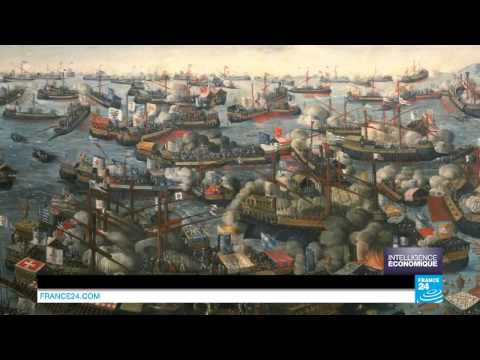
- When diplomacy failed, Venice resorted to military action against rivals like Genoa and Catalonia to secure its economic interests.
- The Republic engaged in continuous warfare not only on land but also at sea, employing piracy and raids to expand its influence.
Sacrifices for Economic Dominance
- To maintain its monopoly over Europe’s salt supply, Venice sacrificed local production by targeting rival saline operations across the Adriatic Sea.
- This strategy included eliminating competitors such as Comacchio while controlling essential goods like salt, grain, spices, silk, and wine.
Financial Hub of Medieval Europe
- By the late 15th century, Venetian revenues matched those of France despite being a small city-state; it became one of medieval Europe's financial capitals.
- The Rialto Bridge symbolizes this financial prowess where currency exchange flourished under state representation through coins featuring images of authority figures.
Conquests Through Deception
- Conflicts with Byzantium culminated in significant victories for Venice; notably during the Fourth Crusade when they diverted efforts to sack Constantinople instead of aiding fellow Christians.
The Architectural Significance of Venice
The Use of Porphyry and Architectural Diversity
- The façade of the basilica in Venice features porphyry, a prestigious material, indicating its significance.
- The columns and capitals used in the basilica were often repurposed from Byzantine structures, showcasing a lack of architectural unity due to their diverse origins.
- Saint Mark symbolizes Venice's religious independence from Byzantium, representing both local identity and competition with Rome.
Competition with Byzantium and Rome
- Venice aimed to surpass both Roman and Byzantine powers in commerce and military strength, reflecting its dual ambitions.
- The Arsenal served as a monumental entry point that communicated Venice's naval prowess; it was crucial for showcasing the city's importance.
Naval Power and Economic Decline
- By 1500, Venice had numerous shipyards capable of producing significant naval fleets but faced challenges due to changing trade routes.