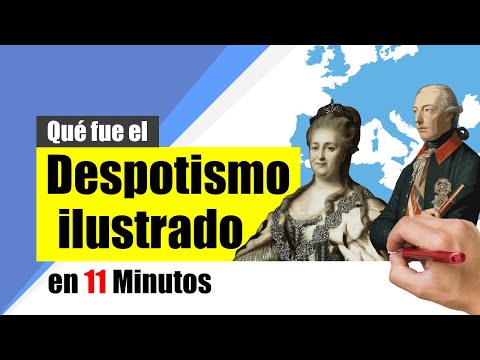
¿Qué fue el DESPOTISMO ILUSTRADO? - Resumen | Definición, características y representantes.
The Rise of Enlightened Despotism
Introduction to Enlightened Despotism
- In the late 18th century, various European monarchs attempted to implement Enlightenment ideas within their states, marking a new era characterized by a unique form of monarchy known as enlightened despotism or enlightened absolutism.
Characteristics of Enlightened Absolutism
- This political model combined principles from the Old Regime with select Enlightenment ideas, where absolute monarchs utilized philosophical concepts to promote gradual reforms without radical transformations.
Natural Rights and Governance
- Many Europeans believed in inalienable natural rights such as equality before the law, freedom of worship, free expression, and assembly during the 18th century.
- Philosophers argued that an enlightened ruler was essential for safeguarding these rights; such a ruler should be strong yet adhere to laws while promoting tolerance and education.
Role of Monarchs in Reform
- The belief was that societal changes should be initiated by absolute monarchs rather than through popular movements. Reforms were expected to be gradual and peaceful.
- These rulers were seen as public servants whose primary role was to ensure the prosperity of their subjects while maintaining control over political participation.
Historical Perspectives on Enlightened Monarchies
- Historians debate whether these so-called enlightened monarchs genuinely embraced Enlightenment ideals or merely sought to appear as followers without implementing significant reforms.
Key Figures in Enlightened Despotism
Frederick II of Prussia
- Frederick II ruled Prussia from 1740 to 1786 and admired Enlightenment thought, inviting philosopher Voltaire to his court.
- He enacted several reforms including a unified legal code, limited torture, promoted freedom of press and religious tolerance but maintained social conservatism by preserving noble privileges.
Joseph II of the Holy Roman Empire
- Emperor Joseph II aimed at reforming his empire by eliminating obstacles against reason; he abolished serfdom and established equal rights under law.
- His ambitious reforms faced backlash due to their radical nature leading to conflicts with nobility and the Catholic Church which ultimately hindered lasting change after his death.
Charles III of Spain
The Impact of Enlightenment Reforms in Europe
The Expulsion of the Jesuits and Inquisition Limitations
- The Spanish monarchy expelled the Jesuits and limited the activities of the Inquisition, which significantly strengthened its power.
- Despite this strengthening, the Spanish landowning aristocracy continued to wield substantial influence throughout the 18th century.
Catherine the Great's Reform Enthusiasm
- Catherine the Great of Russia demonstrated a strong desire to reform her nation, being well-acquainted with Enlightenment philosophers.
- She recognized that successful reforms depended on maintaining good relations with the powerful landowning nobility, leading her to temper her initial ambitions.
Limitations of Reforms in Russia
- Ultimately, Catherine's reforms did not result in significant changes; instead, they further empowered Russian nobility by granting them legal privileges such as trial rights and tax exemptions.
Success Variability Among Enlightened Monarchs
- Not all so-called enlightened monarchs were equally successful or willing to implement Enlightenment ideas; only Emperor Joseph II introduced truly meaningful changes.