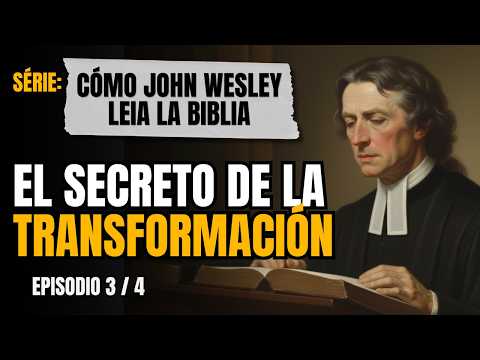
Cómo leía la Biblia John Wesley | No leía para SABER más. Leía para SER transformado. (Episodio 4/4)
La Transformación a Través de la Lectura Bíblica
Introducción a John Wesley y su Método
- John Wesley es presentado como un lector apasionado de la Biblia, quien no leía para acumular conocimiento teológico, sino para transformarse.
- Se destaca que Wesley dominaba varios idiomas y escribió numerosos textos, pero se consideraba "el hombre de un solo libro", refiriéndose a la Biblia como su única autoridad.
La Biblia como Medio de Gracia
- Wesley veía la Biblia no solo como un libro informativo, sino como un medio a través del cual Dios actúa en el alma humana. Esto contrasta con las visiones comunes que ven la Biblia como un manual moral o una fuente de respuestas.
- La diferencia entre ver la Biblia como un retrato versus una presencia activa es crucial; el primero informa mientras que el segundo transforma.
Enfoque Correcto al Leer
- Wesley enfatizaba leer con atención plena y sin prejuicios previos sobre lo que uno está dispuesto a aceptar o rechazar. Esto implica abrirse completamente al texto bíblico para ser evaluado por él.
- La lectura debe ser una experiencia transformadora donde se busca qué cambios Dios desea hacer en nuestra vida, en lugar de simplemente evaluar si estamos de acuerdo con el texto.
Cultura del Consumo y Evaluación Crítica
- En la cultura actual, tendemos a consumir información pasivamente y evaluar si nos gusta o no; esta actitud impide la transformación personal que puede ofrecer la lectura bíblica profunda.
- Hebreos 4:12 se cita para ilustrar cómo la palabra penetra y discierne nuestras intenciones más profundas; somos nosotros quienes debemos ser evaluados por ella, no al revés.
Preparación Espiritual Antes de Leer
- Wesley comenzaba su lectura orando para crear un ambiente interior propicio donde solo Dios estuviera presente, buscando entender Su voluntad antes de abrir las Escrituras.
- Esta práctica establece una expectativa activa sobre lo que Dios podría revelar durante la lectura, diferenciando así entre una lectura informativa y una transformadora.
Comparación de las Escrituras
- El método analógico propuesto por Wesley consiste en comparar versículos oscuros con otros pasajes claros dentro de las Escrituras para obtener comprensión contextualizada y evitar interpretaciones erróneas basadas en impresiones iniciales.
- Este enfoque promueve leer toda la narrativa bíblica en conjunto para entender mejor cada parte dentro del contexto general del mensaje divino sobre creación, caída, redención y restauración.
Comunidad en la Lectura Bíblica
- Wesley afirmaba que "la Biblia no conoce nada de religión solitaria"; enfatizaba que leer e interpretar las Escrituras debe hacerse en comunidad con otros creyentes para fomentar responsabilidad mutua y crecimiento espiritual real.(1310]
- Los grupos metodistas organizados por Wesley eran espacios donde los participantes compartían sus experiencias vividas respecto al texto bíblico, promoviendo así una discusión más allá del mero análisis académico.(1451]
Uso Crítico de la Razón
- Aclarando malentendidos sobre su enfoque intelectual, se señala que aunque valoraba profundamente el pensamiento crítico y racionalidad, también creía firmemente en combinarlo con oración y apertura espiritual durante el estudio bíblico.(1711]
Wesley's Intellectual Foundation
Wesley as a Scholar
- John Wesley was a prominent intellectual from Oxford, deeply engaged with biblical languages, mastering Greek and Hebrew for direct exegesis.
- He read classical and Enlightenment philosophy, naturally employing Aristotelian logic in his sermons while maintaining correspondence with leading thinkers of his time.
The Role of Reason in Biblical Interpretation
- For Wesley, reason served as an essential tool for understanding scripture but was not the ultimate authority; it aided comprehension without overriding the text.
- Reason helps clarify grammatical meanings, historical contexts, and logical coherence within scripture but should not judge the text based on external standards.
The Authority of Scripture
Distinction Between Tool and Arbiter
- Wesley passionately defended the primacy of scripture over reason; he believed that scripture is the supreme norm that evaluates other sources of authority.
- The "Wesleyan Quadrilateral" identifies four theological authorities: scripture, tradition, reason, and experience—with scripture being paramount.
Practical Application in Reading Job
- In reading Job's narrative, one must recognize that rational arguments made by friends do not align with God's ultimate message about suffering.
- God rebukes Job’s friends for misrepresenting Him; their rational interpretations fail to capture the complexity of divine truth revealed in scripture.
The Challenge of Modern Rationality
Contemporary Issues with Reason
- In today's context, scientific reasoning often dominates discussions about faith; many approach biblical texts questioning their rationality first.
- While these questions are valid, they should not overshadow the primary inquiry: "What is God saying here?"—with scripture holding final authority.
Experience as Confirmation
Personal Transformation at Aldersgate
- On May 24th, 1738, during a meeting on Aldersgate Street, Wesley experienced a profound spiritual awakening described as his heart being "strangely warmed."
- This moment symbolized a shift from intellectual knowledge to personal conviction regarding salvation through Christ.
Contextual Background
- Wesley's experience did not occur in isolation; it was built upon years of serious biblical study and ministry work prior to Aldersgate.
The Nature of Experience
Experience vs. Truth Source
- For Wesley, experience does not create truth but confirms it; it makes scriptural truths real and operational in daily life.
Importance of Genuine Engagement
- True engagement with scripture leads to transformative experiences akin to recognizing Jesus' presence along the road to Emmaus (Luke 24:32).
Caution Against Enthusiasm
Dangers Identified by Wesley
- Wesley warned against "enthusiasm," where individuals elevate personal emotional experiences above scriptural authority leading to doctrinal errors.
Balancing Experience with Scripture
- While valuing genuine experiences within faith practice is important, they must be tested against scriptures for authenticity.
Authenticating Experience Through Scripture
Evaluating Experiences
- Experiences should authenticate what scriptures affirm rather than serve as independent authorities dictating beliefs contrary to biblical teachings.
Pursuing Holiness
Ultimate Goal of Biblical Reading
- For Wesley , all methods employed in reading scriptures aim towards achieving holiness—both internal transformation and external expression.
Inner vs. Outer Holiness
- Inner holiness involves continuous heart transformation while outer holiness manifests through ethical living and social justice actions.
Consequences of Imbalance
- A lack of balance between inner transformation and outward behavior results in either self-centered spirituality or hollow moralism devoid of true change.
Addressing Superficiality in Faith Practice
Warning Against Shallow Engagement
- Many contemporary ministries grow numerically yet lack depth due to superficial engagement with scriptures lacking genuine transformative intent.
Call for Depth Over Numbers
- True depth comes from intentional reading practices aimed at fostering authentic love for others rather than mere accumulation of knowledge or attendance metrics.
Reflective Questions on Transformation
Self-Evaluation Prompts
- Reflect on whether your engagement with scriptures has led you toward tangible changes such as increased patience or compassion over time.
Final Thoughts on Methodology
- Emphasizing that effective Bible reading requires both methodical approaches alongside sincere willingness for personal transformation guided by divine insight.