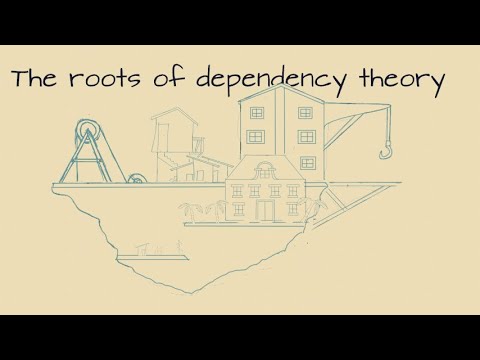
The roots of dependency theory
Development Economics and Dependency Theory
Theoretical Foundations of Development Economics
- Development economics often overlooks historical social and economic conditions that initiate national development, focusing instead on a linear progression towards prosperity.
- The field tends to ignore the historical context of colonialism, failing to address the socio-economic power dynamics between developed and developing nations.
Critical Perspectives on Development
- Critical development scholars challenge mainstream views, particularly those rooted in neo-Marxist and Latin American structuralist traditions, which critique the simplistic association of economic growth with social welfare.
- Dependency theory emerges as a significant framework, positing that global economic structures favor certain countries while hindering others' development.
Understanding Dependency Theory
- Dependency theory is defined as a historical condition shaping world economies in ways that benefit some nations at the expense of others, limiting subordinate economies' growth potential.
- Underdevelopment is characterized by the underutilization of resources for the benefit of dominant classes, necessitating a break from dependency for genuine endogenous development.
De-linking and Economic Autonomy
- The concept of de-linking supports movements for decolonization in the Global South by advocating for domestic control over key economic sectors rather than complete isolationism.
- Key aspects include achieving food self-sufficiency, access to raw materials, competitive production capabilities, and establishing local financial systems to support development.
Marxist Contributions to Understanding Capitalism
- While Marx's theories face various critiques, they remain crucial for analyzing capitalist production systems and understanding contemporary developmental challenges.
- Concepts such as class analysis and imperialism are essential for examining capitalism's impact on global power dynamics.
Historical Context of Imperialism
- Imperialism is broadly defined as both market expansion and intensified exploitation within existing markets; however, classical theories often neglect its effects on colonized regions.
- The origins of dependency theory can be traced back to neo-Marxist contributions that analyze capitalism's monopolistic tendencies within an unbalanced global economy.
Evolution of Dependency Theory
- Paul Baran's foundational work popularized dependency theory alongside contributions from scholars like Samir Amin and others who focused on monopoly capitalism.
- Neo-Marxists reject nationalistic perspectives in favor of relational analyses that highlight how some nations benefit while others remain subordinated within the world system.