Starch Retrogradation
Understanding Retrogradation in Bread and Gels
The Process of Gelatinization
- Retrogradation affects how bread rips over time, with initial ripping differing from later stages due to this process.
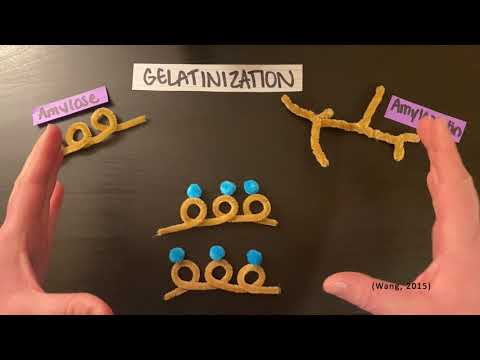
- Gelatinization is crucial for retrogradation; it involves starch, a polymer made of glucose molecules, which serves as an energy source for plants.
- Starch can exist in two forms: linear (amylose) and branched (amylopectin), both stored in starch granules within plants.
Mechanism of Gelatinization
- Inside starch granules, hydrogen bonds form between neighboring starch strings. Heating causes water absorption, breaking these bonds.
- As the mixture heats up, water replaces the broken hydrogen bonds, causing the granules to expand significantly.
Transition to Retrogradation
- Upon cooling after gelatinization, starch molecules begin to come together again and reform hydrogen bonds while expelling water.
- This expulsion of water leads to gel breakdown; visible moisture may appear on top of sauces or contribute to bread staling.
Effects on Bread Staling
- Bread starts staling immediately after being taken out of the oven due to retrogradation kicking in as it cools down.
- Although the effects are not noticeable right away, they become apparent over a few days as moisture is lost.
Reheating and Softening
- Reheating bread can soften it again by disrupting reformed hydrogen bonds and allowing water back into the structure.