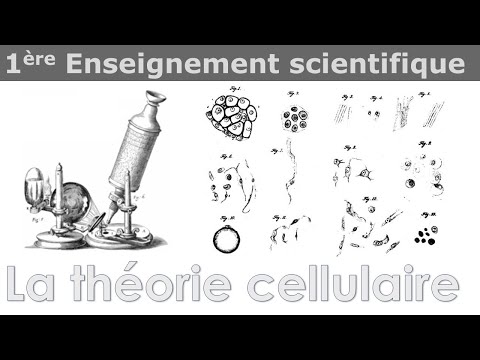
Les cellules et l'histoire de la théorie cellulaire - Enseignement scientifique - 1ère
The Evolution of Cellular Theory
The Development of Microscopic Observation Techniques
- The video discusses the gradual construction of solar theory in the history of science, emphasizing advancements in microscopic observation techniques.
- The invention of optical microscopes in the 17th century allowed for magnifications between 20x and 300x, leading to the first observations of cells.
- Scientist Levin Euk observed microorganisms using a microscope, marking early cell observations even before the term "cell" was coined.
Key Contributions to Cell Theory
- Euk also examined cork under a microscope and identified structures he termed "cells," contributing significantly to cellular theory.
- By the 19th century, scientists Schwann and Schleiden established that all living organisms are composed of cells, reinforcing a fundamental aspect of cellular theory.
- During this period, spontaneous generation was a prevalent hypothesis regarding cell formation from organic matter.
Advancements in Understanding Cell Division
- In the late 19th century, Virchow proposed that all cells arise from pre-existing cells through division.
- Pasteur's experiments debunked spontaneous generation, confirming that cells originate solely from other cells' division.
Modern Microscopy and Its Impact on Cellular Study
- The evolution of microscopy continued into the 20th century with electron microscopes capable of magnifying up to 150,000 times.
- Electron microscopes enabled detailed observations of cellular structures such as mitochondria and chloroplasts, enhancing our understanding of cell components like DNA within chromatids.
Conclusion: Collaborative Scientific Progress