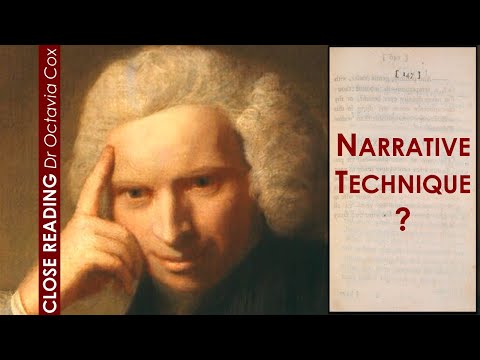
Laurence Sterne Tristram Shandy ANALYSIS—Narrative Technique—18th Century Development of Novel Genre
Introduction to "Tristram Shandy"
In this section, Dr. Octavia Cox introduces the novel "Tristram Shandy" by Laurence Sterne and discusses its narrative playfulness and meta-textual elements.
The Novel as a Genre in the 18th Century
- The novel genre began to take shape in the early 18th century with works like Jonathan Swift's "Gulliver's Travels" and Daniel Defoe's "Robinson Crusoe."
- The novel genre evolved throughout the 18th century, exploring different forms and styles.
- Unlike later Victorian novels, which followed more conventional structures, 18th-century novels were more diverse and experimental.
Meta-textual Elements in "Tristram Shandy"
- "Tristram Shandy" is characterized by its narrative playfulness and self-reflection as a novel.
- The protagonist, Tristram Shandy, struggles to write his own life story, raising questions about what details are important and how to represent a life in literature.
- The novel invites readers to engage their imagination and judgment while confronting them with the expectations of reading fiction.
Narrative Playfulness in "Tristram Shandy"
In this section, Dr. Octavia Cox explores an example of narrative playfulness in "Tristram Shandy," where Laurence Sterne explicitly engages the reader's imagination.
Reader Engagement and Imagination
- Laurence Sterne encourages readers to actively use their imagination while reading "Tristram Shandy."
- The narrative voice directly addresses the reader throughout the novel.
- Sterne draws attention to the reader's role in bringing their imagination to the text.
Evolution of the Novel Genre
Dr. Octavia Cox discusses the evolution of the novel genre from the 18th century to the Victorian period.
Changing Conventions of the Novel
- The novel genre gradually became more solidified and defined over the 18th century.
- In the Victorian period, readers came to expect certain conventions in novels, such as a clear plot structure and resolution.
- Victorian novels aimed for a sense of conclusion and moral purpose, unlike "Tristram Shandy" with its digressions and lack of traditional plot progression.
Novel Genres: From Diverse to Defined
- The 18th-century novel genre was diverse and explored different forms and styles.
- In contrast, Victorian novels became more conventional and adhered to specific expectations.
- The modernist period later challenged these conventions, leading to a more diverse approach to storytelling.
Narrative Style in "Tristram Shandy"
Dr. Octavia Cox compares the narrative style of "Tristram Shandy" with that of Victorian novels.
Playful Narrative Style
- "Tristram Shandy" has a looser, freer, and more playful narrative style compared to Victorian novels.
- The novel is characterized by digressions and lacks a traditional plot structure or sense of conclusion.
- Readers are taken on a different kind of journey where loose ends may not be tied together.
Conclusion
Dr. Octavia Cox concludes her discussion on "Tristram Shandy" by highlighting its departure from conventional novel expectations.
Departure from Conventional Expectations
- "Tristram Shandy" challenges conventional expectations of what a novel should be.
- Unlike Victorian novels that aimed for resolution and moral purpose, Sterne's novel embraces digressions and a more open-ended narrative style.
- The novel exemplifies the evolving nature of the novel genre in the 18th century.
Timestamps are approximate and may vary slightly.
Definition of the Novel Genre
In this section, the speaker discusses Samuel Johnson's definition of the novel genre in his famous dictionary from 1755. The novel is defined as an innovator, asserting novelty.
Samuel Johnson's Definition
- Samuel Johnson defines a novelist as an innovator and asserter of novelty.
- The term "novel" originally referred to a new genre, emphasizing its newness and innovation.
- The 18th-century novel was characterized by freedom, playfulness, and pushing the boundaries of narrative prose form.
- Unlike the Victorian period, there were no established conventions or expectations for novels during this time.
Innovation and Playfulness in Tristram Shandy
This section explores the innovation and playfulness within Laurence Sterne's novel "Tristram Shandy."
Volume 6 Chapter 38
- Tristram Shandy engages with the reader directly in volume 6 chapter 38.
- The previous chapter ends with a temptation for the reader to continue reading.
- The narrator addresses the reader explicitly, discussing their potential temptation towards Widow Wadman.
Engaging with the Reader's Imagination
This section focuses on how Laurence Sterne engages with the reader's imagination in "Tristram Shandy."
Concupiscible Woman
- The narrator describes Widow Wadman as "the most concupiscible woman," meaning she induces strong sexual desire.
- There is a disparity between how concupiscible sounds and its actual meaning.
- Instead of providing specific details about Widow Wadman's appearance, readers are encouraged to imagine her themselves.
Interactive Conceit and Reader's Imagination
This section explores the interactive conceit in "Tristram Shandy" and how it engages with the reader's imagination.
Painting Widow Wadman
- The narrator instructs the reader to get pen and ink, emphasizing the materiality of the novel.
- A blank page is provided for readers to paint their own picture of Widow Wadman.
- This interactive element allows readers to engage with their own imagination and create their version of the character.
Irrelevance of Physical Details
This section discusses how physical details are deemed irrelevant in "Tristram Shandy."
Allowing Reader's Interpretation
- The narrator emphasizes that specific physical details about Widow Wadman are irrelevant.
- Readers are encouraged to imagine their own version of her, focusing on what they find most desirable.
- The narrative perspective differs from traditional storytelling that aims for detailed realism.
Self-referential Playfulness
This section highlights the self-referential playfulness between the narrative voice and the reader in "Tristram Shandy."
Joking Interaction
- The interaction between the narrative voice and reader is playful and self-referential.
- There is a joke about how Tristram comments on a drawing made by a fictional character within the story.
- The engagement between narrator and reader revolves around storytelling techniques and engaging readers in imaginative participation.
The Relationship with the Reader
In this section, the speaker discusses the portrayal of the relationship between the author and reader in "Tristram Shandy." Tristram is shown to belittle and be grudging towards his readers, perceiving them as malicious and ignorant. This representation raises questions about trust, interpretation, and the role of the reader in understanding the author's intentions.
Representation of Readers in "Tristram Shandy"
- Tristram constantly belittles and grudges his readers.
- He views them as full of malice and ignorance.
- Worries that readers will misunderstand him or misrepresent him.
- Raises questions about the relationship between author and reader.
Interpreting Texts
- Any text can be interpreted differently based on the reader's mindset.
- Malicious or ignorant readers may distort the meaning of a text.
- The logical extreme would be an entirely blank book to avoid misinterpretation.
- However, this is not feasible for a novel like "Tristram Shandy."
Playfulness and Big Questions
- The novel playfully explores what readers expect from texts.
- It raises questions about trust between authors and readers.
- Considers how much authors can rely on readers to understand their intentions.
- Explores the imaginative space that readers bring to a text.
Playfulness and Imagination in "Tristram Shandy"
This section highlights how "Tristram Shandy" engages with playfulness, imagination, and broader questions about texts. It suggests that authors should embrace ambiguity and allow readers to bring their own interpretations. The speaker recommends reading "Tristram Shandy" for those who enjoy playful narratives that challenge traditional expectations.
Embracing Playfulness
- "Tristram Shandy" is delightfully playful and interrogative.
- It asks interesting questions about readers' expectations from texts.
- Challenges the notion of a linear narrative journey.
Imagination and Interpretation
- Readers inevitably bring their own imagination to a text.
- The author may choose to leave certain aspects open to interpretation.
- Tristram's suggestion to imagine the most desirable woman exemplifies this approach.
Recommendation and Conclusion
- The speaker highly recommends reading "Tristram Shandy."
- It offers a rich experience of textual playfulness and exploration.
- Emphasizes that readers should be open to its unconventional style and questioning nature.
Final Thoughts and Call-to-action
In this final section, the speaker concludes by reiterating the recommendation for reading "Tristram Shandy" and encourages viewers to subscribe to their channel for more content. They also invite comments from viewers who enjoy textual playfulness.
Final Thoughts on "Tristram Shandy"
- "Tristram Shandy" is a fabulous text that requires patience with its playfulness.
- It challenges traditional expectations of Victorian novels.
- Offers an engaging exploration of broader questions about texts.
Call-to-action
- Viewers are encouraged to read "Tristram Shandy" if they enjoy playful narratives.
- Subscribe to the speaker's channel for more content like this video.
- Leave comments below if you appreciate textual playfulness.
Timestamps have been associated with relevant sections in accordance with the provided transcript.