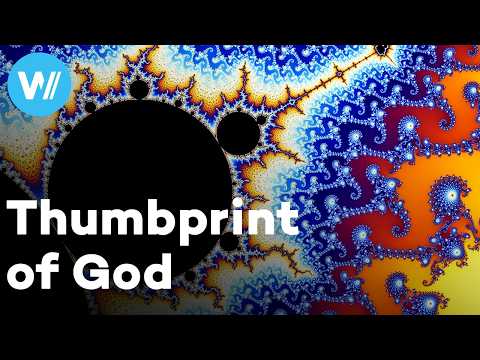
The Mandelbrot Set | The origin and applications of Fractal Geometry (Full Documentary)
Introduction to the Mandelbrot Set
The Significance of the Mandelbrot Set
- The Mandelbrot set is described as one of the most beautiful discoveries in mathematics, discovered in 1980.
- Arthur C. Clarke introduces the concept, linking it to revolutions in technology and our understanding of the universe.
- Notable figures such as Professor Ian Stewart, Dr. Michael Barnsley, Professor Stephen Hawking, and Dr. Benoit Mandelbrot are introduced as contributors to this exploration.
Visualizing the Mandelbrot Set
- The visual complexity of the Mandelbrot set is highlighted; it resembles various forms from nature but remains unique.
- It is emphasized that while infinitely complex, the set can be studied by anyone with basic mathematical skills.
Exploring Infinite Complexity
Magnification and Detail
- As magnification increases (up to 3,000 times), new patterns emerge within the Mandelbrot set, showcasing its infinite complexity.
- The speaker stresses that true infinity exists within this mathematical construct—beyond mere large numbers.
Simple Principles Behind Complexity
- Despite its complexity, the Mandelbrot set is based on simple arithmetic operations: addition and multiplication.
- Historical context provided: Gaston Julia's work on complex numbers laid groundwork for future discoveries related to fractals.
Iteration and Boundaries
Understanding Iteration
- Iteration processes lead to either divergence (infinity) or convergence (zero), creating a boundary map within the set.
- Each point on a computer screen represents a pixel that either escapes or remains trapped based on iterative rules.
Color Mapping Techniques
- Points converging towards zero are colored black; those diverging are assigned colors based on their rate of escape.
- This color-coding serves as an analogy for contour maps used in geography, revealing different properties through color variations.
Fractals in Nature
Characteristics of Fractals
- The internal consistency of fractals allows for self-similarity at different scales; smaller sections resemble larger ones.
- Bifurcation observed at tips of "hairs" illustrates typical fractal behavior—splitting into more branches indefinitely.
Definition and Origin of Fractals
- Fractals are defined as geometric structures exhibiting detail across all scales; Benoit Mandelbrot coined this term reflecting their fragmented nature.
Implications for Science
New Perspectives on Geometry
- Fractal geometry extends classical Euclidean concepts, allowing scientists to describe irregular natural phenomena accurately.
Generating Natural Forms
- Demonstrations show how simple instructions can create complex shapes resembling trees or other natural forms through iteration.
Connections Between Mathematics and Nature
Biological Analogies
- Comparisons drawn between fractal generation processes and biological growth patterns highlight similarities in structure formation across life forms.
Observing Fractals Everywhere
- Developing a "fractal eye" enables recognition of these patterns throughout nature—from gardens to broader landscapes.
Practical Applications
Transformative Potential
- Discovery impacts scientific methodologies by enabling descriptions beyond traditional linear models using fractal curves instead.
Future Innovations
- Anticipated advancements suggest new devices will emerge from principles derived from fractal geometry over time.
The Power of Fractal Geometry in Image Compression
Introduction to Fractal Geometry
- Fractal geometry can significantly enhance the value of investments, suggesting its transformative potential.
- Michael Barnsley, based in Atlanta, Georgia, received a $2.5 million grant in 1991 to develop fractal image compression systems.
- Major corporations like Microsoft and Virgin utilize Barnsley's software for data compression.
Discovery of the Collage Theorem
- A pivotal moment for Barnsley was discovering the collage theorem while attempting to model dynamical systems that create images resembling leaves.
- The theorem involves covering an object with smaller copies of itself, leading to a formula for creating images like ferns.
Challenges in Implementation
- Despite the theoretical framework, practical application required extensive time from graduate students to generate images using the collage theorem.
- Barnsley had a breakthrough dream revealing how to automate finding fractal formulas from digital pictures.
Advancements in Image Reconstruction
Automating Fractal Analysis
- The goal became capturing complex fractal details from low-resolution images automatically.
- By analyzing coarse digital images through Barnsley's system, it is possible to reconstruct original details without losing quality.
Infinite Resolution Concept
- The reconstructed fractal image allows for infinite magnification without pixelation due to its underlying mathematical structure.
Applications Beyond Image Compression
Military and Medical Uses
- Weather satellites provide essential data but are complemented by reconnaissance satellites that require advanced data compression techniques due to their high-definition imagery needs.
- Fractal geometry also finds applications in medicine, particularly in understanding complex structures like blood circulation and brain wiring.
Connection Between Mathematics and Biology
- There may be links between fractals and brain function; visual patterns seen under certain conditions resemble those generated by mathematical sets like the Mandelbrot set.
Cultural Resonance of Fractals
Artistic Connections
- Historical art forms echoing fractal patterns suggest a deep-rooted connection between human perception and mathematical concepts.
Collective Unconscious Theory
- Carl Jung's theory on collective unconsciousness aligns with how humans resonate with universal symbols found within fractals.
Philosophical Implications of Chaos Theory
Determinism vs. Chance
- Newton's clockwork universe concept faces challenges from quantum mechanics and chaos theory which introduce elements of unpredictability into deterministic models.
God Playing Dice: A New Perspective
- The discussion shifts towards reconciling determinism with chance through chaos theory insights provided by the Mandelbrot set.
Conclusion: Discoveries Through Simplicity
Complexity from Simple Formulas
- The Mandelbrot set exemplifies how simple equations can yield infinitely complex results, highlighting mathematics' profound beauty as both a map and treasure trove of knowledge.
Turn any video into a summary like this
YouTube links, meetings, lectures. With transcripts, search, and chat.