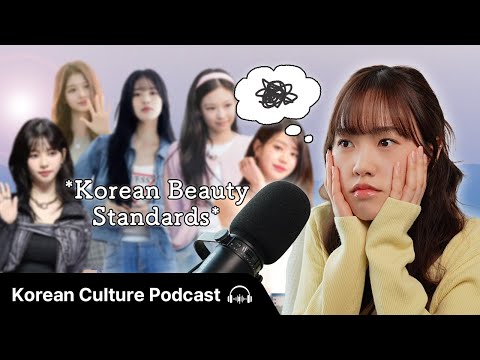
한국은 '외모(Look)'가 중요한 사회?🪞 (My Thoughts on Korea’s Beauty Obsession) | Didi's Korean Culture Podcast
Welcome to Didi’s Korean Culture Podcast
Introduction to Episode 2
- The host welcomes listeners back to the podcast, continuing from the previous episode.
- Recap of last episode's discussion on Korea's plastic surgery culture, including reasons for its popularity and personal reflections.
Exploring Self-Satisfaction in Plastic Surgery
- The host reflects on whether plastic surgery truly leads to self-satisfaction or if it is influenced by external perceptions.
- Questions arise about the motivations behind wanting to change one's appearance—whether it's genuinely for oneself or due to societal pressures.
Insecurities and Societal Influence
- Discussion on how insecurities drive individuals towards plastic surgery, highlighting a cultural atmosphere that emphasizes appearance.
- The host shares personal experiences of realizing the heightened focus on looks in Korean society compared to other countries.
Cultural Emphasis on Appearance
- Observations about how Koreans are particularly conscious of their appearances and how they are perceived by others.
- Acknowledgment that while wanting to look good is universal, Korea has unique standards and pressures regarding beauty.
The Concept of "Che-myeon" (Face-Saving)
- Introduction of "che-myeon," which refers to maintaining face or social standing in public perception.
- Explanation of how this concept influences behavior, making individuals cautious about their image and interactions with others.
Real-Life Example from Popular Culture
- Reference to a trending drama that illustrates themes related to poverty and social perception through a character's childhood experience.
Meeting the Teacher: Cultural Expectations and Personal Experiences
The Importance of Appearance in Cultural Context
- When meeting the teacher, a mother dresses in her finest clothes to avoid appearing rude or careless, exemplifying the concept of "saving face."
- The speaker reflects on personal experiences, noting that dressing up helps avoid coming off as weak or shabby, highlighting cultural norms around appearance.
Personal Reflections on Confidence and Dress Code
- The speaker feels uncomfortable going out with unwashed hair, associating it with being perceived as dirty or impolite; thus, they wear a cap to maintain social decorum.
- The phrase “Dress according to TPO” (Time, Place, Occasion) is introduced as a guideline for appropriate dressing based on context.
Workplace Expectations and Dress Codes
- In professional settings like workplaces, there are strong expectations regarding attire; revealing clothing can distract from work focus.
- Many companies enforce dress codes prohibiting low-cut tops and shorts due to perceptions of professionalism and appropriateness.
A Personal Anecdote about Teaching
- The speaker shares an experience working at an English library for children while wearing a crop top; kids were indifferent to their attire during class.
- After parents expressed discomfort over the speaker's outfit during pick-up time, they received feedback about needing more appropriate clothing for teaching.
Learning Moments and Societal Norms
- This incident served as a learning moment for the speaker about societal expectations regarding professional attire despite feeling frustrated by the parents' reactions.
- The constant concern over how one is perceived leads to self-doubt and second-guessing one's choices in various situations.
Observations on Male Grooming Habits
- An example is given of a man who washes his hair before visiting salons that typically wash hair themselves; this highlights differing grooming standards among individuals.
Why Do People Wash Their Hair Before Visiting a Hairdresser?
The Importance of Cleanliness in Korean Culture
- A common question arises: "Why do you wash your hair before going?" This reflects the belief that arriving with clean hair is a matter of respect towards the hairdresser.
- Some individuals feel it is simply good manners to present themselves with clean hair, indicating strong cultural values around grooming and appearance.
- Basic grooming practices are normalized in society, leading to increased pressure on individuals to be mindful of how they are perceived by others.
- This societal expectation can escalate into an obsession with appearances, particularly when people feel compelled to conform to these standards.
Stereotypes and Appearance Standards
Societal Perceptions of Body Types
- There exists a stereotype associating overweight individuals with laziness, while thin people are often viewed as efficient and hardworking.
- Dressing appropriately for different occasions (TPO - Time, Place, Occasion) is linked to having good taste and social desirability in professional settings.
- In group-oriented societies like Korea, there’s a stronger emphasis on collective harmony over individualism, which contributes to societal pressures regarding appearance.
Korean Beauty Standards Compared to Other Countries
Specificity of Appearance Criteria
- Korea has notably narrow and strict beauty standards compared to other countries where diversity in attractiveness is more accepted.
- The concept of a “correct answer” for beauty creates pressure for individuals to fit into mainstream ideals rather than embracing uniqueness.
The Impact of Trends on Personal Appearance
Following Fashion Trends
- Individuals feel compelled to quickly adopt popular trends; this constant need for validation leads to ongoing stress about being fashionable.
- An example includes long padded coats becoming trendy; once deemed fashionable by many, there's a tendency for everyone to follow suit.
Key Aspects of Korean Beauty Standards
Skin Quality as a Priority
- Clear skin is highly valued in Korea; it signifies cleanliness and beauty beyond just pale skin preferences.
- Koreans prefer skin that is free from blemishes such as moles or acne—this ideal resembles the smoothness of a peeled hard-boiled egg.
Facial Features and Proportions
- A small face is considered attractive due to its contribution toward favorable body proportions; this preference influences fashion models and character designs alike.
- Trends regarding facial features change rapidly based on popular celebrities' looks at any given time.
Body Image and Cultural Standards
The Importance of Body Shape Over Weight
- The speaker emphasizes that body shape is more significant than the number on a scale, suggesting that visible fat is a key factor in perceived attractiveness.
- A slim body type is preferred culturally, indicating societal standards favor good proportions rather than specific weight metrics.
Perceptions of Beauty in Society
- The ideal body type is likened to a "slim, mannequin-style," which raises concerns about unrealistic beauty standards.
- While similar looks among people can be seen as acceptable, the speaker argues for the recognition of diverse forms of beauty and individual uniqueness.
Cultural Pressures and Self-Perception
- The speaker identifies problematic cultural norms that lead individuals to feel uncomfortable about their appearance due to societal pressures.
- There’s an issue when personal care about one’s looks turns into pressure on others to conform to fixed beauty standards.
Societal Commentary on Appearance
- An analogy is made comparing circles (conformists) pressuring stars (individualists), highlighting how society often pushes for conformity in appearance.
- Casual comments regarding body image are identified as problematic, especially when they come from close family members during gatherings.
Impact of Comments on Self-Esteem
- Conversations often begin with remarks about physical appearance, such as weight gain or height changes, which can negatively impact self-esteem.
- This behavior isn’t limited to older generations; younger individuals also engage in commenting on appearances frequently.
Reflection on Cultural Norms
- Upon reflection during podcast preparation, the speaker realizes how normalized it has become to make comments about others' appearances without consideration.
- Even children are subjected to critical comments regarding their looks, indicating a pervasive culture that needs change.
Understanding Motivations Behind Comments
- Two main reasons for making appearance-related comments are identified: thoughtlessness and genuine concern for someone's well-being regarding societal beauty standards.
Concerns About Body Image and Social Acceptance
Societal Pressures on Appearance
- Concerns about body image stem from fears of social rejection, including worries about popularity and job prospects.
- The fear of being single or alone in life is linked to societal expectations regarding physical appearance.
Personal Standards and Assumptions
- Individuals often impose their own standards of beauty onto others, leading to misguided assumptions about what others need or desire.
- Making assumptions about someone's feelings based on their appearance can perpetuate negative stereotypes and judgments.
Impact of Negative Comments
- Research indicates that individuals need to hear at least five positive affirmations to counteract the emotional damage caused by a single negative comment.
- Criticism regarding uncontrollable aspects of one's appearance can have a more profound impact than compliments.
Encouraging Positive Communication
- Before making critical comments, it may be beneficial to offer multiple compliments as a form of support.
- Suggestions for improvement should be framed positively, such as proposing shared activities like dieting together.
Cultural Context and Reflection
- The tendency to comment on appearances is not limited to Korea; it exists globally across various cultures.
- When sharing personal values, especially if they are negative, it's important to balance them with positive affirmations.
The Need for Change in Beauty Standards
Critique of Societal Norms
- There is a call for change in how society imposes beauty standards that lead to criticism and hurt among individuals.
Personal Commitment
- Acknowledging the difficulty in changing ingrained societal views, there is an emphasis on striving to appreciate inner beauty and individuality throughout one’s life.
Conclusion on Korean Beauty Standards
- The discussion wraps up with reflections on the challenges posed by appearance-focused culture while inviting viewers' thoughts on the topic.
Reflections and Engagement with the Audience
Clarity and Openness to Feedback
- The speaker expresses gratitude for clear communication, indicating a desire for understanding without misunderstandings.
- Acknowledges personal imperfections, inviting listeners to share their thoughts or suggestions for improvement in a gentle manner.
- Emphasizes the importance of learning from audience feedback, showing a willingness to grow and adapt based on listener insights.
- Thanks the audience for their commitment to listening until the end, reinforcing appreciation for their engagement.
Podcast Support Announcement
- The speaker transitions into an announcement about supporting the podcast through Patreon and YouTube Membership.
- Encourages listeners who wish to support the podcast's continued quality and production to click provided links.
- Expresses heartfelt gratitude towards supporters, promising dedication in creating more valuable content.