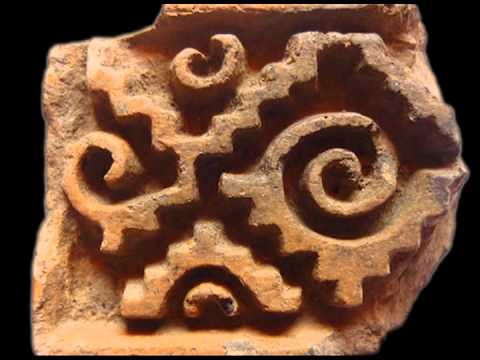
Arte en Mesoamérica, Historia de México.
Mesoamerican Civilization: Origins and Cultural Significance
Emergence of Mesoamerica
- Around 2500 BC, a diverse civilization emerged in what is now Mexico and Central America, characterized by various ethnic and linguistic groups united by a shared worldview.
- Paul Kirk Soft coined the term "Mesoamerica" in 1943 to describe this region, which was fundamentally based on sedentism, agriculture, and pottery.
Cultural Foundations
- The complex economic, political, and religious organization of these cultures was heavily influenced by their cosmology, where natural forces were deified into a vast network of gods and myths.
- Artistic expressions such as buildings, murals, ceramics, and codices transformed knowledge into material forms that connected humans with the supernatural.
Artistic Legacy
- The artistic legacy left behind is original yet enigmatic; its interpretation has required extensive scholarly effort due to the diversity of styles and themes.
- Common motifs include dualism, maize worship, mythical animals like serpents and jaguars, as well as the ball game. Specialized artisan neighborhoods existed within cities.
Dualism in Mesoamerican Culture
- A significant aspect of Mesoamerican culture is dualism—representing opposing forces that create balance (e.g., life/death; creation/destruction).
- For the Aztecs, duality manifested through deities like Hometekutli (male aspect) and his female counterpart. This concept also relates to cardinal directions and cycles of creation.
Maize: The Sacred Crop
- Maize was central to Mesoamerican agriculture; it was considered sacred and symbolized the axis mundi from which nature's forces emanated.
- Myths surrounding maize link its origins to divine creation stories among different cultures; for instance, Mayan beliefs state that humans were created from maize dough.
Mythological Figures
- The feathered serpent deity appears prominently across Mesoamerican art; Quetzalcoatl for Mexica represents life-giving aspects while also embodying destructive forces.
Jaguar and Mesoamerican Cosmology
The Sacred Jaguar in Olmec Culture
- The jaguar, a sacred animal, originates from the Olmec dragon, incorporating features of various creatures including caimans and humans.
- This powerful feline symbolizes authority; priests and kings adorned themselves with jaguar skins to signify their mythical connection.
- In Olmec art, the jaguar is prominently featured in monumental sculptures and intricate jade pieces.
Mythological Significance of Jaguars
- The Maya referred to the jaguar as "Balam," associating it with four jaguar gods that represent cardinal directions, preventing the sky from collapsing.
- Ritual sacrifices were seen as necessary tributes to appease these deities, linking death to life through blood offerings.
Human Sacrifice and Its Role
- Human sacrifice was not exclusive to Aztecs; it was offered to Huitzilopochtli, the god of war and sun, who guided rulers on founding Tenochtitlán.
- Ironically, this blood tribute led to rebellion among subjugated peoples and contributed to the empire's eventual downfall.
Ritual Practices: Ball Game Connection
- Human sacrifice was intertwined with the sacred ball game across Mesoamerica; winners would decapitate losers as part of fertility rituals.
Calendrical Systems in Mesoamerican Cultures
- Mesoamerican civilizations developed advanced calendars based on astronomical knowledge: a solar calendar (365 days) and a lunar calendar (260 days).
- These calendars aligned every 52 years during which Mexica celebrated "fire new," marking cosmic renewal.
Architecture Reflecting Cosmological Beliefs
- Urban planning and architecture mirrored cosmological beliefs; structures were oriented according to celestial bodies' movements.
- Key architectural elements included talud-tablero styles used in stepped pyramids serving as temple platforms.
Notable Architectural Examples
- The Castillo at Chichén Itzá is an exemplary structure dedicated to Kukulcán, symbolizing the solar calendar with its 91 steps per side totaling 364 plus one for leap year.
Cultural Legacy of Mesoamerica