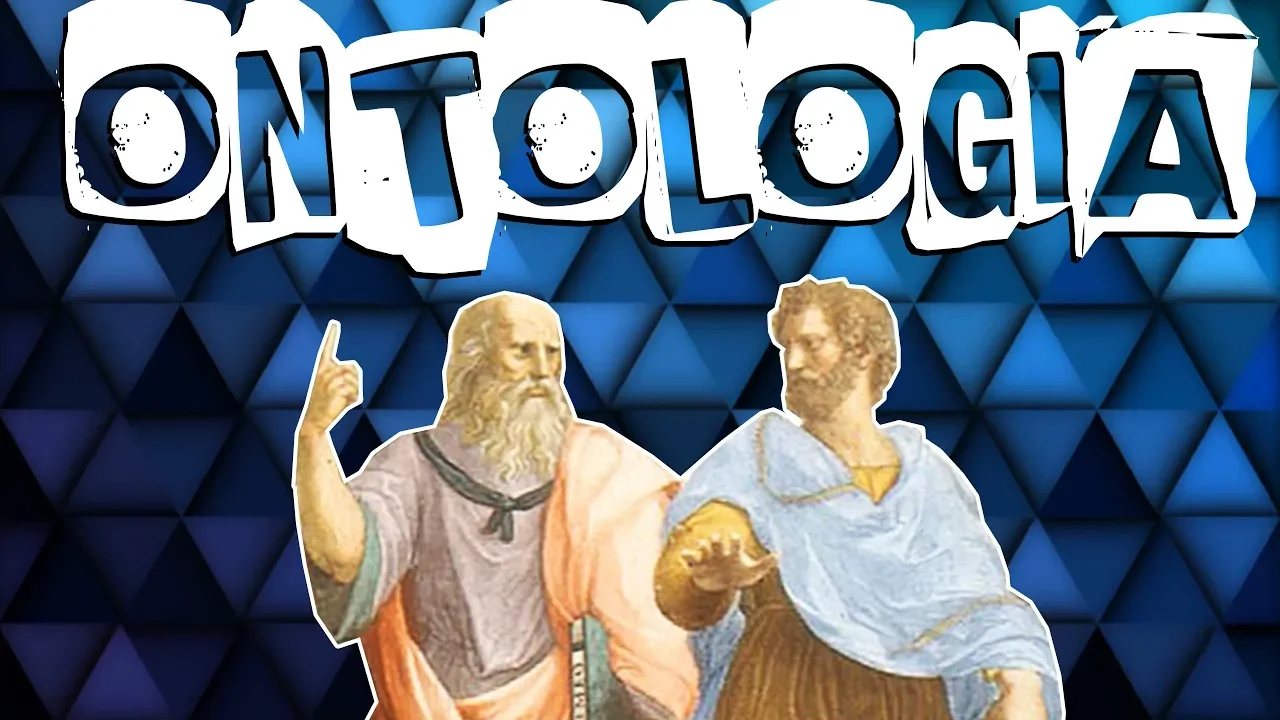
O QUE É ONTOLOGIA?
Philosophy Class: Ontology and Philosophical Terms
In this philosophy class, the instructor delves into the concept of ontology and discusses various philosophical terms essential for understanding the subject.
Understanding Ontology
- Ontology originates from Greek, meaning the study of being or existence.
- It focuses on studying the essence of existence, consciousness, and intelligence.
- Ontology explores the origins of consciousness and essential aspects of existence.
Three Lines of Ontological Thought
- There are three main lines of ontological thought: ontology of unity, ontology of being, and ontology of becoming.
- Each line represents a distinct perspective on the nature of existence and reality.
Ontology of Unity
- Originating from Plato's ideas, it asserts that all dominant thoughts stem from a single source - the world of ideas.
- According to this view, knowledge is derived from the realm of ideas rather than earthly experiences.
Ontology of Being
- Contrasting with unity ontology, this perspective suggests that knowledge arises from individual experiences and empirical learning.
Ontology of Being and Becoming
In this section, the speaker delves into the concepts of ontology related to being and becoming, contrasting the philosophies of Plato and Aristotle regarding knowledge acquisition.
Ontology of Being
- The School of Athens painting by Raphael serves as a didactic example to illustrate philosophical currents. Plato points upward, symbolizing the world of ideas, while Aristotle gestures outward, representing knowledge gained through sensory experience.
- Ontology of being emphasizes generating knowledge through earthly experiences in the tangible, material world rather than from an intelligible realm as proposed by Plato.
Differentiating Philosophical Concepts
- Pre-Socratic philosophers like Anaximander and Anaximenes focused on understanding the origin of nature through physical elements rather than exploring consciousness or reason.
- Distinguishing between philosophers who study consciousness and those investigating natural origins is crucial in comprehending different philosophical perspectives.
Ontology of Becoming
- The ontology of becoming emerged in the modern age, emphasizing studying existence's dynamics rather than non-being. This concept is prevalent in works by Hegel and Heidegger.
- Existentialism highlights that individuals have multiple possibilities shaping their lives; one defines oneself through choices made, reflecting the essence of ontology of becoming.
Understanding Ontological Thought
- The ontology of becoming underscores that individuals create their own realities over time based on their choices and actions.
- Ontology explores metaphysical aspects concerning human reasoning, origins of thoughts, and existential realities rather than focusing solely on physical or material origins.
Conclusion
Turn any video into a summary like this
YouTube links, meetings, lectures — with transcripts, search, and chat.