The Terrible Story of the Last Tsar of Russia: The Life of Nicholas II - See U in History
Nicholas II: The Last Emperor of Russia
Early Life and Background
- Nicholas II was born on May 18, 1868 (Julian calendar: May 6). He became the last emperor of Russia, king of Poland, and grand duke of Finland.
- He ruled from November 1, 1894, following his father's death until his abdication on March 15, 1917. His reign saw Russia's decline from a world power to an economic disaster.
- By the late 19th century, Russia was the world's sixth-largest country with around 130 million subjects from diverse ethnic backgrounds.
Political Context and Challenges
- The construction of the Trans-Siberian Railway began in 1891 under Nicholas II's reign; it spanned approximately 6,500 kilometers starting from Moscow.
- Alexander III, Nicholas's father, maintained an autocratic regime where power flowed top-down. After Alexander II’s assassination by anarchists due to his reformist stance, Alexander III adopted more authoritarian views.
Family Dynamics and Education
- Nicholas II's mother was Dagmar of Denmark (Maria Fedorovna), who was well-loved by the Russian people.
- Educated by tutors in various subjects including foreign languages and history, Nicholas excelled academically but often felt overshadowed by his father's strictness.
Personal Life and Aspirations
- At age 21, he was described as slender with expressive eyes and charisma inherited from both parents. His character traits included kindness and friendship.
- Initially accepting a playboy role while waiting for his turn to become tsar, he had few romantic interests until he fell for Princess Alex of Hesse.
Romantic Pursuits
- Despite societal disapproval due to her perceived awkwardness during her visit to St. Petersburg in 1889, Nicholas remained devoted to Princess Alex.
- In his diary dated back to 1892, he expressed a deep desire to marry her despite challenges posed by their families' political stances against such a union.
Marriage Proposal
- As Alexander III’s health declined in winter 1894 due to flu complications, Nicholas sought permission for marriage with Alex after years of unfulfilled longing.
Engagement and Early Reign of Tsar Nicholas II
The Engagement and Marriage
- The girl initially struggled with the idea of converting religions but was reassured by Alex's sister, who shared her own experience of changing faiths.
- Nicholas joyfully recorded in his diary about his engagement to Alexandra, which took place after a breakfast meeting with Queen Victoria, who expressed delight for the couple.
- Following the death of Alexander III on November 1st, Nicholas unexpectedly inherited the Russian throne at age 26 and felt unprepared for his new responsibilities.
Transition to Orthodoxy
- In a significant moment, Alexandra was consecrated into Orthodoxy as Grand Duchess Alexandra Feodorovna shortly after Nicholas ascended to the throne.
- Despite initial plans for a discreet wedding due to mourning customs, family pressure led to an elaborate ceremony on November 26th.
Wedding Details
- The wedding coincided with Empress Mary’s birthday, allowing a brief respite from mourning; however, there was no reception or honeymoon due to ongoing grief.
- On their wedding night, Alexandra wrote in Nicholas's diary about their eternal bond and love that transcends life.
Coronation Ceremony
- After a year of mourning, preparations began for Nicholas's coronation in May 1896 in Moscow; this event included public celebrations and amnesty measures.
- During the coronation ceremony lasting five hours, both Nicholas and Alexandra were anointed with holy oil amidst traditional rituals emphasizing autocracy.
Public Tragedy Post-Coronation
- A massive public celebration turned tragic when rumors led to chaos among attendees; many were injured or killed during the stampede for beer supplies.
- Despite the tragedy that unfolded outside during the celebration, Tsar Nicholas attended a ball later that evening against public sentiment.
Diplomatic Visits and Challenges Ahead
- Following their coronation, Nicholas and Alexandra embarked on official visits across Europe including Vienna and England while renewing alliances against Germany.
Nicholas II: The Early Years of Reign
Nicholas II's Ascension and Initial Policies
- Nicholas II, whose Russian language skills were mediocre, preferred his ministers to communicate in Russian. He admired Russian authors and favored Tsar Alexei the Peaceful.
- Ascending the throne unprepared, Nicholas was influenced by family members. Critics claimed he lacked personal will, disappointing liberals who hoped for a shift from autocracy after Alexander III's death.
- Despite being privy to the French alliance only upon taking the throne, Nicholas sought international disarmament and peace, proposing the establishment of a permanent court of arbitration in The Hague—an idea met with ridicule in Europe.
Cultural Flourishing and Personal Challenges
- The early years of Nicholas's reign saw a cultural renaissance known as the "Russian Renaissance" or "Silver Age," marked by significant achievements across politics, philosophy, sciences, music, and arts.
- Personal tragedies struck when Nicholas’s brother Grand Duke George died of tuberculosis in 1899. In 1900, Nicholas himself fell ill with typhoid fever while in Crimea; Alexandra cared for him during recovery.
Foreign Policy Missteps
- Wilhelm II of Germany influenced Russian foreign policy from 1894 to 1904. His guidance led to disastrous outcomes for Russia, notably its defeat in the Russo-Japanese War.
- Expansionist ambitions drove Russia towards conflict with Japan over Korea. Despite Japanese offers for negotiation regarding Manchuria and Korea, tensions escalated into war.
The Outbreak of War and Its Consequences
- On February 6th, 1904, Japan launched a surprise attack on Port Arthur. This unexpected assault caught Russia off guard as they struggled to mobilize their forces via the Trans-Siberian Railway.
- Stunned by military failures against Japan and recognizing Russia's vulnerability, Tsar Nicholas sought U.S. assistance for peace negotiations after acknowledging defeat.
Domestic Unrest Following Military Defeats
- By 1905, following humiliating losses in war and growing dissatisfaction among citizens due to mismanagement of resources and policies led to widespread protests across Russia.
- A peaceful march on January 22nd aimed at delivering a petition for reforms turned tragic when soldiers opened fire on demonstrators outside the Winter Palace—a day that became known as Bloody Sunday.
Aftermath of Bloody Sunday
- Following Bloody Sunday’s violence resulting in numerous casualties (officially reported as 92 dead), public perception shifted dramatically against Tsarism; it shattered long-held beliefs about unity between the tsar and his people.
Timeline of Russian Turmoil and the Romanov Dynasty
The Assassination and Rising Unrest
- Grand Duke Sergey, Nicholas's uncle and Ella's husband, was assassinated in Moscow, marking a significant escalation in violence across Russia.
- The sailors of the battleship Potemkin mutinied, leading to bombings in cities; by mid-October 1905, a general strike paralyzed all of Russia.
Emergence of Revolutionary Leadership
- Red flags symbolized revolution as peasants stormed farms; Leon Trotsky emerged as a key leader for the Soviets, representing Marxist ideologies.
- The Tsar faced two choices: suppress the rebellion through military force or grant civil rights and a constitution to appease the populace.
Transition to Semi-Constitutional Monarchy
- On October 30th, 1905, Russia transitioned from an absolute monarchy to a semi-constitutional monarchy with an elected parliament (Duma), albeit less liberal than England’s system.
Personal Tragedy within Royalty
- Amidst political turmoil, Alexandra gave birth to Alexei on August 12th, 1904; he was the first son born to a reigning Tsar since the 17th century.
- Concerns arose when Alexei exhibited symptoms of hemophilia—a hidden condition that would significantly impact Russian history.
Rasputin's Influence on the Imperial Family
- Rasputin, a Siberian monk believed to be a healer, became close to Alexei and gained influence over the imperial family despite opposition from aristocrats.
- His presence sparked rumors about his relationship with Alexandra; this connection led to public scrutiny and damaged their reputations.
Political Changes and Challenges
- From 1906 to 1911, Russia experienced agricultural success and economic growth under Prime Minister Stolypin until his assassination ended this partnership.
- With censorship lifted post-Stolypin’s era, press criticism of Rasputin intensified amid allegations regarding his influence over church appointments and personal conduct.
Growing Tensions Leading Up to War
- Nicholas II struggled with maintaining control as rumors about Rasputin’s misconduct circulated; attempts by politicians to confront him were met with resistance due to Alexandra's protection.
- By 1913, while celebrating three centuries of Romanov rule amidst European aristocracy's zenith, signs of impending danger loomed for Russia.
Prelude to World War I
- The assassination of Archduke Franz Ferdinand in May 1914 marked the beginning of World War I; initially hopeful that it wouldn’t lead to war.
The Prelude to War: Serbia, Russia, and Austria-Hungary
The Diplomatic Tensions
- Assurance of Serbia's independence was crucial in European diplomacy; threats to Serbia were seen as challenges to Russian influence in the Balkans.
- Tsar Nicholas attempted negotiations with Austria and Germany but faced refusals, leading to escalating tensions.
Outbreak of Hostilities
- On July 29th, Austria began bombing Belgrade; by July 31st, Germany declared war on Russia despite Nicholas's belief that Kaiser Wilhelm did not want conflict.
- A formal proclamation of hostilities was issued on August 2nd, 1914; a wave of patriotism surged through Russia.
Initial Public Sentiment and Tsar's Actions
- An ancient tradition required the Tsar to seek God's blessing before war; this led to a euphoric reception in Moscow despite looming mistakes.
- In an attempt at moral leadership, Nicholas banned vodka sales during wartime—a decision viewed as noble yet impractical given military expenses.
Military Mobilization Challenges
- Russia mobilized over 3 million reservists but remained ill-prepared for war due to inadequate infrastructure and limited industrial capacity.
- The German advance through Belgium and northern France highlighted the necessity of keeping Russian forces engaged on two fronts.
Early Military Engagements and Family Dynamics
- Despite initial optimism about military engagements against weaker Austrian forces, heavy losses soon became apparent by late 1914.
- Tsar Nicholas took command at the front while his son Alexei faced health crises requiring Rasputin’s intervention for treatment.
Leadership Struggles Amidst War
- By early 1916, significant casualties had eroded public morale; Nicholas’s decision to lead troops resulted in further military failures.
- Alexandra assumed control over domestic affairs but relied heavily on Rasputin’s advice—leading to poor governance decisions.
Rasputin's Influence on Military Decisions
- Alexandra made critical errors influenced by Rasputin regarding ministerial appointments without considering their qualifications or experience.
The Fall of the Romanov Dynasty
The Strain on Nicholas II's Leadership
- Alexandra urged for an offensive halt as the economy deteriorated and army morale declined, leading to Nicholas's health issues.
- Prime Minister Trepov was appointed with a goal to eliminate Rasputin, reflecting a growing consensus that change in leadership was necessary.
- Rasputin was ultimately assassinated on December 17, 1916, marking a pivotal moment in the royal family's struggles.
Aftermath of Rasputin's Death
- Nicholas expressed horror at Rasputin's death but soon suffered a nervous breakdown, indicating his fragile mental state.
- Despite initial optimism about military supplies from allies, food and fuel shortages plagued Petrograd more severely than rural areas.
Escalation of Civil Unrest
- By March 1917, discontent grew among workers and revolutionaries; Lenin felt isolated while planning for change.
- On March 8th, protests erupted as people stormed bakeries; strikes began across Petrograd by March 10th.
Turning Point: The Duma Takes Control
- Tsar Nicholas underestimated the situation’s severity; he ordered troops to clear streets instead of addressing grievances.
- A mass defection of soldiers on March 12th shifted power to the Duma as they decided to ignore imperial orders.
Abdication and Its Consequences
- Nicholas abdicated in favor of his brother Michael after realizing his family would be exiled; this decision marked the end of the Romanov dynasty.
- Michael initially accepted the throne but quickly abdicated in agreement with the Duma, sealing their fate after over three centuries.
Imprisonment and Execution
- The Romanovs were detained at Sarcoicelo Palace; Nicholas showed deep emotional distress upon reuniting with Alexandra.
- In April 1918, they were moved to Yekaterinburg under harsher conditions following Bolshevik control post-revolution.
Final Days of the Romanovs
- Discussions about putting Nicholas on trial increased as he reflected on his abdication’s negative impact on Russia.
The Execution of Tsar Nicholas II and His Family
The Gruesome Details of the Execution
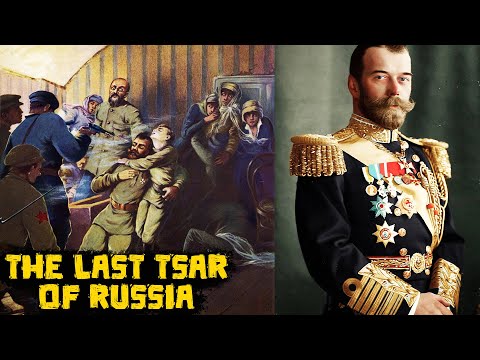
- On the dawn of July 17th, Tsar Nicholas II, his wife, and all their heirs faced a terrifying execution by firing squad, as detailed in Helen Rappaport's book "The Last Days of the Romanovs."
- Commander Yurovsky ordered Dr. Eugene Botkin to wake the family under the pretense of moving them to safety; they were instead taken to a small room awaiting transport.
- Yurovsky read out the order of conviction to Nicholas II, who was shocked but had little time for questions as panic ensued among family members attempting to pray.
The Execution Process
- With guns drawn, Yurovsky commanded the firing squad to commence shooting; this resulted in 20 minutes filled with chaos and terror.
- Nicholas II was killed instantly with shots to his chest; Alexei, aged 13, suffered two fatal headshots while some family members were attacked with bayonets due to protective diamonds on their clothing.
Aftermath and Burial
- Once confirmed dead, bodies were removed from the room for smoke clearance before being loaded into a truck for burial near the Goronno Urals railway line.
- To prevent identification, bodies were treated with sulfuric acid and quicklime before being buried in a shallow grave.
Identification of Remains
- In January 1998, remains found near Yekaterinburg were identified as belonging to Nicholas II's family through DNA analysis conducted by Russian, British, and American scientists.
- In April 2008, authorities confirmed two missing skeletons belonged to Alexei and one sister after further excavations.
Legal Recognition and Canonization
- On October 1st, 2008, Russia's Supreme Court recognized Tsar Nicholas II and his family's status as victims of political repression.