Budget Constraints

Budget Constraints

Entendiendo la Toma de Decisiones

Factores que Afectan las Decisiones

  • Para tomar decisiones, es crucial entender los factores involucrados, muchos de los cuales están fuera de nuestro control, como el precio de bienes y servicios.
  • El salario depende tanto de habilidades personales como de factores externos, incluyendo la demanda del mercado y la competencia.

Ejemplo Práctico: Café y Pizza

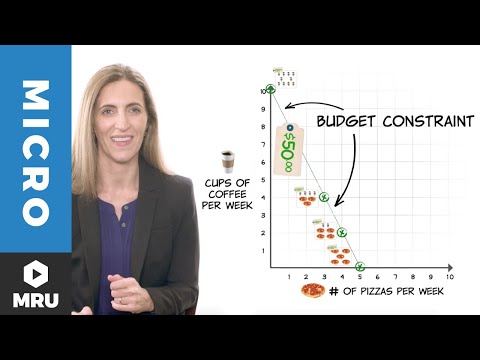
  • Al considerar un presupuesto semanal de $50 para café ($5) y pizza ($10), se presentan múltiples combinaciones posibles.
  • La restricción presupuestaria se representa gráficamente, mostrando todas las combinaciones asequibles entre café y pizza.

Restricciones Presupuestarias

  • Las combinaciones por encima de la línea del presupuesto son inalcanzables; aquellas por debajo son costeables.
  • La relación entre precios refleja cómo el mercado valora estos productos; una pizza equivale a dos tazas de café.

Costo de Oportunidad

  • La pendiente del margen presupuestario indica el costo de oportunidad; renunciar a 2 tazas de café para obtener 1 pizza.
  • Un aumento en el presupuesto no cambia esta relación; el intercambio sigue siendo constante independientemente del ingreso disponible.

Cambios en Precios Relativos

  • Si el precio del café disminuye a $2.50, la relación cambia drásticamente; ahora puedes comprar más café al renunciar a menos pizzas.
Video description

Think through all of the variables that determine the price of a cup of coffee. It might help to imagine the coffee beans on the farm first. Consider the land costs and the price of the farmer’s labor. What about transportation of the beans to the roaster? There are packaging costs, oil costs, driver costs...and we’re still only talking about the beans! Once the roasted beans finally make it to your local coffee shop, they still have to be turned in that cup of coffee. The cost of rent for the building is a factor in the price of the final good, as is the labor of the barista and the price of electricity in your area. We’re barely scratching the surface here, but you get the idea that a ton of variables are behind the price of even a relatively simple good like a cup of coffee. What you, the consumer, are able and willing to pay is yet another one. Your salary helps set your budget constraints. And your budget constraints are a crucial variable in helping you decide whether to spend $5 on that cup of coffee, or $5 on something else. In this video, we’ll examine what budget constraints look like and how they function by graphing a simple example: $50 to spend on $5 coffees or $10 pizzas. You’ll see how the graph shifts as variables change. We’ll also use this example talk about a fundamental concept in economics that can help you make better decisions: opportunity costs. Microeconomics Course: http://bit.ly/20VablY Next video: http://bit.ly/2rHPUY1