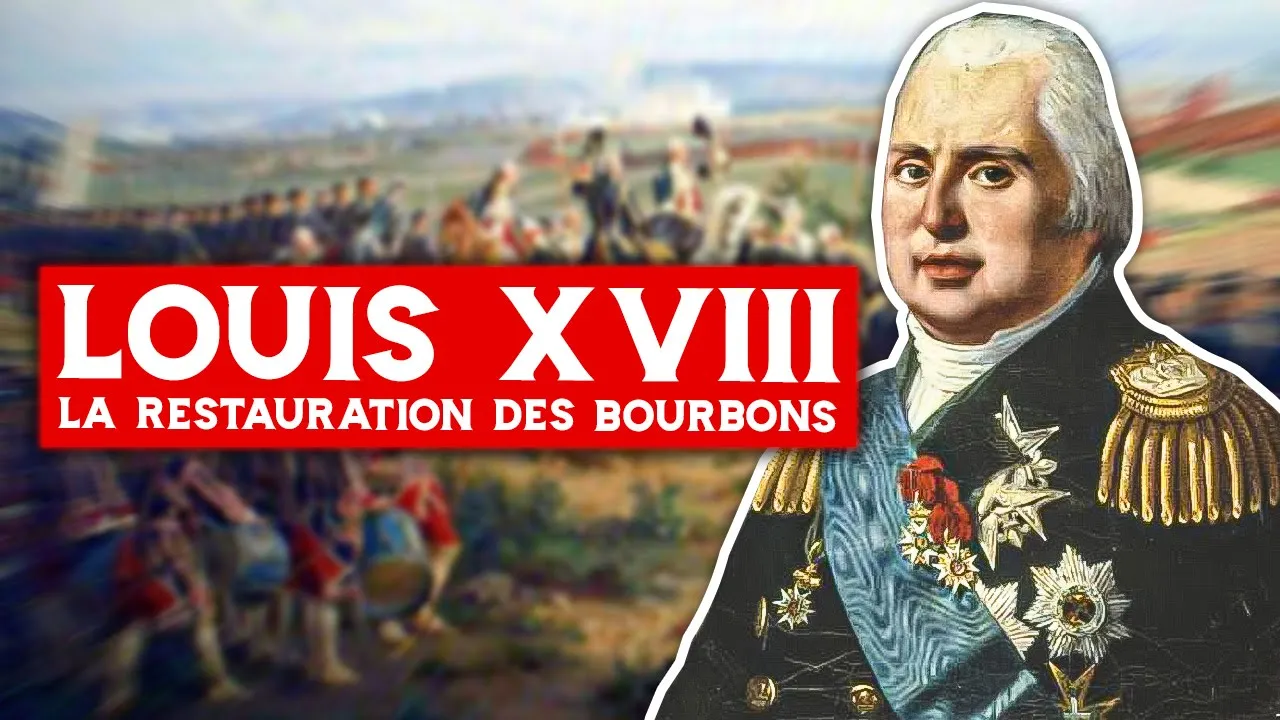
Louis XVIII La Restauration des Bourbons
The French Revolution and the Fall of Monarchy
This section provides an introduction to the French Revolution, which began on July 14, 1789, with the storming of the Bastille. It highlights the union of liberal political movements and the masses in challenging absolute monarchy. The old ideas of hierarchy and tradition were replaced by new principles of enlightenment, citizenship, and inalienable rights.
The Start of the Revolution
- The French Revolution started on July 14, 1789, with the storming of the Bastille.
- Liberal political movements and popular masses united to challenge absolute monarchy.
- Initially, there was a desire for a more liberal monarchy that would be open to new ideas and demands from both bourgeoisie and common people.
Abolition of Monarchy
- The radical elements took power from moderates, leading to the abolition of monarchy.
- The Declaration of Rights of Man marked a radical shift in mindset for the French population.
- Louis XVI's refusal to accept proposed reforms led to his downfall.
- Louis XVI and Marie Antoinette were imprisoned at Temple Prison in August 1792.
Challenges towards Democracy
- Despite their deaths, it took several generations for their vision for France to be realized.
- After Louis XVI's death, many royalists believed that his son Louis Charles (Louis XVII) would succeed him as king.
[0:03.55] The Fate of Louis XVII
This section focuses on the fate of Louis Charles (Louis XVII), the son of Louis XVI and Marie Antoinette, during and after the French Revolution.
Louis XVII's Imprisonment
- Louis Charles was imprisoned as an enemy of the republic in Temple Prison.
- His uncle, Louis Stanislas (Count of Provence), declared himself as King Louis XVIII.
- Despite theories about his escape, Louis XVII died in captivity around 1795.
[0:05.08] The Reign of Terror and its Impact
This section explores the chaotic period known as the Reign of Terror during the French Revolution and its consequences.
Reign of Terror
- The nation descended into chaos after the regicide, leading to paranoia and what became known as the Reign of Terror.
- Democratic reforms were suspended, and mass executions took place using the guillotine.
- The royal family's situation worsened, with increased surveillance and thwarted royalist plots.
Fate of Marie Antoinette
- Marie Antoinette was transferred to Conciergerie prison for common prisoners.
- She was quickly declared guilty by a revolutionary tribunal and executed.
Fate of Louis XVII
- Louis Charles (Louis XVII) was left in the hands of cobbler Simon in Temple Prison.
- He was treated poorly and suffered from tuberculosis, eventually dying around 1795.
The transcript is in French, so the summary and headings are also in French.
Conditions of Detention in the Temple Prison
This section discusses the investigation into the conditions of detention for a child in the Temple prison.
Investigation and Neglect
- An investigation was conducted into the treatment of a child in the Temple prison.
- The child, previously healthy, had been abused and neglected.
- Despite efforts to improve his situation, it was too late as he was already dying.
- The child's identity came into question due to his drastic physical changes.
Death of Louis XVII
This section covers the death and burial of Louis XVII.
Autopsy and Burial
- Louis XVII died on June 8, 1795 at the age of ten.
- An autopsy was performed, and he was buried without ceremony in a mass grave.
- His brother, Louis Stanislas Comte de Provence, claimed succession to the throne as Louis XVIII.
Doubts about Identity
This section explores doubts surrounding the true identity of the imprisoned child.
Substitution Rumors
- Rumors circulated that the imprisoned child had escaped and another child had been substituted for him.
Background of Louis Stanislas Xavier
This section provides background information on Louis Stanislas Xavier, also known as Count de Provence or later as Louis XVIII.
Family Background
- Louis Stanislas Xavier was born in 1755 at Versailles.
- He was the son of Louis Dauphin de France and Marie-Josèphe de Saxe.
- He had three brothers (Louis Joseph, Louis Auguste, Charles Philippe) and two sisters (Clotilde and Elizabeth).
Lifestyle and Political Views
This section discusses Louis Stanislas Xavier's lifestyle and political views.
Sedentary Lifestyle
- Louis Stanislas led a peaceful and sedentary lifestyle, focusing on food and reading.
- He did not share the Bourbon family's passion for hunting.
Moderate Reforms
- He advocated for modest tax reforms rather than radical changes.
- He urged caution when faced with signs of revolt during the early stages of the revolution.
Emigration during the Revolution
This section covers the emigration of Louis Stanislas Xavier and his brother Charles from France during the revolution.
Different Paths
- When violence erupted in Paris, Louis Stanislas chose to stay in Versailles while his brother Charles left for Turin.
- Louis Stanislas remained at his palace in Luxembourg, possibly plotting to replace his brother as king.
Residence at Luxembourg Palace
This section discusses Louis Stanislas Xavier's residence at Luxembourg Palace during the revolution.
Dine with Royalty
- He regularly dined with King Louis XVI and Queen Marie Antoinette until their unsuccessful escape in 1791.
Escape from Paris
This section describes Louis Stanislas Xavier's escape from Paris during the revolution.
Disguised Departure
- In June, he was informed about his brother's flight and decided to join Monsieur de Bouillé's army near Montmédy.
- To avoid suspicion, he disguised himself by wearing a tricolor ribbon associated with revolutionaries.
Apprehension and Return
This section covers the apprehension of Louis Stanislas Xavier during his attempted escape.
Capture and Return
- Louis Stanislas was apprehended during his famous flight to Varennes.
- He was brought back to Paris under escort and later proclaimed King of the French, establishing a constitutional monarchy.
Les conséquences de la Révolution française
Cette section aborde les réactions des autres nations européennes à la Révolution française et l'émergence de Napoléon Bonaparte.
Les réactions des autres nations européennes
- Les autres nations d'Europe étaient initialement satisfaites de voir la France aux prises avec des luttes politiques internes.
- Cependant, lorsque la famille royale fut emprisonnée au Temple, les monarques européens perçurent la Révolution comme une menace pour leurs propres intérêts.
- La colère du peuple français se dirigea vers le dauphin, Louis-Charles, qui devint une victime tragique de la Révolution.
L'émergence de Napoléon Bonaparte
- À cette époque, un jeune général républicain du nom de Bonaparte gagna en popularité auprès des Français.
- En seulement trois ans, les premiers objectifs révolutionnaires furent atteints avec l'abolition des privilèges de classe et l'établissement d'une souveraineté populaire.
- Cependant, dix ans plus tard, la France était encore plongée dans des conflits internes et externes, retardant ainsi la réalisation concrète des objectifs révolutionnaires.
- Napoléon Bonaparte saisit l'opportunité pour renverser le Directoire par un coup d'État en 1799 et devient Premier Consul.
L'exil de Louis XVIII et sa famille
Cette section traite de l'exil de Louis XVIII et de sa famille pendant la période napoléonienne.
L'exil prolongé de Louis XVIII
- Louis XVIII continue d'agir en tant que roi, même pendant son exil.
- Il tente de consolider la puissance de sa famille en mariant sa nièce, Marie-Thérèse, au duc d'Angoulême.
- Marie-Thérèse est la seule survivante de la prison du Temple et est libérée peu après la fin de la Terreur.
- Louis XVIII trompe sa nièce en lui faisant croire que les dernières volontés de ses parents étaient qu'elle se marie avec lui.
Les différentes résidences en exil
- Louis XVIII trouve refuge dans plusieurs pays européens, notamment l'Italie, puis en Russie grâce à la générosité du tsar Paul Ier.
- En Lettonie, il reconstruit une cour luxueuse similaire à Versailles dans le palais de Mitau.
- Cependant, les événements politiques le forcent à quitter ces résidences successivement.
Les tentatives pour restaurer les Bourbons
Cette section aborde les tentatives visant à restaurer les Bourbons et les interactions entre Napoléon Bonaparte et Louis XVIII.
Les complots contre Napoléon
- Napoléon est préoccupé par les complots visant à restaurer les Bourbons sur le trône français.
- Il tente d'obtenir que Louis XVIII renonce au trône, mais ce dernier refuse catégoriquement.
Le couronnement de Napoléon Bonaparte
- Napoléon se couronne lui-même empereur des Français en 1804, après avoir rejeté l'offre de Louis XVIII.
- Il promet à la France de ramener la stabilité, mais établit une dictature militaire et met fin au mouvement révolutionnaire.
Les héritiers présomptifs du trône
Cette section aborde les héritiers présomptifs du trône de France pendant l'exil de Louis XVIII.
La famille de Louis XVIII
- Louis XVIII n'a pas d'enfants, mais son frère a deux fils qui sont les héritiers présomptifs du trône.
- Pour consolider la puissance de sa famille, Louis XVIII convainc sa nièce Marie-Thérèse d'épouser son cousin, le duc d'Angoulême.
- Marie-Thérèse est la seule survivante de la prison du Temple et est libérée peu après la fin de la Terreur.
Les résidences en exil
- Louis XVIII trouve refuge dans plusieurs pays européens, notamment l'Italie et la Russie.
- En Lettonie, il reconstruit une cour luxueuse similaire à Versailles dans le palais de Mitau.
L'échange entre Napoléon Bonaparte et Louis XVIII
Cette section traite des échanges entre Napoléon Bonaparte et Louis XVIII concernant le trône français.
La proposition de Napoléon à Louis XVIII
- Napoléon propose à Louis XVIII de devenir lieutenant général du royaume, mais ce dernier refuse.
- Napoléon se couronne alors lui-même empereur des Français en 1804.
Le refus de Louis XVIII
- Louis XVIII refuse la proposition de Napoléon et affirme son ambition de régner en tant que roi.
- Napoléon répond en disant qu'il faudrait que Louis XVIII passe sur "cent cinquante mille cadavres" pour revenir au pouvoir.
L'avènement de Napoléon Bonaparte
Cette section aborde l'ascension de Napoléon Bonaparte au pouvoir après le ren
New Section
This section discusses the reign of Louis XVIII, his lifestyle, and the restoration of the monarchy in France.
Reign of Louis XVIII
- Louis XVIII adopted a formal style with occasional moments of familiarity.
- He surrounded himself with a refined court and maintained a guard to enhance his image.
- The king enjoyed living in a luxurious environment and had numerous devoted servants.
- Louis XVIII was known for his opulent gifts to other sovereigns and his appreciation for neoclassical art and furniture.
- The arts flourished during his reign, making Paris a center of luxury and fashion.
- However, both the palaces of Saint Cloud and Tuileries were destroyed due to subsequent violence.
New Section
This section focuses on the declining health of Louis XVIII towards the end of his reign.
Declining Health
- In spring 1824, Louis XVIII's health began to deteriorate due to obesity, gout, arteriosclerosis, and gangrene.
- He weighed around 130 kg (286 lbs) and was nicknamed "le pot d'agrumes" (the citrus pot).
- Despite his poor health, he continued to indulge in excessive eating and drinking.
- Gangrene affected his body severely, leading to amputations and causing great suffering.
- Despite physical ailments, Louis XVIII remained mentally sharp until his death on September 16th, 1824 at the age of 68.
New Section
This section discusses the legacy of Louis XVIII's reign and his role in restoring monarchy in France.
Legacy
- Louis XVIII's burial took place at Basilique Saint-Denis alongside other French kings.
- His reign demonstrated that the revolution and the empire did not break the connection between the royal family and the French people.
- Despite his flaws, Louis XVIII successfully restored monarchy by balancing different factions and reestablishing authority.
- He honored key figures of the revolution, gave a role to the French nobility, and fulfilled the desires of the people for peace.
- However, his reign is often overshadowed by Napoleon's dramatic rise and fall, which captured popular imagination.
New Section
This section compares Louis XVIII with his ancestor Henri IV and highlights his successes and weaknesses.
Comparison with Henri IV
- Unlike Henri IV, who is remembered as a multi-faceted hero, Louis XVIII's successes were overshadowed by his weaknesses.
- Napoleon's actions brought immense losses to France but also ensured his enduring presence in history.
- Louis XVIII's moderation, a significant virtue during his reign, was not as spectacular or memorable.
- Nevertheless, he managed to restore monarchy under favorable conditions and contributed to France's revival after years of war exhaustion.
- The relative liberalism of Louis XVIII's reign was eclipsed by the disastrous rule of Charles X that followed.
New Section
This section discusses Charles X's rule after Louis XVIII and its impact on France.
Rule of Charles X
- Charles X succeeded Louis XVIII as king. He was supported by ultra-conservative members who aimed to increase power for both sovereigns and the church.
- However, this government suppressed many freedoms that had been allowed under Louis XVIII's rule.
- The continuation of policies reminiscent of the despised old regime led to widespread discontent among the population.
- Eventually, this dissatisfaction culminated in a popular uprising known as the July Revolution.
New Section
This section highlights the disillusionment of the French population with the promises of glory and stability made by Napoleon.
Disillusionment
- The violence carried out in the name of the republic deviated from the noble revolutionary goals.
- The French population, seeking glory and stability, believed in Napoleon's promises.
- However, these promises were not fulfilled, leading to a sense of disillusionment among the people.
The transcript is in French.
The Restoration of the Bourbons
This section discusses the strong executive monarchy under Louis XVIII and the public's reaction to his death.
The Achievements of Louis XVIII
- Louis XVIII's goal was to maintain a balanced and strong executive monarchy.
- Upon his death, the people took to the streets in large numbers to pay homage to him.
- This reveals that for many subjects, Louis XVIII had achieved his objectives.
End of Bourbon Restoration
- The restoration of the Bourbons came to an end in 1830.
- However, the nation continued its fight for...
The transcript is in French.