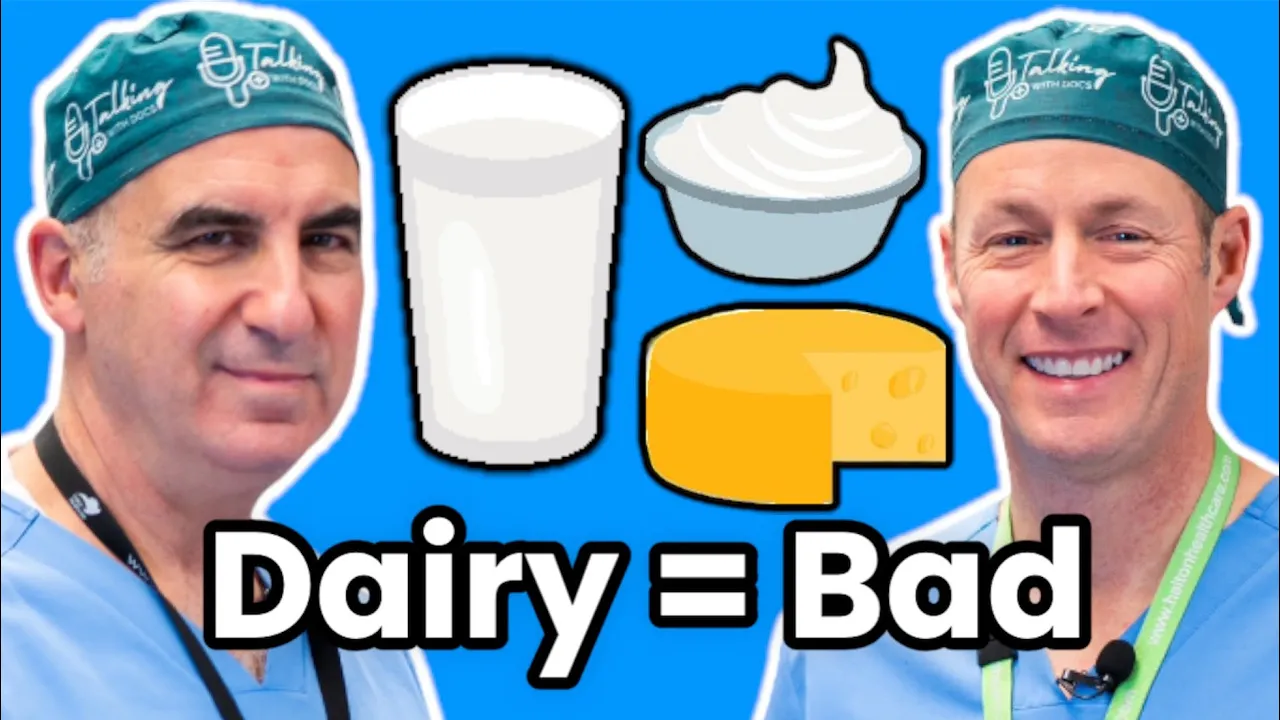
Why You Should Stop Having Dairy
The Deal with Dairy
In this section, the doctors discuss the topic of dairy and its potential inflammatory properties. They address common misconceptions and explore different studies on the subject.
Is Dairy Inflammatory?
- Studies show that dairy is not specifically inflammatory for individuals who are not allergic or lactose intolerant.
- Blood markers used to measure inflammation do not typically increase with dairy consumption.
- However, it's important to note that dairy is a heterogeneous collection of foods, ranging from different types of cheeses to various milks from different animals.
- Different dairy products may have varying effects on inflammation.
Conflicting Studies and Industry Influence
- Some studies funded by the dairy industry found no association between dairy intake and gastrointestinal inflammation in healthy adults.
- It's crucial to consider conflicts of interest when evaluating research articles, especially those funded by specific industries.
- Historically, there have been studies suggesting a link between dairy consumption and increased risk of hip replacement. However, individual reactions to dairy can vary greatly.
Lactose Intolerance and Allergies
- After age six, around 65% of the world's population lacks the enzyme lactase needed to properly digest lactose in dairy products.
- Lactose intolerance can lead to inflammatory responses in some individuals.
- Allergy to milk or dairy products is different from lactose intolerance and affects only about 2-5% of people.
Testing Dairy Intolerance
- Elimination-style diets can help identify if dairy is causing discomfort or inflammation in individuals.
- Gradually reintroducing dairy after an elimination period allows monitoring for any changes in symptoms.
The transcript does not provide timestamps beyond this point.
New Section
This section discusses the historical promotion of dairy, the government's involvement in supporting dairy farmers, and the controversy surrounding the health benefits of dairy.
Historical Promotion of Dairy
- Dairy consumption was historically promoted in North America by the US Department of Agriculture due to their vested interest.
- Northern Scandinavian countries relied on dairy more due to harsh winters and high fat content.
- Northern Europeans have low incidence of lactose intolerance due to genetic modifications.
Government Involvement with Dairy Farmers
- The government supported dairy farmers by buying their products, leading to a surplus of cheese in the 70s.
- The government started giving away cheese through programs like the government cheese program.
- When an industry or government has a vested interest in a product, it changes its role in society.
Controversy Surrounding Dairy
- Milk was widely promoted as beneficial for health, but later studies questioned its effects on everyone's body.
- Some people may have lactose intolerance or allergies to dairy products.
- Countries with high dairy consumption have higher incidence of hip fractures, contrary to expectations.
- Calcium from dairy is not protective against hip fractures as we age.
New Section
This section explores some shortcomings of consuming dairy, including concerns about fat content, lactose intolerance or allergy, and potential links to atherosclerosis.
Concerns About Fat Content
- High-fat dairy products can increase blood triglyceride levels and may be detrimental for those predisposed to high cholesterol.
- Studies often use low-fat dairy products to reduce saturated fat and inflammatory markers.
Lactose Intolerance or Allergy
- Individuals with lactose intolerance or allergy may experience discomfort after consuming dairy products.
- Enzymes like lactase can help digest lactose for those who still want to consume dairy.
Potential Links to Atherosclerosis
- Research shows no correlation between dairy consumption and atherosclerosis in the general population.
- Individuals with genetic predispositions to high cholesterol or triglycerides may need to be cautious.
New Section
This section discusses the presence of hormones in dairy products, including growth hormones given to cows and other naturally occurring hormones.
Hormones in Dairy Products
- In Canada, growth hormone use is prohibited, but some milk from cows treated with synthetic growth hormones may still enter the country.
- The long-term risks of growth hormone use are unknown.
- Other naturally occurring hormones are present in dairy products.
The transcript provided does not include enough content for additional sections.
New Section
This section discusses the potential risks associated with consuming dairy products, particularly in relation to certain types of cancers such as prostate and endometrial cancer. The presence of hormones in milk is believed to contribute to an increased risk.
Dairy and Cancer Risk
- Consuming dairy products, specifically milk, has been linked to an increased risk of certain types of cancers, including prostate and endometrial cancer.
- The hormones present in milk are believed to be responsible for this increased risk.
New Section
This section highlights the different types of dairy available, including sheep, goat, and cow dairy. It emphasizes the importance of considering one's goals and objectives when choosing whether or not to consume dairy.
Types of Dairy
- There are various types of dairy available, including sheep, goat, and cow dairy.
- When deciding whether or not to consume dairy, it is important to consider one's goals and objectives for their diet. If consuming dairy solely for enjoyment purposes, moderation may be key. However, if seeking specific health benefits from dairy consumption, it is essential to evaluate alternative sources for nutrients like calcium and protein.
New Section
This section emphasizes that there is no evidence suggesting that all forms of dairy are inherently bad for health. It encourages moderation in consumption and highlights the importance of a varied diet.
Moderation and Variety
- There is no evidence indicating that all forms of dairy are detrimental to health. In fact, some populations known for longevity include moderate amounts of dairy in their diets.
- Consuming excessive amounts of any food item can have negative consequences on health. It is important to practice moderation and avoid excessive consumption of dairy products.
- A varied diet that includes a range of different foods is generally considered the most healthy approach. If dairy is enjoyed in moderation and fits within one's dietary goals, it can be a part of a balanced diet.
New Section
This section discusses the potential benefits of consuming dairy for individuals who may have difficulty obtaining certain nutrients from other sources.
Dairy as an Option
- If individuals struggle to obtain necessary protein, vitamins, or vitamin D from alternative sources, consuming dairy can be beneficial in meeting these nutritional needs.
- Personal preferences and individual dietary requirements should be taken into consideration when deciding whether or not to include dairy in one's diet.
New Section
This section explores personal habits regarding dairy consumption and compares it to other dietary choices.
Personal Habits
- The speaker personally enjoys consuming cheese with wine but does not consume a significant amount of dairy overall. However, they do not actively avoid it if it is present in certain situations.
- While some dietary choices, such as processed meats, have been linked to negative health outcomes, the speaker has not found sufficient evidence to change their current dairy consumption habits.
- The speaker acknowledges that alcohol consumption should also be moderated based on research findings linking it to potential health risks. They have personally reduced their alcohol intake based on this information.
Please note that these summaries are based solely on the provided transcript and may not capture all nuances or details from the video content.