Ethics || Lesson 1 || The Ethical Dimension of Human Existence
The Ethical Dimension of Human Existence
Introduction to Ethics
- The lesson begins with an introduction to ethics, focusing on "The Ethical Dimension of Human Existence," emphasizing the unique characteristics that define humans.
- A key characteristic of humanity is the capacity for rational thought, which allows individuals to discern moral right from wrong.
Defining Ethics
- The speaker highlights the importance of understanding ethics by defining it as a study of what is good and bad, acceptable and unacceptable in human behavior.
- Ethics involves obligations we must fulfill and prohibitions we are required to respect, guiding our actions towards moral correctness.
Understanding Morality
- Morality is described as the philosophical study of moral values and rules, also referred to as moral philosophy.
- It differentiates between right and wrong actions while explaining why certain actions are deemed correct or incorrect.
Guidelines of Morality
Obligations
- The first guideline in ethics focuses on obligations—duties that individuals must fulfill based on their roles (e.g., students).
Prohibitions
- The second guideline addresses prohibitions—actions that should not be taken. This duality helps clarify ethical responsibilities.
Ideals
- The third guideline encourages striving for ideals, promoting personal growth beyond mere compliance with duties or avoidance of wrongdoings.
Conclusion: Importance of Moral Values
- Overall, ethics studies the foundations for values crucial to human life, providing insight into why certain behaviors are valued or condemned.
Understanding Ethics: What It Is and Isn't
The Essence of Ethics
- Ethics is not solely about recognizing one's own worth; it emphasizes the importance of acknowledging and expressing the worth of others.
- The study of ethics aims to foster a deeper understanding of how we value ourselves and those around us, moving beyond selfish perspectives.
Clarifying Ethical Concepts
- To grasp what ethics entails, it's crucial to first understand what it does not encompass. Not all judgments about right and wrong are ethical in nature.
- Recognizing that many decisions labeled as right or wrong may not fall under ethical considerations is essential for clarity in discussions about morality.
Value Judgments vs. Ethical Judgments
- While ethics provides guidance on valuing oneself, there are limitations to these valuations; some judgments do not pertain to ethics at all.
- Many value judgments made in daily life—such as opinions on movies or fashion—are often mistaken for ethical evaluations but lack moral implications.
Distinguishing Aesthetics from Ethics
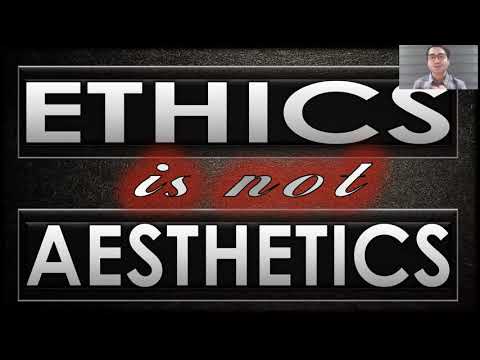
- One key distinction is that ethics is not aesthetics; aesthetic preferences relate to personal taste rather than moral values.
- Aesthetic judgments stem from sensory experiences (e.g., beauty, taste), which should not be conflated with moral assessments of character or behavior.
Misjudging Morality Based on Appearance
- People often judge others based on superficial traits like fashion choices without understanding their true character or morals.
- This tendency highlights the need for awareness that appearances do not equate to ethical standing; one cannot assess morality based solely on looks or style.
Understanding Aesthetics and Ethics
The Relationship Between Aesthetics and Ethics
- The speaker discusses the misconception that aesthetics can define a person's character, emphasizing that physical appearance does not correlate with ethical values.
- They highlight a common belief that fluency in English equates to intelligence, cautioning against judging someone's intellect based solely on language proficiency.
- The speaker argues that fluency in English is merely a skill and should not be used as a measure of an individual's worth or intelligence.
- It is reiterated that aesthetic preferences can lead to unfair judgments about individuals, stressing the need for awareness regarding these biases.
Judgments Based on Trivial Matters
- The discussion shifts to how people often make snap judgments about couples based on superficial appearances, such as attractiveness disparities.
- The speaker warns against making assumptions about relationships or individuals based solely on their looks or societal perceptions of beauty.
- They emphasize that one's character should not be judged by external factors like appearance, speech patterns, or personal choices (e.g., tattoos).
Distinguishing Ethics from Etiquette
- A clear distinction is made between ethics and etiquette; while both concern right and wrong actions, etiquette deals with trivial matters rather than significant moral issues.
- Examples are provided to illustrate how minor actions may evoke strong reactions but do not necessarily reflect an individual's ethical standing.
Cultural Context in Ethical Judgments
- An example is given where failing to offer a seat to an elderly person might be viewed negatively within Filipino culture but could differ significantly in other cultures like Japan.
- In Japan, offering a seat might be perceived as belittling the elderly's capabilities rather than showing respect, highlighting cultural differences in ethical interpretations.
- Ultimately, the act of giving up one’s seat is framed as more of an issue of etiquette rather than ethics itself.
Cultural Etiquette vs. Ethics
Understanding Cultural Context in Actions
- The speaker identifies as Filipino and discusses the right to express indignation towards immoral actions, such as a man failing to offer a seat to an elderly woman on a bus.
- The distinction between etiquette and ethics is introduced; etiquette refers to culturally suggested moral values that are not universal.
- Examples of cultural etiquette include expectations for children’s behavior, like giving up seats, which are seen as measures of kindness but do not fall under ethical considerations.
Examples of Etiquette in Daily Life
- Common examples of etiquette violations include public behaviors like farting or burping, talking with a full mouth, or picking one’s nose in public—actions deemed inappropriate within Filipino culture.
- Despite these actions being viewed negatively, they do not equate to moral judgments; they are simply matters of etiquette rather than ethics.
Importance of Observing Cultural Etiquette
- Respecting cultural etiquette demonstrates respect for community norms and values; it is essential for harmonious coexistence within diverse cultures.
- Individuals from different cultures should adapt to local customs and communal etiquettes when immersed in another culture, emphasizing the importance of understanding cultural differences.
Gray Areas Between Ethics and Etiquette
- The speaker raises questions about gray areas where actions may straddle the line between ethics and etiquette, such as breastfeeding in public or public displays of affection.
- Controversial topics like transgender individuals using gendered restrooms highlight the complexities involved in distinguishing between ethical considerations and mere cultural etiquette.
Clarifying Misconceptions About Ethics
- The speaker emphasizes three key distinctions:
- Ethics is not about aesthetics.
- Ethics is not merely about etiquette.
- Ethics does not revolve around technical valuations.
- Technical valuation pertains to context-specific right or wrong actions that do not necessarily involve ethical principles; rules can exist without being ethically driven.
Technical Valuation Explained
- An example from basketball illustrates how violating game rules (like traveling) does not imply immorality; it reflects a breach of technical valuation rather than ethical misconduct.
- A person's worth should not be judged based on isolated actions that fall under technical evaluations instead of ethical standards.
Conclusion on Ethical Distinctions
- The discussion concludes by reiterating that many common judgments stem from misunderstandings regarding what constitutes ethics versus technicality or aesthetics.
- Emphasizing the Greek origin of "techne," the speaker clarifies that improper execution within specific contexts does not equate to moral failure but rather indicates a deviation from established techniques.
Understanding Ethics: Distinctions and Definitions
The Nature of Ethics
- Ethics is distinguished from etiquette, aesthetics, and technical valuations. It can be challenging to differentiate between trivial and grave offenses in ethical discussions.
- Clothing serves as an example; while it may seem purely aesthetic, provocative clothing raises questions about moral judgment rather than mere taste.
Gray Areas in Ethical Judgments
- Provocative clothing prompts a discussion on whether it necessitates moral scrutiny beyond personal preference.
- Verbal abuse in relationships challenges the notion of bad manners versus ethical condemnation, highlighting gray areas within ethics.
Clarifying Terms: Ethics vs. Morals
- A distinction is made between ethics and morals; cognates related to these terms include unethical, immoral, amoral, etc.
- "Amoral" refers to individuals lacking moral principles or issues outside the realm of morality.
Ambiguities in Ethical Language
- Caution is advised when using prefixes like "not" or "un-" with ethical terms due to potential ambiguities.
- For instance, "not ethical" indicates something not belonging to ethics (like cooking), whereas "unethical" implies a violation of ethical standards (like lying).
Understanding Morality and Conduct
- Morals refer to specific beliefs or attitudes that guide individual conduct; failing to meet these can result in being labeled as immoral.
- Moral judgments involve rational reasoning about right and wrong behavior.
Defining Ethics as a Discipline
- Ethics studies ideal human behavior and thought processes beyond cultural or religious norms; it aims for understanding what constitutes moral actions.
- As an intellectual discipline within philosophy, ethics categorizes behaviors into acceptable (ethical) and unacceptable (unethical).
Differentiating Personal Conduct from Ethical Study
- Morals pertain specifically to personal conduct while ethics encompasses broader philosophical inquiries into ideal behavior.
Understanding Ethics: Descriptive vs. Normative
The Role of Human Decision-Making in Ethics
- God has given humans the ability to discern right from wrong, emphasizing our responsibility to act ethically.
- Ethics serves as a guide to understand what is right and wrong, and why certain actions are classified as such.
Approaches to Studying Ethics
- There are two main approaches in ethics: descriptive ethics and normative ethics.
- Descriptive ethics focuses on how groups make moral judgments without passing judgment on those valuations.
Descriptive Ethics Explained
- A descriptive study involves observing moral behaviors within a group without making value judgments about them.
- Social scientists, like historians and sociologists, conduct descriptive studies by analyzing moral standards across different cultures or time periods.
Understanding Normative Ethics
- In contrast, normative ethics prescribes what should be considered morally right or wrong based on philosophical reasoning.
- Normative discussions establish standards for moral valuation and dictate actions that ought to be taken or avoided.
Philosophical Discussion of Ethics
- Engaging in ethical discussions often leads us into normative territory where we evaluate actions based on established moral standards.
- A philosophical approach critically examines both descriptive theories and normative theories' strengths and weaknesses.
Key Terms in Ethical Discussions
- Familiarity with terms such as issue, decision, judgment, and dilemma is essential for understanding human beings as moral agents.
Understanding Moral Agency and Ethical Decision-Making
The Concept of Moral Agents
- Human beings are unique among God's creations, possessing the ability to discern right from wrong, which designates them as moral agents.
- As moral agents, individuals must understand the meaning of moral issues and decisions that arise in various situations.
Defining Moral Issues
- A moral issue refers to situations that provoke significant debate regarding human morality and ethical behavior within society.
- An example presented is a poor son contemplating stealing medicine for his dying mother, illustrating the complexity of moral dilemmas.
Exploring Ethical Dilemmas
- The scenario raises questions about the morality of theft when motivated by compassion, highlighting conflicting ethical perspectives.
- Moral issues often lead to debates about respect for property versus the urgency of caring for loved ones.
Examples of Contemporary Moral Issues
- Other prevalent moral issues include capital punishment, euthanasia (mercy killing), and same-sex marriage.
- Observing these issues allows individuals to assess their ethical implications objectively.
Distinguishing Between Moral Issues and Decisions
- A moral decision occurs when an individual faces a choice requiring action based on ethical considerations.
- In contrast to merely observing a situation (moral issue), making a decision involves personal involvement and accountability.
Understanding Moral Judgment
- When assessing another's actions or behaviors, one engages in moral judgment—evaluating whether those actions are right or wrong.
- This differs from discussing broader societal concerns; it focuses on individual assessments of specific behaviors.
Navigating Moral Dilemmas
- A moral dilemma arises when an individual must choose between two goods or lesser evils, complicating their ethical stance.
- An example illustrates this with a scenario involving honesty about a friend's newborn child’s appearance, showcasing the tension between truthfulness and kindness.
Moral Dilemmas and Ethical Reasoning
Understanding Moral Dilemmas
- A moral dilemma occurs when an individual faces conflicting choices, such as a mother wanting to feed her starving child but knowing that stealing is wrong.
- Key terms related to moral dilemmas include moral judgment, moral decision, and moral issue, which highlight different aspects of ethical considerations.
The Role of Reasoning in Ethics
- Philosophy in ethics goes beyond merely describing actions; it involves understanding the reasoning behind why certain actions are deemed right or wrong.
- Sound reasoning is essential for determining the morality of actions, prompting deeper inquiry into ethical principles.
Questions Driving Ethical Considerations
- The study of ethics seeks to answer why specific actions are considered acceptable or unacceptable within a society.
- Early childhood experiences shape our understanding of right and wrong through rewards for good behavior and punishments for bad behavior.
Reward and Punishment as Motivators
- The concepts of reward and punishment serve as initial motivators for ethical behavior but may be seen as superficial reasons for acting morally.
- If one can gain rewards from unethical actions (e.g., cheating), then relying solely on reward/punishment frameworks becomes problematic.
Philosophical Inquiry Beyond Superficial Morality
- Zhuang Zhu's perspective suggests that education based on rewards and punishments is inadequate for true moral development.
- Asking "why" about ethical issues encourages deeper philosophical exploration rather than accepting surface-level justifications.
Abstraction in Ethical Thinking
- Abstraction requires detaching concepts like cheating from specific contexts (e.g., exams), allowing broader discussions about morality.
- By separating cheating from its context, we can analyze it purely as an act without situational biases influencing our judgment.
Understanding Cheating: Moral Implications and Principles
The Nature of Cheating
- Cheating is universally recognized as wrong, but the reasons behind its immorality are worth exploring. The discussion encourages examining cheating across various contexts, such as exams and romantic relationships.
- By detaching the concept of cheating from specific situations, one can analyze its implications in different aspects of life. This abstraction helps in understanding why cheating is fundamentally wrong.
Fair Play and Integrity
- One key conclusion about cheating is that it violates the principle of fair play. Engaging in dishonest behavior undermines fairness not only in academic settings but also in personal relationships.
- For instance, if a student cheats on a quiz while others have studied hard, it creates an unfair advantage. Similarly, infidelity in a relationship breaches trust and loyalty.
Validity of Testing
- Cheating also calls into question the validity of assessments. When someone cheats on an exam, they express disbelief in the necessity of testing to prove their competence or worthiness.
- This skepticism extends beyond academics; it challenges the integrity of evaluations across various life scenarios where merit should be demonstrated.
Establishing Moral Principles
- The principles derived from understanding cheating—fair play and validity—form a moral framework that guides ethical behavior. These principles emerge through critical thinking and abstraction.
- As individuals reflect on these concepts, they develop personal moral theories that articulate why certain actions are deemed right or wrong.
Broader Ethical Considerations
- The exploration can extend to other moral dilemmas like killing. Questions arise regarding why taking a life is considered evil—often rooted in religious beliefs or philosophical assertions about human dignity.
- Arguments against killing may include views on life's sanctity or its contribution to human suffering versus happiness, further enriching one's moral theory.
Constructing a Moral Framework
- A moral theory systematically attempts to validate certain ethical principles beyond just cheating—encompassing faithfulness and love among others.
- By integrating various principles into a cohesive framework, individuals clarify their motivations for ethical behavior and belief systems regarding morality.
Reasoning Behind Ethics
- Ethical reasoning begins with abstracting actions from their contexts to apply them broadly across life experiences. This process reveals consistent patterns regarding what constitutes right or wrong behavior.
- Ultimately, this leads to establishing firm principles against actions like cheating while fostering commitment to integrity across all facets of life—including relationships and personal conduct.
By engaging deeply with these discussions around morality and ethics related to cheating, individuals can cultivate robust frameworks guiding their decisions throughout life.
Understanding Sources of Authority in Ethics
Introduction to Moral Theories
- The study aims to explore various moral theories and frameworks developed throughout history, highlighting their relevance today.
Source of Authority in Ethics
- A key discussion point is identifying the source of authority in ethics—who determines what is right or wrong and who has the authority to dictate moral standards.
First Source: Law
- The first identified source of ethical authority is law, which dictates what is considered right based on legal mandates.
- Critics argue that laws should not be the sole standard for ethics because they often focus on prohibitions rather than positive guidance.
Critique of Law as Ethical Authority
- Laws are primarily prohibitive; they tell us what actions to avoid rather than what we should actively pursue.
- This limitation raises questions about how laws can serve as a comprehensive standard for morality when they do not promote positive ethical behavior.
Limitations of Legal Standards
- Laws cannot inform us about ethical pursuits; they only instruct avoidance, making them inadequate as universal moral authorities.
- There exist morally questionable actions that are not prohibited by law, indicating that legality does not equate to morality.
Second Source: Religion
- Many believe religion serves as a higher moral authority, providing both prohibitive rules and ideals worth pursuing.
Challenges with Religious Authority
- However, the multiplicity of religions complicates this view. Different religions may have conflicting teachings regarding morality, leading ethicists to question which religious doctrine should be followed.
Cultural Conflicts and Ethical Authority
The Role of Religion and Culture in Ethics
- Discussion on how dietary restrictions vary across cultures, highlighting the multiplicity of beliefs regarding what is considered ethical or acceptable.
- Emphasis on cultural relativism, questioning which culture's ethics should be followed when they contradict each other.
- Example of a Filipino-American individual facing a conflict between two distinct cultural identities, raising questions about which cultural norms to adhere to.
Personal Identity and Cultural Dilemmas
- A personal narrative illustrating the tension between being a Filipino Muslim and adhering to differing marital customs from both cultures.
- Exploration of the challenges posed by competing cultural authorities in determining moral standards.
External vs. Internal Forces in Morality
- Introduction to external forces influencing morality: law, religion, and culture; prompting individuals to consider their sources of ethical authority.
- Mention of internal forces such as personal disposition that may lead individuals to prioritize self-guidance over external influences.
Senses of Self in Ethical Decision-Making
- Overview of three senses of self concerning ethics: subjectivism, psychological egoism, and ethical egoism.
Subjectivism
- Definition: Belief that individuals are the ultimate authority on what is right or wrong based solely on personal opinion.
Psychological Egoism
- Explanation: The view that all human actions are motivated by self-interest; even altruistic acts serve one's own benefit.
Ethical Egoism
- Distinction from psychological egoism: While it acknowledges self-interest, it does not claim that all actions are inherently selfish; some can be genuinely altruistic.
Ethical Egoism and Its Implications
Understanding Ethical Egoism
- Ethical egoism posits that helping others is essential, not just for self-interest but also for the benefit of society. The idea is that good deeds towards others will eventually yield positive returns to oneself.
- This perspective encourages a selfless approach where one considers the welfare of others while recognizing that such actions can lead to personal benefits in the long run.
Distinctions Among Egoism Theories
- Ethical egoism differs from subjectivism; it involves considering the well-being of others rather than solely focusing on one's own desires or feelings.
- Psychological egoists may argue against breakups based on perceived benefits, suggesting love is contingent upon personal needs, contrasting with ethical egoists who act out of genuine concern for mutual happiness.
Martyrdom in Ethical Egoism
- An example of ethical egoism includes being faithful to a partner with the expectation that this will foster mutual happiness, illustrating a balance between self-interest and altruistic behavior.
- A martyr-like attitude in ethical egoism suggests that if love fades, one should let go for both parties' happiness, highlighting a nuanced understanding of relationships within this framework.
Course Overview and Assignments
- The session concludes with an overview of ethical dimensions in human existence and introduces various moral theories to be explored further in subsequent lessons.
- Students are reminded about upcoming assignments, specifically a reflection paper due next week after reviewing Unit 1 published on their Canvas account.
Submission Guidelines
- Reflection papers must be submitted through class representatives before taking quizzes. This requirement emphasizes accountability and preparation among students.
- The instructor stresses the importance of timely submission as part of course engagement and assessment criteria.