First Conditional – Grammar & Verb Tenses
First Conditional in English
Understanding the Conditional Mood
- The conditional mood is used for hypothetical situations where outcomes are uncertain. It allows speakers to express guesses about potential results.
- The first conditional specifically addresses possible or likely outcomes, indicating that if a certain condition is fulfilled, the result will probably occur.
Structure of the First Conditional
- The most common structure for forming first conditional sentences is: if + present tense, will + base verb. A comma is placed after the "if" clause.
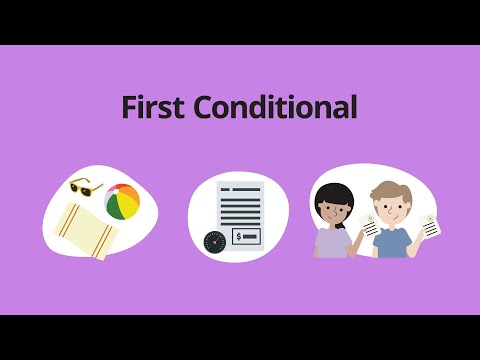
- An example of this structure: "If it is sunny tomorrow, we will go to the beach." Note that the "if" clause can appear at either the beginning or end of a sentence.
More Examples of First Conditional Sentences
- Additional examples illustrate how to use first conditional sentences:
- "If he drives really fast, he will get a speeding ticket."
- "If the students do well on the test, their teacher will let them go home early."
- "If you miss the bus, you will be late for school."
Practical Applications and Exercises
- Further examples include:
- "She will be tired tomorrow if she watches TV all night."
- "The children will eat all these cookies if we don’t hide them."
- "We will be so happy if we win the game on Saturday."
- Participants are encouraged to create their own sentences using this structure, such as: “If you stay out late tonight, you will regret it tomorrow morning.”
Engaging with First Conditional Practice
- Encouragement for practice includes:
- “If the students study hard, they will get good grades.”
- “She will move to a new city if she gets the job.”