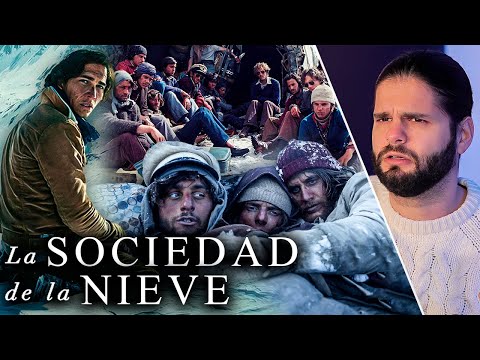
La SOCIEDAD de la NIEVE desde OTRA PERSPECTIVA | Relato y Reflexiones
Understanding the Tragedy in 1972
The transcript introduces a tragic event that occurred in October 1972 involving a rugby team from Uruguay.
The Rugby Match and Fateful Decision
- The rugby team, All Christians Club, is playing in Montevideo, Uruguay. Roberto Canesa's individualistic decision leads to consequences.
- Teammates reprimand Roberto for his actions, highlighting the importance of teamwork in rugby.
Preparing for a Trip to Santiago
- The team needs to raise money for their next match in Santiago, Chile.
- Numa Turcatti is invited on the trip despite not playing rugby initially but eventually agrees due to a friend's request.
Flight Journey and Turbulence
- The group boards the flight with enthusiasm and takes off with passengers and crew members.
- Turbulence during the flight raises concerns among passengers but is initially managed by the pilot.
Turbulent Events Unfold
The journey encounters unexpected turbulence leading to a critical situation.
Escalating Turbulence
- Initially manageable turbulence escalates as the plane approaches landing.
- A sudden descent causes panic among passengers as they face severe turbulence.
Impact and Aftermath
- The plane collides with a mountain during an attempt to avoid it, resulting in casualties and injuries.
- Survivors face challenges post-crash as they navigate through the aftermath of the impact.
Lessons from Rugby Applied to Survival
Drawing parallels between rugby principles and survival strategies post-crash.
Importance of Teamwork in Crisis
- Individual actions can have significant consequences in challenging situations.
- Rugby principles emphasize teamwork over individual glory, mirroring survival efforts after the crash.
Collaboration and Sacrifice for Survival
- In rugby, collaboration and sacrifice are essential for success; similarly crucial for survival post-crash.
Survival and Social Norms in Extreme Conditions
The survivors, after a plane crash, form a cohesive society in the snow-covered mountains, each with assigned roles and responsibilities. They adapt to their environment by creating water sources and shelter from the fuselage wreckage.
Building a Society of Survivors
- Marcelo rations food strictly, giving each person minimal portions.
- Maintaining hope for rescue becomes challenging as days pass without aid.
- Improvisation is key: survivors create water filters and signal for help with suitcases.
- Despite challenges, Marcelo emphasizes faith in eventual rescue to keep morale up.
Challenges of Survival and Ethical Dilemmas
As resources dwindle, ethical dilemmas arise among the survivors regarding extreme measures for sustenance.
Struggles for Survival
- The group explores salvaging batteries from the plane's tail to repair communication devices.
- Desperation leads to discussions about consuming human flesh as an option for survival.
Evolution of Social Norms in Crisis
In dire circumstances, societal norms shift drastically as survival takes precedence over conventional ethics.
Adapting Social Norms
- Some members reluctantly consider cannibalism as a means of survival while others resist.
- A new social norm emerges as individuals rationalize consuming human flesh for survival.
Cultural Taboos vs. Survival Instinct
Cultural taboos are challenged when survival instincts override traditional norms within the group dynamics.
Cultural Adaptation
- The group reevaluates cultural taboos under extreme conditions where survival surpasses societal norms.
Desperate Situations and Leadership Challenges
The group faces desperation as the authorities suspend the search until the next year due to poor visibility. Marcelo's leadership undergoes a shift, highlighting how individuals adapt in critical situations.
Numa's Rejection and Group Desperation
- Numa rejects an offer for acceptance, leading to disrupted dialogue.
- Desperation grips the group upon learning of the search suspension.
- Marcelo's leadership dynamics change post-accident, showcasing adaptation challenges.
Leadership Evolution and Unexpected Leaders
- Marcelo's prior effective leadership contrasts with new challenges.
- Numa maintains his decision while embarking on a secret mission.
Group Cohesion and Survival Strategies
The group navigates harsh conditions, emphasizing the importance of unity, shared goals, and psychological support in survival scenarios.
Facing Harsh Conditions
- Challenges during the search for batteries highlight physical hardships.
- Numa's determination and training instill hope amidst adversity.
Psychological Support and Group Dynamics
- Group morale improves on day 17 through humor and camaraderie.
- Importance of group cohesion in alleviating stress during crises.
Collective Identity and Sacrifices
The film portrays how shared experiences forge a collective identity, leading individuals to prioritize group welfare over personal interests.
Strengthening Collective Identity
- Intensification of group cohesion amid tragedy fosters interdependence.
- Shared survival goal enhances collective identification over individualism.
Sacrifices for Group Survival
- Avalanche disaster tests survivors' willingness to sacrifice for others.
Ventana Numa's Journey of Survival
The group, led by Ventana Numa, faces challenges and pivotal moments during their survival journey after being buried in an avalanche.
Ventana Numa's Resilience
- Inciarte describes the avalanche as a turning point, leading to smarter decisions and the emergence of leaders within the group.
- Arturo encourages Numa to conserve energy, emphasizing faith in humanity over religious beliefs.
Emergence of Unlikely Leaders
- New challenges prompt unexpected leadership roles; Marcelo's death unintentionally propels Nando into a leadership position.
- Despite self-doubt, Nando's unwavering determination inspires others to see him as a leader, fostering perseverance.
Finding Purpose in Adversity
- Amidst doubts and fears, Nando's relentless pursuit of solutions motivates others to view him as a leader.
- Javier reflects on finding purpose through adversity, echoing Viktor Frankl's idea that love is the ultimate human aspiration.
Transforming Suffering into Love
- Frankl's concept of love as salvation resonates with Javier, highlighting how profound acts of love can bring redemption even in dark times.
- Numa begins to grasp the potential for transforming suffering into a legacy of love, marking the start of his own path towards profound acts of love.
Hope Amidst Challenges
The group faces dwindling resources and conflicting views on rescue strategies while maintaining hope amidst adversity.
Pursuit of Rescue
- A new team ventures towards the plane tail with hopes pinned on repairing the radio for communication.
- Technical issues hinder distress signals; dwindling food supplies lead to desperate measures for survival.
Sacrifice and Longing for Home
- Despite near-death experiences, Numa sacrifices food for others and expresses a desire to return home appreciating life's moments.
Struggles with Decision-making
New Section
In this section, Numa grants permission to Nando to use his body if he dies, showcasing acceptance of his fate and happiness for others' survival. Numa's understanding of love in its highest form is highlighted.
Understanding Love and Sacrifice
- Numa comprehends that love involves actively benefiting others, recognizing their potential, and elevating them. This realization brings peace in accepting one's destiny.
- Love is depicted as the willingness to sacrifice one's life for others, exemplifying the highest act of love. Numa embodies this by sacrificing himself for his friends.
New Section
The narrative unfolds with Numa's death at 25 years old, leaving a note expressing the profound sentiment that there is no greater love than giving one's life for friends. Roberto decides they must head towards Chile.
Sacrifice and Departure
- Despite challenges, Roberto, Nando, and Tintín begin their ascent towards Chile after taking provisions from Numa's body. They set off into the night with determination.
- Roberto hesitates due to limited food supplies but is convinced by Nando to continue towards Chile. Their journey is marked by perseverance and belief in reaching their destination.
New Section
The survivors face hardships but find hope as they repair their equipment and discover water. Assistance from an arriero leads to improved conditions before being rescued.
Resilience and Assistance
- Despite challenges like illness, finding a river rejuvenates Roberto and signals a turning point in their fortunes. Encounter with an arriero initiates external help leading to better circumstances.
- The arriero aids in communicating their situation to the Chilean Air Force, triggering a search operation that eventually guides them to safety and nourishment.
New Section
The survivors are found by rescue helicopters after enduring harsh conditions. Gustavo's refusal to abandon belongings symbolizes attachment amidst departure from their makeshift home.
Rescue Operation and Reunion
- Upon rescue, the survivors are hailed as heroes but struggle with survivor's guilt as they question the purpose of their survival.
- Gustavo's insistence on keeping belongings reflects emotional ties while leaving behind the fuselage signifies closure on their 70-day ordeal before reuniting with families.
New Section
Post-rescue reflections delve into societal perceptions of heroism versus personal struggles with survivorship guilt. The importance of mutual support during adversity is emphasized.
Reflection on Survival
- Survivors grapple with existential questions post-rescue regarding the meaning of suffering and deaths amidst societal glorification as heroes.
- Sacrificial acts within the group underscore teamwork over individualism as essential for collective survival, emphasizing human interconnectedness during challenging times.
Final Reflection
- The narrative concludes by highlighting how unity and support among individuals can overcome adversities collectively, fostering a better world through shared experiences.
Understanding the Meaning of Life
The speaker discusses the concept of finding meaning in life and suggests that life should be viewed as an opportunity to create one's own meaning rather than passively seeking it.
Finding Meaning in Life
- Before us, leaving its significance perhaps not worth living, but this perspective changes when we understand that every experience challenges humans to find their own meaning.
- Life should not be a passive search for meaning but an invitation to create it.