Semana 13 Nutrición 24 10 2022
Trastornos de la Conducta Alimentaria
The discussion revolves around eating disorders, emphasizing the importance of weight loss and key definitions related to significant weight loss.
Weight Loss Importance
- Low energy intake or high expenditure can lead to weight loss.
- Involuntary weight loss can indicate medical or psychiatric issues.
- Sarcopenia, muscle mass loss, is crucial to consider in weight loss evaluation.
- Cachexia syndrome involves involuntary weight loss exceeding 10% of body weight in a month.
Definitions and Guidelines
- WHO defines significant weight loss as approximately 2kg in a month, 5% in three months, or 10% in six months.
- Clinically important weight loss should alert healthcare providers to potential underlying issues like sarcopenia.
Anorexia Nerviosa: Overview and Risk Factors
An exploration of anorexia nervosa as an eating disorder, detailing its characteristics, epidemiology, etiology, and risk factors.
Anorexia Nervosa Description
- Anorexia nervosa is characterized by food behavior disturbances leading to starvation.
- It predominantly affects females with intense fear of gaining weight despite being underweight.
Epidemiology and Etiology
- Prevalence is around 0.4%, more common in females aged 14-18 with high mortality rates.
- Genetic predisposition plays a role; social factors like media influence body image perceptions.
Psychological Factors and Clinical Presentation
- Psychological aspects include low self-esteem, perfectionism, anxiety leading to restrictive eating behaviors.
- Patients exhibit distorted body image perception and intense fear of gaining weight.
Severity Criteria and Complications of Anorexia Nervosa
Discusses severity criteria based on BMI levels and common complications associated with anorexia nervosa.
Severity Classification
- Anorexia severity ranges from mild (BMI >17), moderate (BMI 16–16.9), severe (BMI 15–15.9), to extreme (<15).
Complications
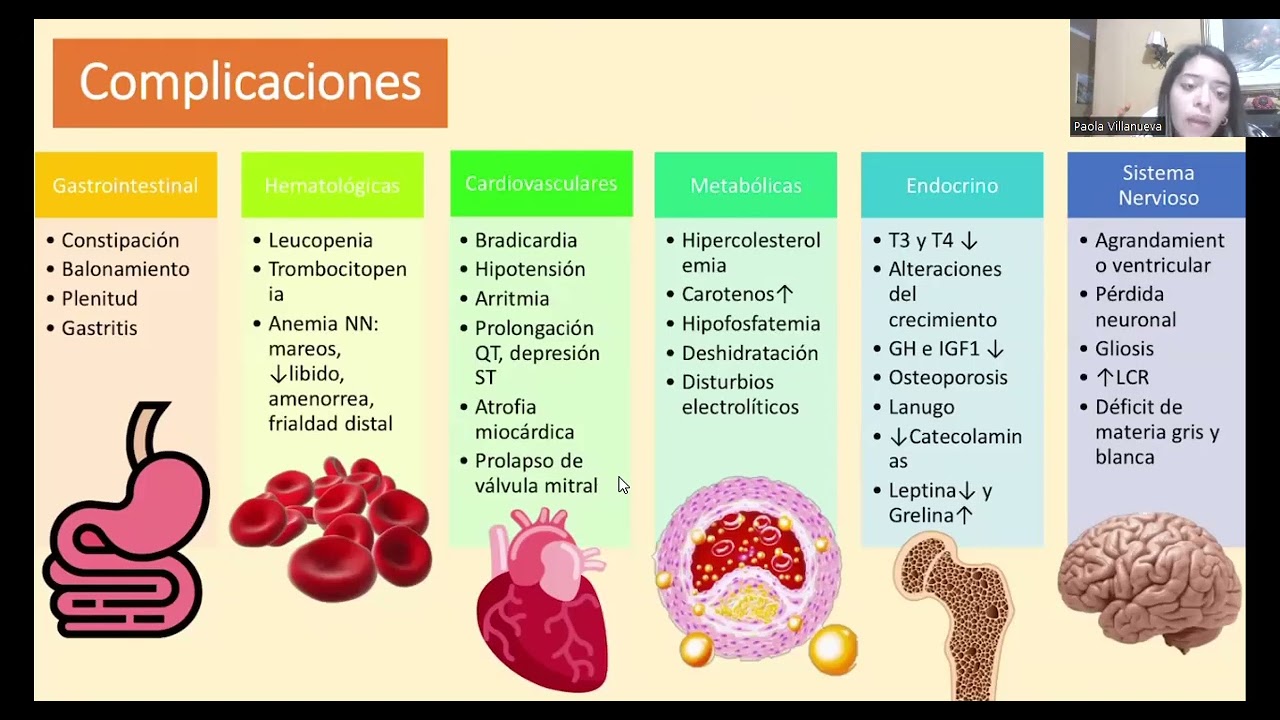
Understanding the Medical Complications of Eating Disorders
In this section, the speaker delves into the medical complications associated with advanced cases of eating disorders, focusing on the challenges patients face in resuming normal eating habits and the physiological impacts on various body systems.
Physiological Impact of Eating Disorders
- Patients with eating disorders may experience hematological issues such as leucopenia, thrombocytopenia, and anemia, leading to classic symptoms like dizziness and shortness of breath during exercise.
- Cardiovascular effects include bradycardia, potential arrhythmias, QT interval prolongation, and myocardial atrophy, highlighting severe implications for heart health.
- Endocrine disruptions can manifest as hypothyroidism and growth abnormalities due to altered thyroid-stimulating hormone (TSH) levels and growth factor interactions.
- Metabolic changes may result in hypercholesterolemia, elevated carotenoids levels, dehydration in extreme cases, along with decreased leptin and increased ghrelin levels.
Neurological and Diagnostic Considerations
- Neurologically, patients may exhibit ventricular enlargement, neuronal loss, increased cerebrospinal fluid (CSF), gray matter deficits, emphasizing the impact on brain health.
- Diagnosing these conditions requires differentiation from other causes like neoplasms or connective tissue disorders that also present involuntary weight loss.
Multidisciplinary Approach to Treating Eating Disorders
This segment explores the comprehensive treatment approach necessary for managing eating disorders effectively. It emphasizes collaboration among psychiatric, psychological, nutritional professionals alongside family involvement.
Treatment Strategies
- Multidisciplinary treatment involving psychiatry, psychology, nutrition is crucial for restoring patient weight gradually while addressing compulsive behaviors and purging episodes.
- Hospitalization is warranted if a patient's condition deteriorates significantly based on criteria such as low BMI (<14), life-threatening electrolyte imbalances or psychiatric emergencies like suicide attempts.
- Pharmacological interventions may include antidepressants or mood stabilizers to address depression or mood fluctuations commonly seen in these patients.
Nutritional Support
- Nutritional interventions focus on identifying deficiencies and gradually increasing caloric intake by 200–500 grams per week to avoid overwhelming oral tolerance limitations.
- Enteral support might be necessary if oral intake is insufficient during hospitalization to ensure adequate nutrition delivery.
Understanding Bulimia Nervosa: Patterns and Behaviors
This part sheds light on bulimia nervosa as a prevalent eating disorder characterized by alternating patterns of binge-eating episodes followed by compensatory behaviors like vomiting.
Bulimic Behaviors
- Bulimia nervosa involves cycles of binge-eating followed by compensatory actions such as laxative use or self-induced vomiting to eliminate consumed food.
Discussion on Eating Disorders and Obsessive Behaviors
In this section, the speaker discusses various eating disorders and obsessive behaviors related to food and body image.
Types of Eating Disorders
- Patients with bulimia nervosa engage in binge-eating episodes followed by compensatory behaviors like vomiting or excessive exercise.
- Binge-eating disorder involves recurrent episodes of consuming large amounts of food with a sense of lack of control.
Obsession with Healthy Eating (Orthorexia)
- Orthorexia is an obsession with healthy eating, where individuals focus on consuming only "healthy" foods but may not meet their caloric needs.
Guilt and Planning in Eating Behaviors
- Individuals with orthorexia feel guilty when deviating from their strict diet plans, leading to isolation and meticulous meal planning.
Vigorexia: Obsession with Physical Fitness
- Vigorexia involves an obsession with physical fitness to pathological levels, characterized by muscle dysmorphia and excessive protein intake.
Understanding Sarcopenia and Cachexia
This part delves into the definitions of sarcopenia, cachexia, and anorexia nervosa.
Definitions and Characteristics
- Sarcopenia refers to muscle mass loss, while cachexia involves involuntary weight loss exceeding 10% in a month.
- Anorexia nervosa entails fear of gaining weight, low caloric intake, potential complications across body systems requiring multidisciplinary treatment.
Diagnosis Scenarios
The speaker presents diagnostic scenarios related to eating disorders for audience engagement.
Diagnostic Scenarios
- A 17-year-old female overeats followed by regret using laxatives and vomiting; likely diagnosed with bulimia nervosa due to binge-eating episodes coupled with compensatory actions.