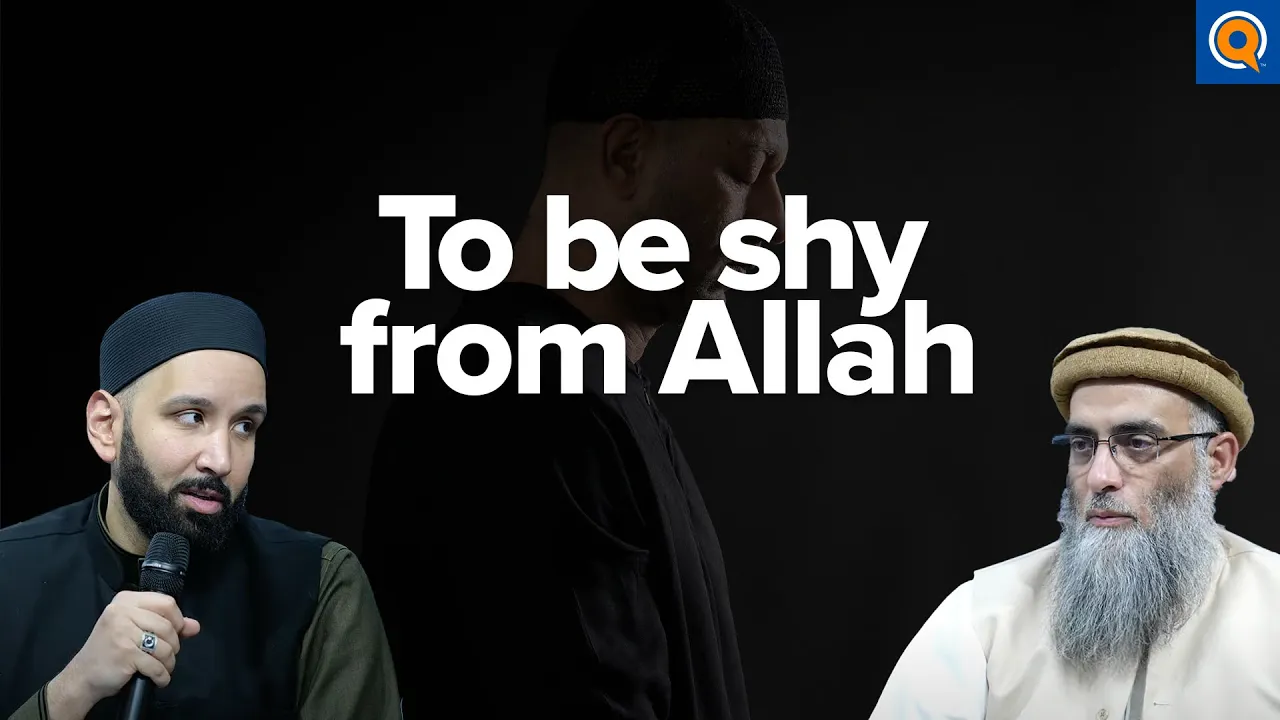
Allah is Too Shy to Disappoint | Late Night Talks | Dr. Omar Suleiman & Sh. Yaser Birjas
New Section
The beginning of the lecture where a sister named Victoria takes her shahada, followed by welcoming other potential new Muslims to do the same.
Sister Victoria's Shahada
- Sister Victoria takes her shahada during the lecture.
- The audience congratulates and welcomes Sister Victoria into the community.
Invitation for Others to Take Shahada
- Attendees are encouraged to consider taking their shahada on this blessed night.
- A warm welcome is extended to all guests present, inviting them to embrace Islam if they feel called to do so.
New Section
Prayers and supplications for blessings, mercy, and protection are made before delving into a discussion on avoiding sins that lead one away from Allah's mercy.
Prayers and Supplications
- Requests for blessings, mercy, and protection are made for attendees and those in need.
- Specific prayers are offered for safety and well-being in troubled regions like Palestine.
Avoiding Sins
- Introduction to a crucial topic aimed at preventing individuals from falling into sinful behaviors that distance them from Allah's mercy.
- Discussion on how sins can lead to being cursed or removed from Allah's mercy due to severity, transgression, oppression, or insistence upon sinning.
New Section
Further exploration of sins that distance individuals from Allah's mercy through changing revelations to fit desires and persisting in sinful behavior despite awareness.
Types of Sin Leading Away from Mercy
- Explanation of how changing revelations to justify sins is considered satanic behavior.
Complacency and Sinfulness
The discussion delves into the concept of complacency leading to sinfulness, drawing parallels between disobedience to Allah and idol worship.
Complacency Leading to Sin
- Complacency marks the beginning of sinfulness, where disobedience to Allah becomes flagrant. This progression can eventually lead one to attribute partners to Allah or even themselves.
Comparison: Alcoholism and Idol Worship
- The Prophet likened an alcoholic or wine addict to an idol worshipper. While not equating the gravity of drinking wine with idol worship, addiction forms a ritual akin to worship due to its routine nature and triggers.
Replacing Sinful Relationships with Godly Ones
Transitioning from sinful relationships resembling servitude towards sin to fostering a relationship with Allah through good habits is emphasized.
Transforming Relationships
- Replace the servitude-like relationship with sin by nurturing a direct relationship with Allah. Establish good habits and systems that prioritize connecting with Allah over falling back into sinful patterns.
Protectiveness and Jealousy as Safeguards Against Sin
Discusses protectiveness and jealousy as essential safeguards against falling into sins, emphasizing their role in purifying individuals.
Importance of Protectiveness
- Sins extinguish the fire of protectiveness and jealousy in the heart, crucial elements that purify individuals from bad habits and sins. These qualities act as fuel for purification similar to how fire refines gold.
Noble Attributes
- Individuals characterized by protectiveness and jealousy are considered noble, studious, serious, and honored. These traits serve as vital components for self-purification from negative elements.
Protectiveness and Boundaries
The speaker discusses the concept of protectiveness, boundaries, and the importance of observing limits set by Allah.
Protectiveness Through Observing Limits
- Observing boundaries set by Allah leads to increased protection and dignity.
- Comparison between Islam's reverence for God and prophets versus open mockery in other societies.
- Proudly upholding principles and ethics as Muslims despite societal norms.
- Decline of Western Society attributed to the open mockery of religion due to loss of respect for sacred values.
- Connection between losing dignity, disrespect for God, and decline in societal values.
Islam as a Defense of True Religion
The speaker reflects on Islam being perceived as a last defense against moral subjectivity and the importance of protecting both substance and symbols of religion.
Islam as a Moral Defense
- Islam viewed as a defense against moral subjectivity that plagues Western society.
- Recognition from scholars of other religions about Islam's adherence to principles.
- Anecdote highlighting Muslims' commitment to religious practices even in daily life situations.
- Emphasizing the need to balance protecting religious symbols with upholding the essence of religion.
True Religion Amidst Changing Times
The speaker delves into how true religion stands out amidst changing times where desires are elevated above spiritual beliefs.
Upholding True Religion
- Critique on turning desires into gods leading to distorted interpretations of religion.
- Islam portrayed as the last bastion of genuine faith amid distortions in other religions.
Religion and Society Transformation
The discussion revolves around the transformation of religion over generations, societal decay, religious hypocrisy, and the potential catalyst for people returning to faith.
Religion Transformation and Societal Decay
- Religion undergoes significant changes across generations.
- Current societal circumstances may serve as a catalyst for individuals returning to faith.
- Allah can bring others besides the Arab world to uphold faith.
- Importance of maintaining boundaries in faith to lead a steadfast life.
- Holding onto the Quran and Sunnah ensures staying on the right path.
Initial Appeal of Islam
The initial appeal of Islam targeted two main groups: the oppressed classes and people with noble character.
Appeal of Islam
- Initially, Islam appealed to the weakest class - the oppressed and exploited individuals.
- Exploited individuals found solace in Islam's call to worship one God.
- Islam attracted those disgusted by idol worship and seeking sincerity.
- Persians were intrigued by Islamic principles over pompous displays.
- Transitioning from slavery under man-made systems to serving Allah resonated with some Persians.
Noble Character in Pre-Islamic Society
People with noble character in pre-Islamic society were drawn to Islam due to their inherent dignity and self-respect.
Noble Character Appeal
- Individuals like Abu Bakr were already known for their dignity before embracing Islam.
- Example of Uthman's refusal to drink alcohol showcases his wisdom and self-control.
New Section
The speaker discusses how man-made systems have altered faith, leading to a shift in boundaries and values in society.
Impact of Man-Made Systems on Faith
- Man-made systems have altered faith by introducing liberal ideas and principles, distancing people from the Quran and Sunnah.
- Contemporary society faces attacks on religious institutions and traditional family values, eroding established boundaries.
- Without manipulation, individuals naturally gravitate towards belief in a Creator and the importance of family life for continuity.
Exploring Boundaries and Values
The discussion delves into the erosion of boundaries in modern society and its impact on moral values.
Erosion of Boundaries
- Modern society promotes freedom without boundaries, leading to a loss of concepts like jealousy, honor, dignity, and protectiveness.
- Liberal agendas contribute to the removal of protectiveness among believers, allowing for acceptance of wrongdoing without accountability.
Upholding Principles Against Injustice
The importance of standing against evil and injustice is emphasized as a core principle in Islam.
Standing Against Injustice
- Muslims should never be complacent with evil or injustice, including acts of Injustice that compromise principles.
- Prophet Muhammad's stance against Injustice highlights the necessity for protecting vulnerable individuals from exploitation.
Guarding Rights and Boundaries
The discussion focuses on guarding both human rights and divine boundaries as integral aspects of faith.
Protection of Rights
- Prophet Muhammad safeguarded both human rights and divine boundaries against transgressions to uphold justice.
New Section
In this section, the speaker discusses the progression from thought to action and the importance of boundaries in shaping one's reputation.
Progression from Thought to Action
- The transition from a mere thought to a plan and then into action is crucial in defining an individual's attributes.
- Lack of boundaries can lead to limitless actions, emphasizing the significance of setting limits.
- Society's diminishing sense of shame has eroded modesty, impacting behaviors and values.
New Section
This part delves into the concept of protectiveness and jealousy towards matters related to faith.
Protectiveness and Jealousy in Faith
- Protectiveness and jealousy over matters concerning faith are likened to an immune system for the heart.
- Modesty is highlighted as essential medicine for maintaining a strong sense of protectiveness and jealousy.
New Section
The discussion shifts towards Allah's characteristics of shyness and generosity, reflecting on their implications for believers.
Allah's Shyness and Generosity
- Allah's shyness is exemplified through His response to believers' supplications, showcasing His care and consideration.
Shyness and Modesty in Islam
In this section, the speaker discusses the concept of shyness (ha) in Islam, highlighting different aspects of ha related to various virtues and behaviors.
The Ha of Different Virtues
- The ha of glorifying Allah intensifies with knowledge of Him.
- The ha of generosity is exemplified by Prophet Muhammad's behavior at a wedding.
- Chastity is compared to the shyness of a companion who hesitated to ask the Prophet about intimacy.
- Humility is likened to a slave's demeanor when asking his Lord for needs.
- Love manifests as an intense feeling towards one's beloved, reflecting in actions and emotions.
The Essence of Shyness and Modesty
This part delves into how shyness and modesty are integral components of faith in Islam, shaping one's relationship with Allah and others.
Understanding Shyness and Modesty
- Servitude stems from love, fear, and recognition of inadequacy before Allah's grandeur.
- Dignity involves acting in ways that align with noble standards, fostering self-reflection on actions.
- Shying away from one's deficiencies leads to a complete sense of ha before oneself and others.
Shyness as a Component of Faith
This segment emphasizes how shyness intertwines with faith, emphasizing its significance within Islamic teachings.
Integrating Shyness into Faith
- Prophet Muhammad highlighted shyness as a fundamental aspect among various categories of faith (Iman).
- Shyness should translate into modest living guided by religious principles from the Quran and Sunnah.
New Section
The speaker discusses the concept of haya (modesty) and its significance in society, emphasizing the importance of protecting one's sense of shame and right from wrong.
Importance of Haya
- Haya involves protectiveness, caring about shame, and distinguishing between right and wrong.
- Emphasizes the necessity for individuals to observe and cultivate haya as a quality due to its scarcity in society.
- Describes Prophet Muhammad's modesty and how people were respectful and shy in his presence due to his dignified demeanor.
- Prophet Muhammad's modesty stemmed from dignity rather than material possessions or appearance.
New Section
The discussion delves into the relationship between modesty, dignity, and self-respect based on the example of Prophet Muhammad.
Modesty and Dignity
- Prophet Muhammad's modesty was rooted in dignity, commanding respect through his behavior rather than material wealth or appearance.
- Emphasizes cultivating a sense of self-respect based on principles, ethics, and modesty that influence those around us positively.
- Highlights Prophet Muhammad's respectful communication style, allowing others to speak without interruption before responding thoughtfully.
New Section
Explores the concept of Allah's shyness towards believers despite their shortcomings, encouraging reciprocal humility and reverence towards Allah.
Reciprocal Shyness with Allah
- Reflecting on Allah's knowledge of believers' sins better than they know themselves, prompting humility when seeking His forgiveness.
- Encourages believers to be humble when calling upon Allah by recognizing His greatness compared to their own deficiencies.
- Discusses moving beyond a transactional relationship with Allah towards genuine love and reverence that surpasses mere adherence to rules.
New Section
Focuses on honoring Allah through actions driven by love rather than obligation, aiming for continuous improvement in worship out of reverence for Him.
Honoring Allah Through Actions
- Encourages surpassing mere compliance with halal rules by considering one's actions through the lens of honoring Allah's sight upon them.
- Stresses the importance of improving worship not for personal gain but as a means to enhance servitude towards Allah out of love and respect.
New Section
Addresses failures in maintaining modesty but emphasizes returning to Allah with humility as a means to strengthen one's sense of haya over time.
Strengthening Modesty Through Failures
- Acknowledges inevitable failures in upholding modesty but underscores the importance of consistently returning to Allah with humility after each setback.
Detailed Discussion on Modesty and Boundaries
In this section, the speaker delves into the concepts of modesty, boundaries, and protecting oneself from sinning openly.
Understanding Modesty and Shyness
- The importance of feeling shy when worshipping Allah or disobeying Him is highlighted.
- Relying on Allah for support is emphasized as a source of strength and beauty in one's actions.
Importance of Setting Boundaries
- Teaching about modesty involves guarding one's self and others against sinning.
- Building an immune system against sins is discussed to prevent weakening due to constant transgressions.
Upholding Righteous Indignation
- Expressing righteous indignation towards crossing boundaries set by Allah is encouraged.
- Outrageous behavior should not be incentivized, even historically during the time of Prophet Muhammad (peace be upon him).
Maintaining Boundaries with Opposite Gender
This part focuses on advice for young people on interacting with the opposite gender while maintaining boundaries and upholding modesty.
Guidelines for Interactions
- Starting with rules such as avoiding seclusion and physical touch helps in setting boundaries.
- Ensuring that interactions would be comfortable if observed by one's spouse serves as a practical filter for appropriate conduct.
Protecting One's Heart
- Failing to abide by boundaries can lead to twisting hearts, emphasizing the importance of respecting limits set for protection.
Shyness and Modesty of a Great Man
The discussion revolves around the exceptional shyness and modesty of a significant figure, highlighting how these qualities defined his greatness and interactions with others.
Shyness as a Sign of Greatness
- The individual's shyness set him apart, overshadowing his other remarkable traits like leadership and intelligence.
- Scholars categorized the Angels' admiration for him based on his unwavering obedience to Allah in public and private, despite possessing qualities that could lead to arrogance.
- His humility and charity endeared him to people even before Islam, showcasing his righteousness and goodness.
Angels' Reverence Due to Shyness
- Despite having all factors for arrogance in pre-Islamic society, he remained bashful, earning the respect of even the Angels.
- The Angels' shyness towards him stemmed from his selflessness towards his community, despite facing potential harm from them.
The Impact of Generosity and Modesty
This segment delves into how generosity, modesty, and resilience shaped the individual's life journey amidst challenges and slander.
Resilience Amidst Slander
- His generosity led to slander by extremists but he chose not to retaliate or defend himself against false accusations.
- Despite facing relentless attacks on his character, he maintained dignity by refusing any bloodshed in defense of himself.
Ultimate Dignity in Adversity
- Facing baseless accusations without defense showcased pure dignity as he accepted fate while reading Quran before being martyred.
- In his final moments, he displayed contentment with Allah's decree and embraced martyrdom with grace.
Seeking Knowledge and Practicing Virtues
This part emphasizes the importance of seeking knowledge, practicing virtues like forbearance, and embodying qualities such as fear of Allah.
Pursuit of Virtues
- Seeking knowledge leads to its acquisition; practicing virtues like forbearance nurtures them; pursuing good qualities unlocks divine blessings.
Advice and Modesty
The speaker discusses the rarity of receiving valuable advice and the importance of accepting it humbly. Additionally, the concept of modesty and distinguishing it from jealousy within relationships is explored.
Advice and Acceptance
- Valuable advice is scarce, and finding someone willing to offer it is even rarer.
- Accepting advice humbly is a sign of luck; rejecting it out of pride can be detrimental.
Modesty vs. Jealousy in Relationships
- Modesty involves being protective for the sake of Allah, following His rules.
- Suspicion and baseless accusations harm relationships; trust and honor are essential.
Protectiveness in Relationships
The discussion delves into the importance of protecting relationships through honor, trust, and avoiding baseless accusations.
Honor and Trust
- Being protective requires honoring one's partner without baseless suspicions.
- Boundaries in relationships prevent suspicion; treasuring each other fosters trust.
Maintaining Trust in Relationships
The speaker emphasizes the significance of maintaining trust by embodying qualities that reflect respect, shyness, and adherence to boundaries.
Shyness and Trustworthiness
- Respecting boundaries prevents suspicion; shyness reflects respect for one another.
- Emulating Prophet Muhammad's behavior fosters trust within relationships.
Overcoming Insecurities in Relationships
Addressing insecurities within relationships by aligning protectiveness with religious boundaries rather than succumbing to jealousy or mistrust.
Overcoming Insecurities
- Jealousy stemming from insecurity leads to mistrust; align protectiveness with religious teachings.
Discussion on Shahada
The speaker mentions discussing the topic of Shahada in the upcoming session and invites anyone interested in taking Shahada to do so.
Invitation for Shahada
- The speaker plans to discuss the topic of Shahada in the next session.
- Attendees are encouraged to express their interest in taking Shahada, extending the invitation to brothers, sisters, and visitors present.