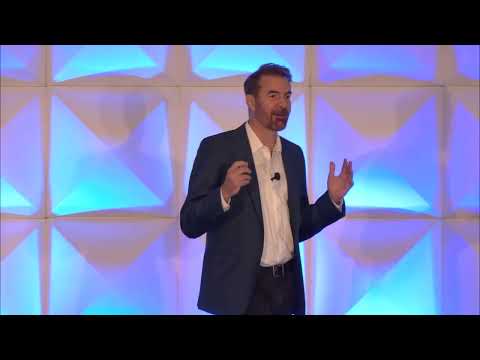
Erik Brynjolfsson | The Turing Trap: The Promise and Peril of Human-like AI
Introduction
The speaker introduces the topic of human-like AI and its potential impact on society and the economy.
The Promise and Peril of Human-Like AI
- The speaker discusses the promise and peril of human-like AI, which is getting closer to reality.
- Stuart Russell gave a seminar about what would happen if we succeed in creating human-like AI.
- People have been thinking about human-like robots and AI for thousands of years, according to legend.
Economic Impact of Human-Like AI
The speaker discusses the economic impact of human-like AI on society.
Automation in Ancient Athens
- The speaker asks what would have happened if robots that could do all the work in ancient Athens had been created.
- These robots could completely replace all labor back then, including making clay pots, weaving tunics, repairing horse-drawn carts, etc.
- While it would be nice to live a life of leisure without having to do any work, it wouldn't be the same standard of living as we have today.
Automating Current Tasks is Not Enough
- Most economic progress does not come from automating current tasks done by humans.
- Focusing on automating current tasks is not the right goal for artificial intelligence or technological progress.
Ten Theses for Artificial Intelligence
The speaker lays out ten arguments for why our goals for artificial intelligence need to change.
Benefits of Human-Like AI
- Human-like AI has enormous benefits such as high productivity and helping us understand our own minds better.
- There's a lot of dirty dangerous dull work that should be automated with non-human like AI.
Not All Types of AI are Human-Like
- Many interesting types of AI are not human-like at all, such as the AI that plays Go.
- These types of AI have an "alien intelligence" that is different from human intelligence.
The Wrong Goal for Artificial Intelligence
- Focusing on making machines more like humans is the wrong goal for artificial intelligence and technological progress.
- We need to change our goals for artificial intelligence if we want to create economic value.
The Touring Trap
In this section, the speaker discusses how focusing only on human-like intelligence can have a negative effect on wages and political power. He introduces the concept of the "Touring Trap" and explains how it can trap people in a bad equilibrium.
The Negative Effect of Human-Like Intelligence
- Focusing only on human-like intelligence is limiting from an economist's perspective.
- Machines that are more like humans tend to substitute for humans, which can drive down wages.
- This reduces the economic and political power of those who are substitutes for machines.
- This creates a trap where people without power cannot change things in their favor.
AI as Complement
- AI doesn't have to substitute; it can also complement human labor.
- Most technologies have increased the value of labor and made humans able to do more than they could before.
- This creates new capabilities, goods, and services that we couldn't do before.
Automation vs. Augmentation
- There are excess incentives that drive us towards automation rather than augmentation.
- We need to balance or tip incentives more towards augmentation because it tends to increase wages and create new capabilities.
Fusion Energy Was Always 30 Years Away
In this section, the speaker talks about how AI progress is surprisingly rapid and getting closer rather than receding. He compares it with fusion energy technology that was always 30 years away but never arrived.
Surprisingly Rapid Progress in AI
- There has been surprisingly rapid progress in artificial intelligence recently.
- Rather than receding, it actually seems to be getting closer.
Introduction
In this section, the speaker introduces himself and his background in economics and AI. He also talks about the purpose of his talk, which is to discuss how AI can complement human labor rather than substitute for it.
Speaker's Background
- The speaker has a background in economics and artificial intelligence.
Purpose of Talk
- The purpose of the talk is to discuss how AI can complement human labor rather than substitute for it.
Metaculus and the Progress of AI
In this section, the speaker talks about Metaculus and their weekly general A.I. report. He also discusses how technology has advanced to a point where A.I. is no longer just a myth.
Weekly General A.I Report
- Metaculus provides a weekly general A.I report.
- The report defines what A.I means and tracks its progress.
- The report moved up from 2042 to 2034 last week.
- The speaker thinks that Dali and the progress in foundation models may have contributed to this increase.
Technology Advancements
- Self-driving cars have been disappointing, but other areas are going faster.
- Technology has advanced sufficiently that it's indistinguishable from some of the mythology.
- AI is considered as a general-purpose technology (GPT).
- GPT catalyzes complementary innovations like steam engines and electricity did in the past.
Impressive Progress on ImageNet
- Machine can recognize images arguably on that particular data set as well or better than humans.
- Crossing more thresholds where machines can do something as well as humans could lead to many benefits.
Productivity Isn't Everything
In this section, the speaker talks about productivity defined as output divided by input. He also discusses how infinite productivity doesn't solve all problems because there are different kinds of infinity.
Definition of Productivity
- Productivity is defined as output divided by input.
- In the national accounts, it's operationalized as GDP divided by hours worked.
Different Kinds of Infinity
- There are two ways to make productivity go to infinity.
- One is to send labor hours to zero, but that means there's no need for labor and labor has no value in that economy.
- Infinite productivity doesn't solve all problems because there are different kinds of infinity.
The Divergence of Wages and Deaths from Despair
In this section, the speaker discusses how wages have diverged for different educational groups and how technology is replacing many kinds of labor. This has led to a significant increase in deaths from despair among people without college degrees.
Wage Divergence
- People without high school education have seen a decline in wages.
- People with graduate degrees have seen an increase in wages.
- Skill-biased technical change is one reason for this divergence.
Deaths from Despair
- Deaths from despair (alcohol, drug, and suicide mortality) are increasing among people without college degrees.
- People with college degrees are doing better.
Useful Knowledge and Decentralization
In this section, the speaker discusses how useful knowledge is essential to creating production and value. It's inherently decentralized because one human brain can only hold so much knowledge. However, digitization allows for centralization of knowledge which can concentrate economic power.
Useful Knowledge
- Useful knowledge is essential to creating production and value.
- It's inherently decentralized because one human brain can only hold so much knowledge.
Digitization and Centralization
- Digitization allows for centralization of knowledge.
- Economic power can be concentrated through centralizing knowledge.
The Turing Trap
In this section, the speaker discusses how the market cannot settle the optimal amount of centralization or decentralization due to changing technology and externalities. The concentration of knowledge and economic power can also lead to the concentration of political power, which is the essence of the Turing Trap.
Market Optimality
- The market cannot settle the optimal amount of centralization or decentralization.
- Economic theorems assume fixed technology and no externalities, which is not realistic.
The Turing Trap
- Concentration of knowledge and economic power can lead to the concentration of political power.
- This is the essence of what the speaker calls the Turing Trap.
The Turing Test and Narrow AI
In this section, the speaker discusses how the Turing test has influenced technologists to focus on creating narrow AI that can perform tasks similar to humans. However, he argues that this approach is not ambitious enough and that we should be focusing on creating machines that can do things that are hard for humans but easy for machines.
The Influence of the Turing Test
- Technologists have been heavily influenced by the Turing test.
- The goal of AI is to make human-like intelligence.
- Creating machines that can perform tasks similar to humans is a quick way to assign projects.
Focusing on Narrow AI
- Focusing only on getting machines to do what humans can do is tunnel vision.
- It's hard to get a robot to perform certain tasks like buttoning a shirt or picking blueberries.
- Machines are great at doing things that are difficult for humans, such as considering millions of possible protein folding options or sifting through documents.
Ambitious Goals for AI
- We should be focusing on creating machines that can do things that are hard for humans but easy for machines.
- The turing test steers us in the wrong direction by focusing too narrowly on human-like intelligence.
Bad Incentives and Lack of Imagination
In this section, the speaker discusses how bad incentives and a lack of imagination have led business executives to focus too much on automation. He argues that while automation creates productivity value, it also shifts bargaining power from labor to capital, leading to more concentration of wealth and power.
Incentives for Automation
- Automation creates productivity value, but it also shifts bargaining power from labor to capital.
- Capital owners have excess incentives to automate because it takes stuff away from other people and shifts it to them.
- This second incentive doesn't create any value and can destroy value overall.
Failure of Imagination
- Focusing only on the narrow tasks that humans do is unimaginative.
- We need more imagination in terms of new products and processes, as well as how we improve the production process.
The Future of Work: Augmentation or Automation?
In this section, Eric Brynjolfsson discusses the need to think beyond automation and instead focus on augmenting human labor. He argues that policy makers often overemphasize automation and that our tax system favors investment in capital over investment in labor.
Automation vs. Augmentation
- Eric Brynjolfsson argues that we should not just automate what humans are currently doing, but instead think more broadly about the whole system and ultimately aim for augmentation rather than automation.
- Policy makers often overemphasize automation, favoring investment in capital over investment in labor.
- Our tax system favors investment in capital over investment in labor, which can lead to a bias towards automation rather than augmentation.
- We need to steer ourselves towards a balanced approach of augmentation as well as automation.
Humans as Ends, Not Means
- Humans should be thought of as ends in themselves, not just means of production.
- Everyone deserves to have a share of the pie regardless of how much they're contributing.
- The system itself should be based on augmenting human labor so that each person is creating more value and has bargaining power to hang onto that value.
Conclusion
- We need to think beyond the economics of it all and consider humans as ends in themselves. By steering ourselves towards a balanced approach of augmentation and automation, we can create a future that flourishes.
The Importance of a Mindset Shift
In this section, the speaker discusses the need for a cultural mindset shift towards understanding the dynamics of the touring trap. He believes that policymakers and people managing big institutions need to understand this concept to avoid forcing themselves unnecessarily into it.
Replacing Labor vs Augmenting Labor
- A technology think tank head believed that higher living standards could only be achieved by replacing labor with capital.
- The speaker argues that there needs to be a mindset shift towards understanding that replacing labor is not the only way to increase productivity, nor is it the most important way.
- People need to open their eyes to seeing other possibilities beyond just replacing labor.
Productivity of Labor and Capital
This section focuses on measuring productivity in terms of labor and capital. The speaker explains how focusing solely on labor productivity can lead to an incomplete understanding of growth.
Measures of Productivity
- Economists have a measure for labor productivity but there is also a measure called total factor productivity which accounts for both labor and capital inputs.
- Total factor productivity has not improved as fast as labor productivity because some of the improvements in labor productivity are due to substitution with capital.
- Focusing on more comprehensive measures like total factor productivity would provide a better understanding of balanced growth.
Focusing on New Goods and Services
This section emphasizes the importance of focusing on creating new goods and services rather than just improving existing processes.
Creating New Goods and Services
- It's easier for people to look at an existing process and think of ways to take costs out or reduce labor, rather than thinking of something entirely new.
- The speaker argues that we need to consciously work harder on focusing on creating new goods and services rather than just improving existing processes.
Augmentation vs Automation vs Management
This section discusses the different options available for workers in terms of augmentation, automation, and management.
Options for Workers
- Workers can move from one group to another, such as becoming a manager instead of a laborer.
- The speaker emphasizes the importance of focusing on creating new goods and services rather than just improving existing processes.
Creativity and Imagination in Job Creation
In this section, the speaker discusses the importance of creativity and imagination in job creation. He emphasizes that most jobs created since the 1940s did not exist before, and people had to invent new ways of doing things. The speaker argues that coming up with new products and services is a more beneficial way to preserve jobs than trying to freeze existing jobs.
Importance of Creativity and Imagination
- Most jobs created since the 1940s did not exist before.
- People have invented new ways of doing things through creativity and imagination.
- Coming up with new products and services is a more beneficial way to preserve jobs than trying to freeze existing jobs.
Conclusion
- The speaker concludes by stating that there are many other things they can discuss, but he looks forward to all questions and comments from the audience.