La Cultura Chavín en 5 minutos | Culturas Peruanas | Culturas Preincas | Historia del Perú
Introduction to the Chavin Culture
This section introduces the Chavin Culture, which is considered one of the most important pre-Inca cultures of Peru.
Discovery and Importance
- The Chavin Culture was discovered by Julio César Tello, who considered it as the "matrix culture" of Peru.
- It appeared in the Andean formative period and is considered within the first cultural horizon.
- It expanded along the coast and Peruvian highlands, with greater influence in La Libertad, Lima, and Ancash.
Influence on Religion and Productivity
- Its influence mainly covers religion due to its ferocious gods and new techniques that improved productivity in agriculture.
- Its center of progress was the temple of Chavín de Huántar located at 3180 meters above sea level.
- The priest was part of a privileged group with political, religious, economic, and social power.
Temple Construction
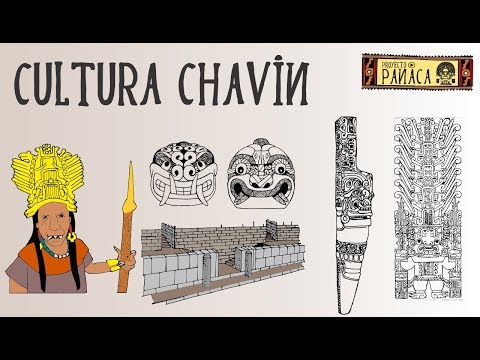
- The construction of the Chavín de Huántar temple started with the "ancient or old temple," decorated with cornices, gravestones, friezes, and lintels carved with gods who ruled Chavin.
- A lithic sculpture shaped like a knife or spear called "Monolithic Lanzon" was found in this temple.
- Over time a building called "New Temple" was built between 1000 to 800 BC.
Artistic Style
- The architectural style of the temple facade and cover of Falconides are impressive.
- Sculptures on the lintels and columns, known as nail heads, are characterized by an anthropomorphic repertoire.
- Chavin art was varied, highlighting mainly in a wide variety of lithic sculptures, ceramic finishes, and textile figures.
Decline
- The Chavin culture began to decay 500 years after its emergence, fragmenting into several parts.
- Its influence lasted over time.