How Great Leaders Inspire Action | Simon Sinek | TED
How Great Leaders Inspire Action
The speaker delves into the concept of why certain individuals and organizations are able to inspire action and stand out from the rest by focusing on their core beliefs rather than just what they do.
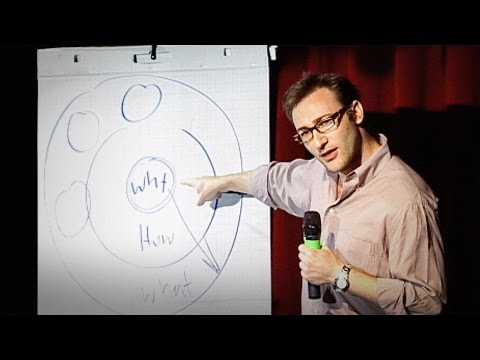
The Golden Circle
- The Golden Circle consists of three key components: Why, How, What. Most organizations know what they do and some know how they do it, but very few understand why they do what they do.
- Understanding "why" refers to identifying the purpose, cause, or belief behind an organization's existence. It goes beyond profit-making and delves into the fundamental reason for being.
- Inspired leaders and organizations communicate from the inside out, starting with why they do what they do before moving to how and what. This approach sets them apart from others who communicate in reverse.
Communication Strategies
- Traditional communication focuses on what a company does and how it is different or better. However, inspiring companies like Apple communicate by starting with why they exist, challenging the status quo before detailing their products.
- People are not just buying products or services; they are buying into the beliefs and values of a company. Apple's success lies in communicating its purpose first, leading customers to align with their vision rather than just their products.
The Biology of Decision Making
The speaker explores how human biology influences decision-making processes and emphasizes that effective communication should target the part of the brain responsible for behavior rather than solely focusing on rational information.
Brain Structure & Decision Making
- The human brain comprises three major components: neocortex (responsible for rational thought), limbic brains (responsible for feelings like trust), and reptilian brain (drives survival instincts). Effective communication targets the limbic brain to influence behavior.
- Communicating from the inside out appeals directly to the limbic brain, which controls behavior. This approach triggers emotional responses that lead to decisions based on beliefs rather than just facts and figures.
The Power of Belief
In this section, the speaker discusses the influence of belief on decision-making and behavior, emphasizing the role of emotions over rationality in choices.
The Influence of Emotions on Decision-Making
- Emphasizes that decisions are often driven by feelings rather than facts.
- Explains how the limbic brain controls decision-making based on emotions, not language.
Belief and Success
This part delves into how belief influences success in various aspects such as business and leadership.
Importance of Shared Beliefs
- Stresses the significance of aligning beliefs to attract loyal customers or employees.
- Highlights that selling or hiring based on shared beliefs leads to more committed individuals.
Wright Brothers vs. Samuel Pierpont Langley
Contrasting the approaches of the Wright brothers and Samuel Pierpont Langley towards innovation and success.
Lessons from History
- Compares the contrasting motivations between Langley's pursuit of wealth and fame versus Wright brothers' purpose-driven approach.
- Illustrates how belief in a cause can drive extraordinary commitment and achievement.
Law of Diffusion of Innovation
Discusses the law governing acceptance and adoption rates for new ideas or products within a population.
Understanding Market Acceptance
- Explains different categories within society based on their willingness to adopt innovations.
- Emphasizes reaching a tipping point for mass-market success through diffusion strategies.
Consumer Behavior Based on Belief
Explores consumer behavior influenced by personal beliefs rather than product features.
Impact of Personal Beliefs
- Argues that people's actions reflect their underlying beliefs more than rational considerations.
- Highlights how being first or early adopters is often driven by personal desires rather than product quality.
The Power of Why
This section discusses the significance of why people do things rather than what they do, using examples of success and failure in innovation diffusion.
The Importance of 'Why'
- People buy into the 'why' behind actions, not just the actions themselves.
- TiVo's failure despite quality and funding was due to emphasizing features over purpose ('why').
- TiVo failed as they focused on what their product did, not why it mattered to consumers.
Inspiring Action Through Belief
Dr. King's ability to inspire action through shared beliefs is highlighted, showcasing how belief-driven movements can mobilize masses.
Dr. King's Approach
- Dr. King's success stemmed from sharing his beliefs rather than demands for change.
- His followers embraced his beliefs, making his cause their own and spreading the message further.
Leading with Purpose
Contrasting leaders with those who lead, this part emphasizes the power of purpose-driven leadership over authority-based positions.
Purposeful Leadership
- True leaders inspire action through shared beliefs and purpose rather than mere authority.
Turn any video into a summary like this
YouTube links, meetings, lectures. With transcripts, search, and chat.